
Fire Damage Restoration in Boston, MA — Cleanup, Repairs & Emergency Response (24/7)
After a fire, the problem usually goes far beyond the visibly burned area. Structural damage, soot residue, smoke migration, debris, and water from suppression can all affect the property at once. We secure the site, stabilize conditions, clean and document the loss, and move the project toward repair and reconstruction with a clear plan from day one.
- Check safety conditions and secure openings with emergency board-up or temporary protection if needed
- Assess structural impact, visible residue, moisture from suppression, and priority salvage areas
- Stabilize the site with containment, debris control, and the right cleanup sequence for the loss
- Document affected areas, materials, and next steps to support communication with your insurance adjuster


“After an electrical fire, they arrived quickly, secured the damaged area, explained what needed to happen first, and documented everything clearly. They handled cleanup, drying from suppression water, and the repair scope in a way that made the whole process feel organized.”
“They protected unaffected areas, helped us sort what could be saved, and kept the work organized while repairs moved forward.”
“Good communication, a clean jobsite, and realistic expectations from the start. We always knew what stage the fire restoration project was in.”
Your home or business may suffer from fire damage, lingering smoke odors, and soot staining that can be difficult (and unsafe) to remove without professional equipment. Boston Restoration Prime provides 24/7 fire damage restoration in Greater Boston — from emergency securing and smoke/soot cleanup to deodorization, repairs, and full reconstruction when needed.
Fire Damage Restoration Starts With Safety, Containment, and a Clear Plan
After a fire, the visible burn area is only one part of the loss. Heat can compromise framing and finishes, smoke can travel well beyond the source room, soot can settle on surfaces and belongings, and suppression water can soak drywall, insulation, subfloors, and hidden assemblies. A strong fire restoration plan starts with safe access, temporary protection, containment, moisture control, and a documented scope that prioritizes what must happen first.
- Only re-enter if fire officials or the property manager say it is safe.
- Leave HVAC off until the system and affected areas are evaluated.
- Do not wipe soot from walls, trim, counters, or contents.
- Photograph rooms, damaged materials, and salvageable items before moving them.
- Emergency board-up, temporary protection, or tarping when needed
- Containment to reduce cross-contamination into cleaner rooms
- Initial review of structure, moisture, residue spread, and priority salvage areas
- A practical scope for cleanup, drying, demolition, repairs, and documentation
- Boston condos and multi-unit buildings may require access coordination and shared-area planning
- Commercial fire losses often need downtime control and phased work
- Clean zones help protect residents, staff, tenants, and unaffected operations
- Clear schedule checkpoints make decisions easier as the project moves forward
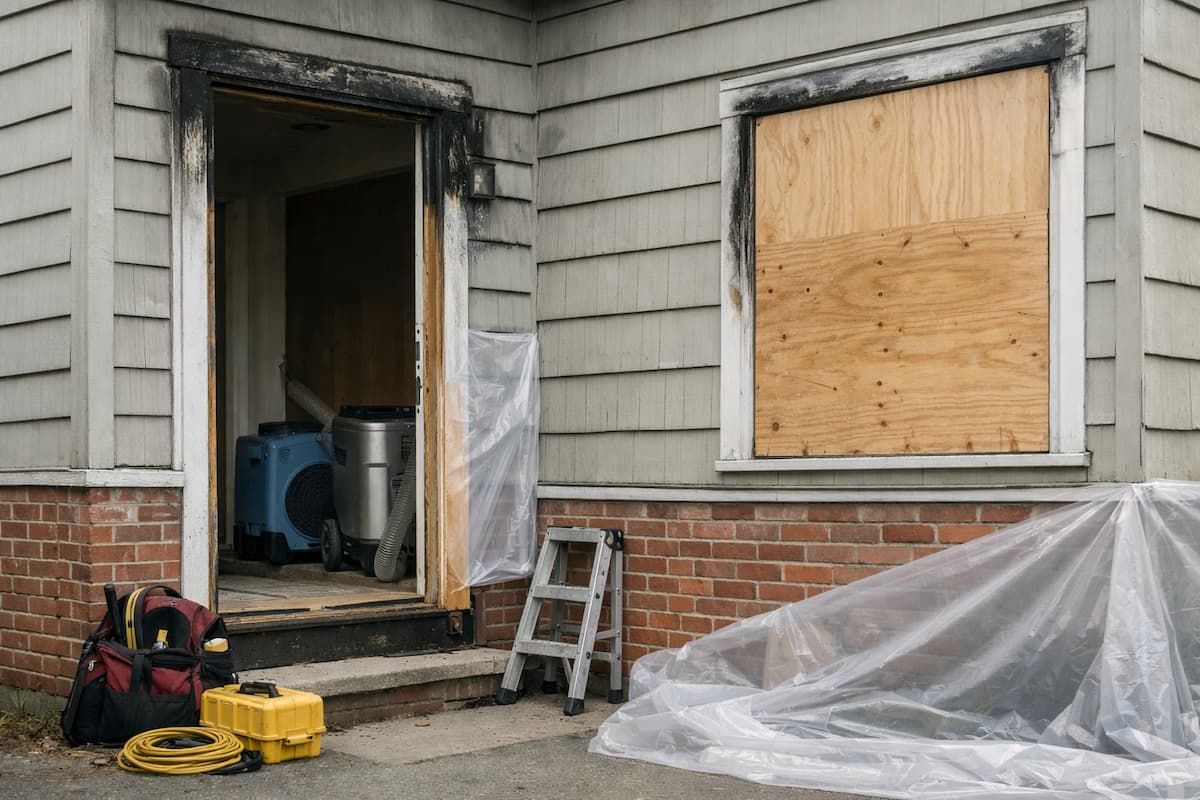
Early fire restoration often starts with securing exposed openings, protecting the property from additional loss, and creating a safer, more controlled site for cleanup and documentation.
Why Choose Boston Restoration Prime for Fire Damage Restoration?
Fire losses move fast, but a rushed or incomplete response can create more problems later. We focus on quick stabilization, coordinated fire-loss planning, careful cleanup, and documentation that supports decisions from the first visit through repairs.
24/7 Fire-Loss Response
We respond quickly to assess safety conditions, secure exposed areas, and organize the first steps before additional weather, moisture, or residue spread makes the loss harder to manage.
- Emergency board-up and temporary protection
- Site stabilization and clean-zone planning
- Fast first-response guidance by phone
One Coordinated Scope
Fire damage rarely comes alone. We plan for burn damage, residue, odor, suppression water, selective demolition, and rebuild needs as one connected project instead of treating each issue in isolation.
- Fire, smoke, soot, and water in one workflow
- Priorities based on safety and salvage value
- Clear scope checkpoints as the job moves forward
Careful Cleanup and Rebuild Planning
We match cleaning methods to the material, avoid residue spread into cleaner areas, and move the job toward repair and reconstruction with realistic sequencing instead of guesswork.
- Material-aware residue removal
- Selective demo where needed
- Repairs and reconstruction planning
Documentation That Supports Decisions
Good documentation helps everyone stay aligned. We provide photo records, scope notes, and progress updates that make communication with owners, managers, and adjusters more organized.
- Photo documentation and field notes
- Moisture and condition tracking when needed
- Cleaner communication with your adjuster
Smoke, Soot, and Odor Still Need the Right Method After a Fire
Smoke contamination is an important part of fire damage restoration, but it is only one part of the overall loss. Different fire conditions create different residues, and the wrong cleaning method can smear soot, drive odor deeper, or damage sensitive finishes. We identify the residue type, the affected materials, and the likely travel paths so smoke-related cleanup supports the full fire restoration plan instead of working against it.
Residue types we account for
- Dry soot from faster-burning conditions that can spread easily and stain porous materials
- Wet or oily residues that may leave sticky films on painted surfaces, cabinetry, and contents
- Lighter-looking protein residue that can still create strong odor and delayed discoloration
Where contamination often travels
- Cabinets, closets, trim lines, and other overlooked detail areas
- Attics, crawl spaces, wall cavities, and connected pathways
- Return-air related zones, vents, and HVAC-connected surfaces
- Nearby rooms or adjacent units in condos and multi-family properties
How we keep it in the right lane
- Containment to protect cleaner areas during fire restoration work
- HEPA vacuuming and material-aware residue removal
- Odor treatment based on source conditions, not masking alone
- Air support when needed while the broader cleanup and repair scope moves forward
When lingering odor, residue spread, and smoke contamination are the main concerns, learn more about our smoke damage restoration in Boston.


Your Partner in Fire Damage Restoration: Experience the Difference
A fire restoration project works best when one team keeps the job moving in the right order. That means stabilizing the property, protecting salvageable areas, coordinating cleanup and drying, tracking what needs repair, and giving you clear updates as the project moves from emergency response toward reconstruction.
Insurance Claim Support Without Guesswork
Fire losses often include more than one category at once: structural damage, residue contamination, affected contents, and sometimes suppression water. Clear documentation makes the project easier to understand, helps approvals move more smoothly, and reduces surprises as cleanup turns into repairs.
What we document
- Photo records of affected rooms, materials, and visible conditions
- Scope notes for cleanup, drying, demolition, and repair needs
- Moisture and condition tracking when suppression water is involved
- Updates if hidden damage or scope changes appear during the work
What helps your claim
- Photos of damaged belongings before disposal or pack-out
- Basic inventory notes for contents and affected rooms
- Receipts for temporary housing and essential purchases when applicable
- Questions for your adjuster about access, timing, and approvals
How approvals affect the timeline
- Emergency stabilization can begin before the full rebuild scope is finalized
- Selective demo or structural repairs may depend on documented approvals
- Changes discovered after opening assemblies should be tracked clearly
- Good communication reduces delays between cleanup and reconstruction
Why this reduces stress
- Fewer surprises when the job moves from mitigation to repairs
- Cleaner communication between owner, manager, and adjuster
- Better clarity around priorities, salvage, and next decisions
- Less confusion when major steps are documented from the start
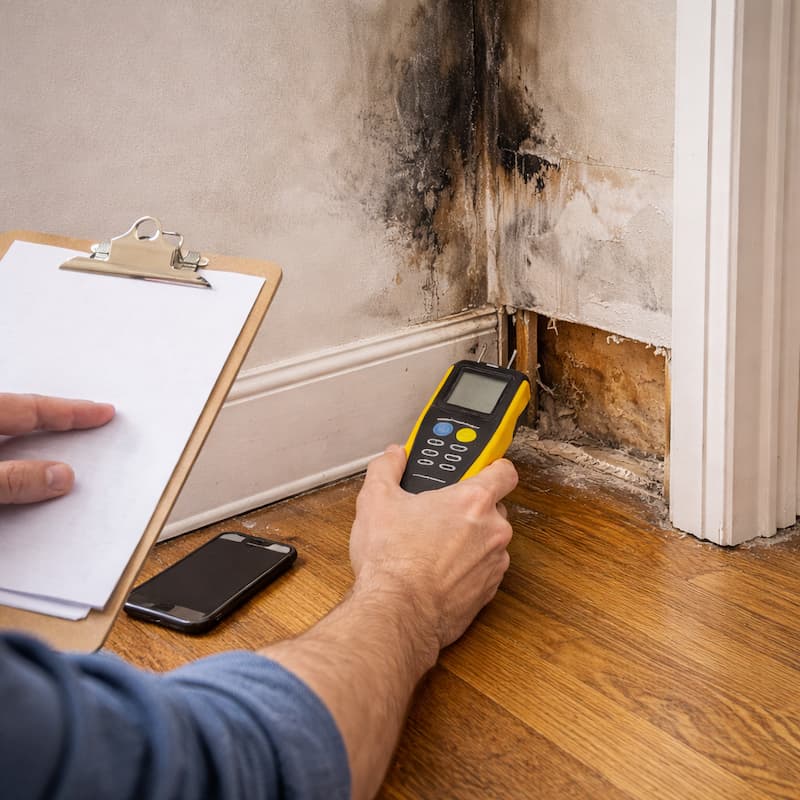
Careful field documentation helps define the scope, support the claim process, and track both fire-related damage and any secondary moisture issues from suppression.
Our Comprehensive Fire Damage Restoration Services
Fire losses often involve more than one problem at the same time: structural damage, debris, smoke residue, odor, water from suppression, and affected belongings. We approach fire restoration as one coordinated project with clear priorities, safe cleanup methods, and a path toward repair and reconstruction.
Detailed Assessment & Loss Scoping
We inspect the damaged areas, identify safety concerns, review the visible and likely hidden impact, and build a practical fire restoration scope that prioritizes stabilization, salvage, cleanup, and repair.
Board-Up, Tarping & Site Stabilization
Damaged openings and exposed areas may need emergency board-up, temporary protection, or tarping to help prevent weather intrusion, unauthorized entry, and additional loss while restoration work is being organized.
Water Extraction & Structural Drying After Firefighting
Sprinklers and firefighting water can leave drywall, insulation, framing, and subfloors wet. We address that secondary damage with extraction, drying, dehumidification, and moisture checks as part of the overall fire loss.
Residue Cleanup, Smoke Cleaning & Odor Control
We remove fire-related residue using material-appropriate methods and address odor based on the actual contamination path. When smoke spread and lingering odor are the main issue, explore our smoke damage restoration in Boston service for more detail.
Contents Pack-Out, Cleaning & Storage Coordination
When salvageable belongings need to be sorted, packed out, cleaned, or stored during the project, we build that step into the restoration plan. You can also learn more about our contents restoration services in Boston.
Structural Cleaning, Selective Demo & Rebuild
From controlled demolition to framing, drywall, trim, flooring, and finish repairs, we move the project from damaged condition toward restored use with a clear sequence and scope checkpoints.
Residential & Commercial Fire Restoration
We handle fire damage restoration for homes, condos, apartments, offices, retail spaces, and other commercial properties, with attention to access, occupants, clean zones, and downtime concerns.
Insurance Documentation & Claim Support
We provide clear photo documentation, scope notes, and change tracking so your claim process stays more organized and the restoration path is easier to follow from emergency response through repairs.
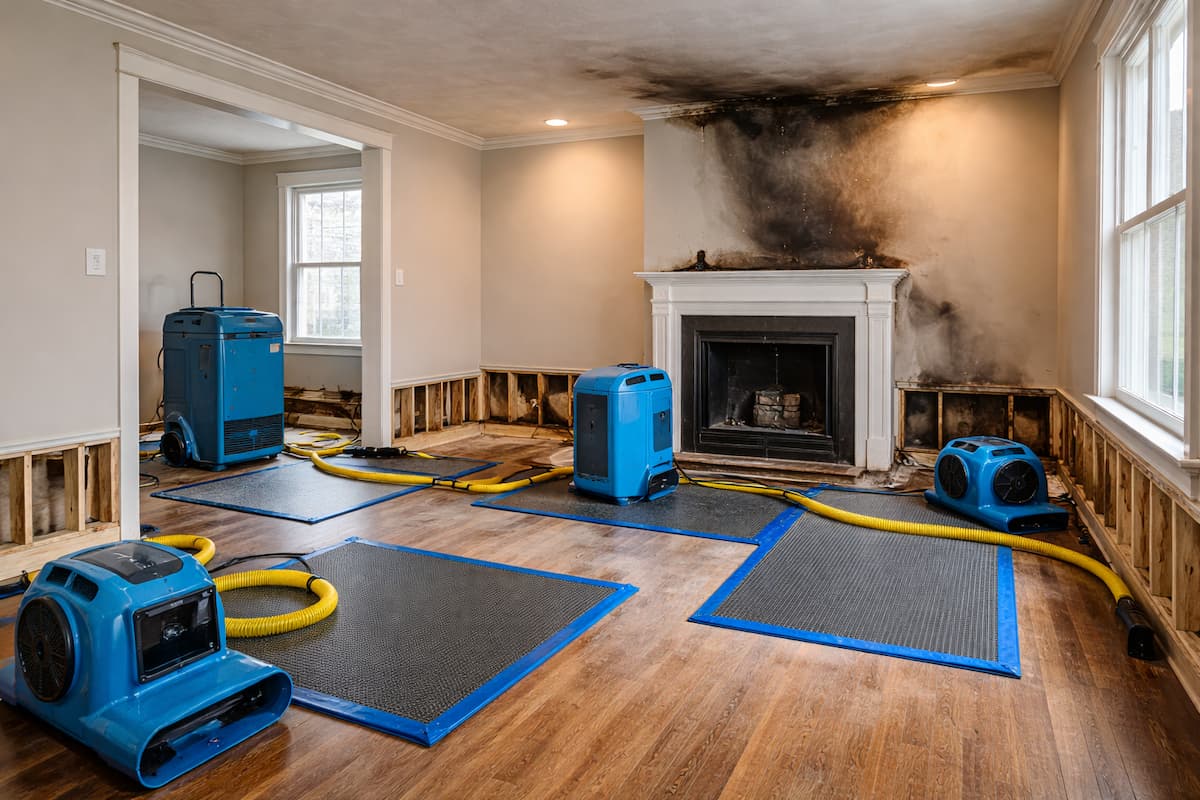
Fire losses often include a second problem: water from sprinklers or firefighting. Extraction, drying, and moisture control can be just as important as residue cleanup before repairs move forward.
Fire Damage Restoration for Boston Homes, Condos, and Commercial Properties
Boston properties often bring their own restoration challenges: older finishes, tighter layouts, multi-unit buildings, mixed-use properties, occupied spaces, and access restrictions. We tailor the fire restoration plan to the type of property, the extent of the loss, and the practical realities of working in Greater Boston.
Older Boston Homes
Older houses may have layered finishes, tighter cavities, more detail trim, and materials that react differently to heat, soot, and suppression water. Cleanup and repair planning need to account for that.
Condos and Multi-Unit Buildings
Fire losses in condos and multi-family properties often require coordination with building management, neighboring units, common-area access, and rules around work hours, debris handling, and protection.
Commercial and Mixed-Use Spaces
Offices, retail suites, restaurants, and mixed-use buildings usually need downtime control, cleaner phasing, occupant safety planning, and practical sequencing so operations can recover as efficiently as possible.
Greater Boston Response
We help property owners across Boston and nearby communities with emergency stabilization, fire cleanup, drying, documentation, and the transition from damaged condition to repaired space.
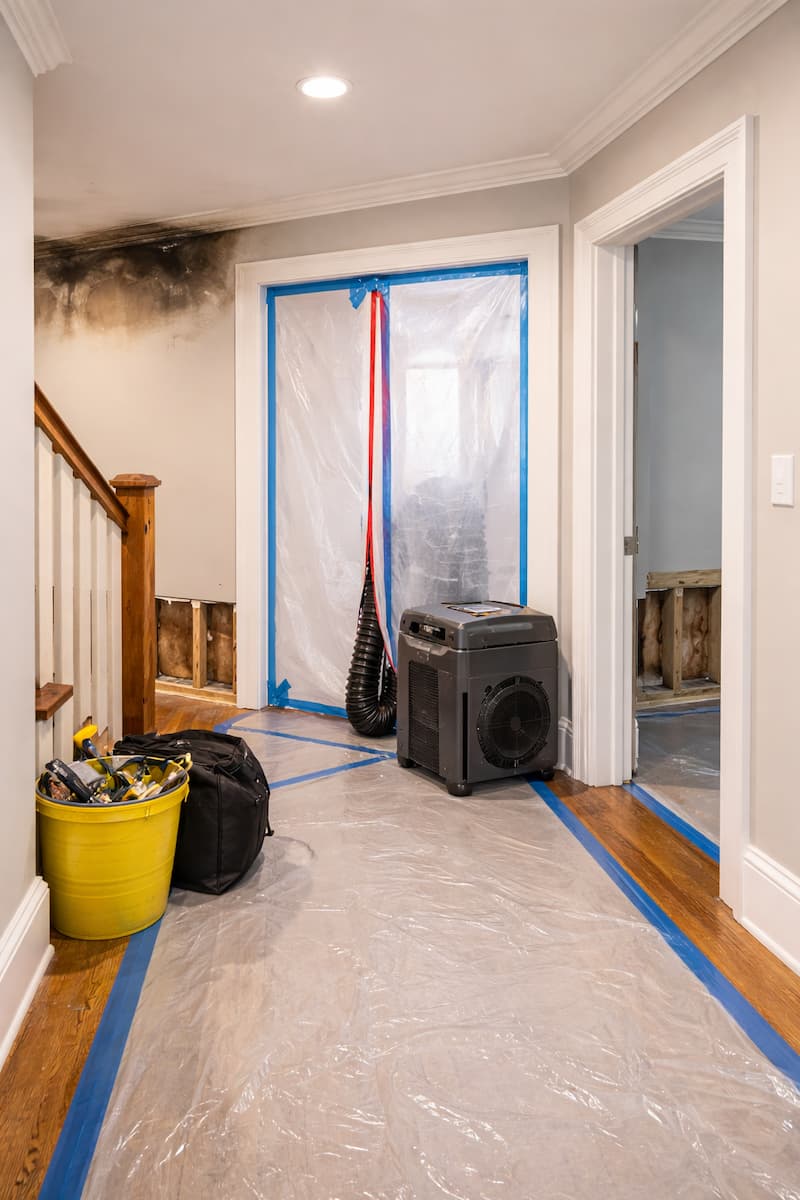
In Boston-area homes, condos, and multi-unit buildings, fire restoration often requires careful containment, protected walkways, cleaner work zones, and planning that fits tighter layouts and occupied spaces.
Common Fire Loss Scenarios We Handle
Not every fire loss looks the same. Some projects involve obvious structural damage, while others are driven by residue spread, suppression water, or the need to protect surrounding rooms and belongings. These are some of the most common fire damage situations we help restore in Boston.
Kitchen Fire Damage
Kitchen fires often leave behind oily residue, strong odor, and heat damage to cabinets, finishes, and nearby rooms. Cleanup usually needs a careful material-specific approach rather than basic surface wiping.
Electrical Fire Damage
Electrical fire losses can affect wall cavities, insulation, trim, and nearby contents even when the visible burn area seems limited. They also often require careful documentation before repairs move forward.
Appliance and Laundry Fire Loss
Fires involving dryers, washing areas, or household appliances can create concentrated heat, soot, odor, and localized water damage from suppression, especially in utility rooms and adjacent finishes.
Attic, Basement, and Garage Fires
These areas often involve hidden spread, framing impact, difficult access, and heavy contamination of stored materials or contents. The restoration plan usually has to balance cleanup, salvage, and selective demolition.
Condo and Multi-Unit Fire Damage
Fire losses in condos and multi-family properties may affect neighboring units, shared pathways, and building operations. These jobs often require tighter containment and more coordination with management or residents.
Retail, Office, and Small Commercial Fire Damage
Commercial projects usually involve downtime concerns, occupant safety, phased work, and clear sequencing between emergency stabilization, cleanup, drying, and repairs.
If the main issue is lingering smoke residue and odor beyond the burned area, you can also learn more about our smoke damage restoration in Boston. If salvageable belongings need item-focused recovery, storage, or pack-out support, see our contents restoration services in Boston.
How the Fire Restoration Process Typically Works
Every fire loss is different, but the workflow usually follows the same logic: secure → protect → clean → dry if needed → repair → final walkthrough. Clear sequencing helps reduce confusion, protect salvageable areas, and keep the project moving in the right order.
Emergency response and site securing
We review safety conditions, protect exposed openings if needed, and set the first priorities for access and stabilization.
Containment, debris control, and damage review
We protect cleaner areas, evaluate residue spread, identify salvageable materials, and organize the job before major cleaning begins.
Residue cleanup, smoke cleaning, and odor strategy
Fire-related residue is removed with the right method for the material, while odor treatment follows the actual contamination path.
Water extraction and structural drying when needed
If sprinklers or firefighting water are part of the loss, we address wet assemblies, drying targets, and moisture control before repairs continue.
Repairs, rebuild, and final walkthrough
After cleanup and drying, the project moves into repairs, finish restoration, and a final review of readiness, scope completion, and remaining items.
Frequently Asked Questions About Fire Damage Restoration in Boston
These are some of the most common questions property owners ask after a fire. The answers are focused on fire-loss workflow, emergency priorities, and what to expect as cleanup turns into drying, repairs, and reconstruction.
What does fire damage restoration typically include?
Do you provide emergency board-up in Boston?
Can you handle water damage from sprinklers or firefighting?
Can salvageable belongings be packed out and restored?
Do you work on condos and commercial properties?
How soon should fire restoration begin?
Do you help with insurance documentation?
When is a separate smoke damage service more appropriate?
Helpful Information About Fire Damage Restoration
Practical guidance makes a fire loss easier to manage. These are the points that most often help owners, tenants, and managers avoid preventable mistakes in the first stage of restoration.
Do Not Wipe Soot
Dry wiping, wet wiping, or using household sprays can smear residue deeper into finishes and make staining worse. Wait until the residue type and the right cleaning method are identified.
Leave HVAC Off Until It’s Evaluated
Running heating or cooling too soon can move smoke contamination into cleaner rooms, duct-connected areas, and hard-to-reach surfaces that were not originally affected.
Document Before You Move or Dispose of Items
Photos of rooms, materials, and belongings are helpful before cleanup changes the scene. That is especially important when contents need to be sorted, packed out, cleaned, or discussed with an adjuster.
Suppression Water Can Become Its Own Problem
Wet drywall, insulation, framing, and subfloors may need prompt extraction and drying. The fire may be out, but the water part of the loss still needs attention to reduce secondary damage.
Your Trusted Partner for Fire Damage Restoration in Boston
Whether your property has visible burn damage, fire-related residue, odor that spread beyond the source area, or water from suppression that now needs drying and repairs, our team is ready to help. We’ll explain the next priorities, document the scope, and move the project forward with care.
Request a Fire Damage Restoration Quote
Tell us whether you are dealing with fire damage, smoke residue, soot, odor, debris, or water from suppression. We’ll respond with practical next steps and guidance on what to do first.
Get a Fast Estimate
Usually replies within 15 minutes. No spam.

Evan Calloway
- IICRC FSRT — Fire and Smoke Restoration Technician
- IICRC OCT — Odor Control Technician
- IICRC WRT — Water Damage Restoration Technician
- IICRC CPT — Contents Processing Technician
- Xactimate Estimating Training — Level 2
- Restoration Industry Association (RIA) — Membership
- Claims Documentation & Contents Inventory Workflow Training
- Works with an IICRC Certified Firm (Boston Restoration Prime)