
Boston Restoration Prime · Greater Boston
Water, Fire & Mold Restoration in Boston
Get help with water, fire or mold damage at your Greater Boston property. We assess the damage, handle cleanup and drying, and help you plan repairs.
24/7 emergency line · Homes & businesses
What to do while arranging help
Our emergency line is available day and night. Tell us what happened so we can discuss the next steps.
Call (617) 639-0909Address immediate danger
For an active fire or immediate danger, call 911. Follow emergency responders’ instructions before entering the building.
Keep clear of hazards
Avoid standing water near electrical equipment and rooms with sagging ceilings. Shut off a leaking water supply only if you can reach the valve safely.
Explain what happened
Call with the property address, when you noticed the damage and whether the source is still active. Notify the property manager if you rent or share the building.
Restoration services
Find help for the damage you’re facing
Start with the problem at your property. We’ll check the affected areas and explain the work they need.
Water damage restoration
Water removal, moisture checks and structural drying after leaks, burst pipes and other water damage.
Explore this serviceBurst pipe cleanup →Fire and smoke restoration
Cleanup of fire debris, soot and smoke residue, with assessment of damaged finishes and remaining odors.
Explore this serviceSoot removal →Mold removal and remediation
Assessment and removal of mold-affected material, with attention to moisture conditions and containment where needed.
Explore this serviceFlood cleanup
Water extraction, contaminated material assessment, cleaning and drying after water enters from outside the building.
Explore this serviceWeather damage restoration
Assessment of rain intrusion, wet ceilings and damaged openings, followed by temporary protection, cleanup and repair planning.
Explore this serviceEmergency board-up →Sewage cleanup
Cleanup after sewage backups, including assessment of contaminated surfaces and materials that may need removal.
Explore this serviceCommercial restoration
Restoration for offices, retail spaces and other commercial properties, with the work planned around access and building use.
Contents restoration
Assessment and cleaning of belongings affected by water, smoke or fire, with decisions based on each item's condition.

The people behind the work
Meet the team behind the work
Boston Restoration Prime helps Greater Boston property owners deal with water, fire, smoke and mold damage. Our team assesses affected areas, handles cleanup and drying, and explains what the property needs before repairs can move forward.
Why choose Boston Restoration Prime?
A clear scope before work begins
You can discuss the proposed work, the affected rooms and what requires a separate trade before deciding how to proceed.
Methods matched to the material
Wet framing, smoke-stained finishes and contaminated carpet need different treatment. We assess the material and its condition before recommending an approach.
Attention to unaffected areas
Floor protection, containment and filtration can form part of the work plan. We consider how crews and equipment will move through the property.
Progress you can discuss
We explain what the inspection and follow-up checks show, including damage revealed during cleanup and any resulting changes to the proposed work.
Homes and businesses
Restoration for homes, rentals and businesses
Homes
A wet basement or smoke-damaged room can affect the rest of the household. Tell us which spaces are occupied and what you need to reach during the work.
- Rooms and belongings affected
- Access through living areas
- Pets, household routines and restricted rooms
Rental and managed properties
Damage may extend beyond one unit. An owner or manager can help arrange access, identify shared building systems and coordinate communication with affected occupants.
- Units and common areas involved
- Keys and access authorization
- Building rules and management contact
Offices and retail spaces
The plan needs to account for staff, customers and the property itself. Explain which areas are closed, what remains in use and any limits on access.
- Affected stock, fixtures and equipment
- Staff and customer routes
- Access hours and building requirements
Scope of work
What your restoration work may include
The assessment determines which tasks are needed. A small plumbing leak and a fire affecting several rooms will have different scopes.
Damage assessment
We inspect accessible areas, identify affected materials and establish where further access may be needed. Water damage calls for moisture checks beyond the visible puddle or stain.
Water removal and temporary protection
The work may include extracting accessible water and assessing damaged openings. Temporary protection may be needed while the permanent repair of a roof, window or other opening is arranged.
Selective material removal
Some materials cannot reasonably be cleaned or dried, or block access to damage. We discuss their removal and how to protect surrounding areas.
Cleaning and odor treatment
Cleaning methods depend on the residue and surface involved. Smoke odor, soot and contaminated water each require attention to their source and affected materials.
Structural drying
We set up drying equipment for affected rooms and materials, then check progress. Conditions found during monitoring may call for different placement or additional access.
Contents and repair planning
We assess affected belongings and remaining building damage. The plan distinguishes cleaning and restoration tasks from replacement needs and repairs that require a plumber, electrician or another specialist.
How the work proceeds
Know what happens next
Cleanup, drying and repairs have different milestones. We explain the sequence for your property, including what needs to happen before the next stage can begin.
Discuss your propertyAssess the damage
Tell us what happened and whether the source is still active. We inspect accessible areas and document the conditions.
Agree on the work
We explain the proposed cleanup, drying and removal, along with repair needs or work that requires another specialist.
Clean up and monitor
We carry out the agreed work, check drying progress or cleaning results, and discuss changes if more damage becomes visible.
Plan the next repairs
We review remaining damage and the condition of materials before discussing replacement, refinishing or rebuilding.
Walk through the completed work
Review the agreed work with us, ask about the results and identify any outstanding items. We explain remaining repair needs and the records available for your files.
Water and hidden moisture
Drying starts with knowing what is wet
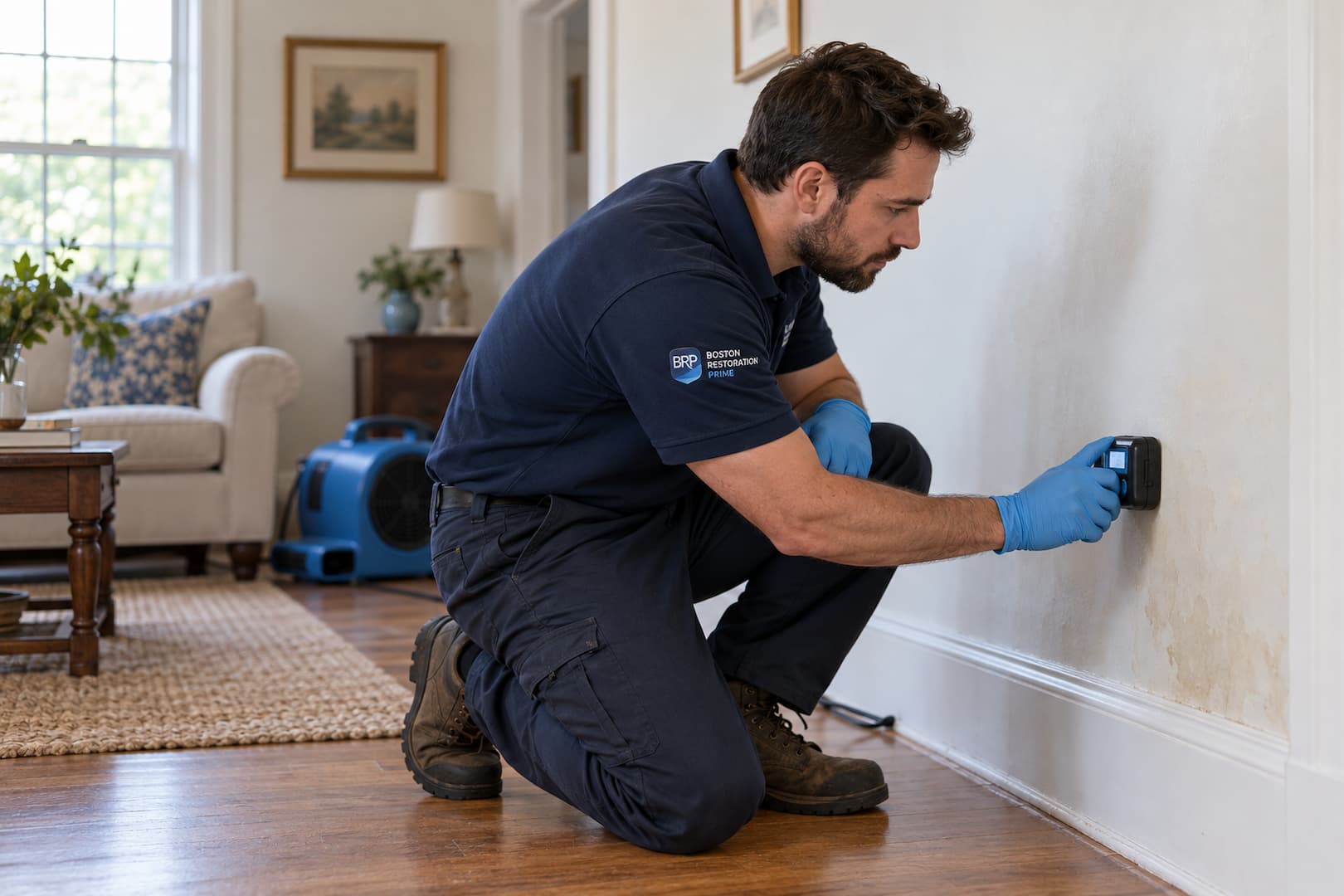
Water can reach beneath flooring, soak insulation and travel into the room below. We check accessible materials and use moisture readings to help define the drying work.
Air movers and dehumidifiers are placed for the space and materials. Follow-up readings guide adjustments and help establish when the affected areas are ready for the next repair step.
Material decisions
What can be saved, and what needs replacement?
The answer depends on the material, the type of damage and what the assessment reveals. Appearance alone does not settle the decision.
When cleaning or drying is an option
Some intact materials and belongings may respond to cleaning or controlled drying. We consider whether the contamination or residue can be addressed, whether the finish will tolerate treatment and whether drying can reach the affected area. For smoke residue, a test clean can help establish how a surface responds.
When replacement may be needed
Swollen flooring, damaged finishes, heat-affected materials or contaminated porous items may not be suitable to retain. Removal can also be necessary to reach wet insulation or concealed damage. We explain the reason for a recommendation and discuss the affected area before that work proceeds.
Tools for the work
Equipment for extraction, drying and cleanup
These photos show equipment arranged in a residential space and a larger interior. The layout depends on the affected materials and access.


Water extraction equipment
Removes accessible standing water once the work area is safe to enter.
Dehumidifiers and air movers
Air movers help moisture evaporate from wet materials; dehumidifiers remove moisture from the air.
Moisture meters
Provide initial and follow-up readings to track affected areas.
Containment and HEPA filtration
Help control the work area where the cleanup calls for them.
Insurance documentation
Keep a clear record of the damage and the work
An insurance discussion is easier to follow when the records describe what was found and what work was proposed. We can provide photos, moisture readings where relevant and scope notes, and discuss the restoration work with your adjuster.
Documentation can continue as work exposes damage that was not visible during the first inspection. Our role is to explain the property conditions and restoration scope.
Documentation we can provide
- Photos of affected rooms and materials
- Moisture readings and drying notes where relevant
- Scope details for equipment, removal, cleaning and repairs
- Notes on additional damage found during the work
Your insurer determines coverage, payment and claim decisions under your policy.
Describe the damage. We’ll help you work out the next step.
Have the property address and a brief account of what happened ready when you call.
Greater Boston
Serving Boston and the surrounding communities
We work with homeowners, property managers and businesses across Greater Boston. Call with the property address to confirm service availability for your location.
View all areas servedUseful answers
Questions before you call
Can I call outside normal business hours?
Yes. Our emergency line is available 24/7 at (617) 639-0909. Tell us your location, what happened and whether the source of damage is still active. We’ll discuss the next steps and availability for your property.
How much will restoration cost?
The affected area, materials, contamination, access and repair needs all influence the cost. We need to assess the damage before explaining the proposed scope and estimate. Mention any cleanup or repairs already completed.
The leak stopped. Does the room still need drying?
It may. Flooring, insulation or framing can remain wet after surface water disappears. An inspection and moisture readings help establish whether further drying or material removal is needed. If the leak came from a pipe, arrange any remaining plumbing repair with a plumber.
How long will the work take?
Cleanup, drying and repairs have different schedules. The extent of the damage and the condition of materials determine the work; readings and cleaning results guide progress. We discuss the expected sequence after assessment and explain changes as they arise.
Can every damaged material or belonging be saved?
Some can be cleaned and dried; others need replacement. Contamination, heat damage, swelling and the condition of the finish affect that decision. We assess materials and contents before recommending what to retain or remove.
Do you work in commercial and multi-unit buildings?
Yes. We serve homes, offices, retail spaces and multi-unit properties. Tell us about occupied areas, shared access and building-management requirements so those details can be included in the work plan.
Can I stay in the property during restoration?
That depends on the damage, access restrictions and the work underway. Tell us which areas are occupied so we can discuss how the proposed work affects their use. Follow any instructions from emergency responders or building officials about entry and occupancy.
What if more damage is found after cleanup begins?
Opening an affected area can reveal wet insulation, residue or damage that was previously hidden. We document what becomes visible and explain how it changes the proposed work, including any additional removal, drying or repairs to discuss.
Get in touch
Tell us what happened at your property
Include your location, when you noticed the damage and the best number to reach you. For urgent help, call the emergency line.
Cambridge, MA 02139, US
Please call before visiting.