
Fire Damage Repairs & Reconstruction in Boston, MA
Once the fire-damaged property has been cleaned, stabilized, and brought under control, the next step is organized repair and reconstruction. We rebuild fire-damaged walls, ceilings, framing, trim, flooring, cabinetry, and interior finishes with a clear scope, careful sequencing, and practical coordination from mitigation through final repairs.
- Review the stabilized loss area, documentation, and repair priorities before rebuilding starts
- Confirm that unsafe materials have been addressed and moisture conditions are controlled for repair work
- Separate structural repairs from finish restoration so the sequence is practical and easier to manage
- Build a phased reconstruction plan for homes, condos, and smaller commercial interiors with clear next steps


“After the cleanup team finished and the loss was stabilized, Boston Restoration Prime took over the rebuild and kept it organized. They repaired the damaged ceilings, walls, trim, and flooring in a way that felt planned from start to finish, not pieced together.”
“We needed careful reconstruction in a condo after the mitigation work was done. They coordinated the wall and ceiling repairs, protected the common areas, and kept the schedule understandable the whole time.”
“They were realistic about what had to happen first, what could be repaired, and when the finish work would come later. That made the reconstruction process much easier to trust.”
The rebuild phase starts once the fire loss is ready for organized repair work
Fire damage reconstruction is the stage that follows the emergency and mitigation work, not a replacement for it. Once unsafe materials have been addressed, the scope is documented, and moisture conditions are under control, the focus shifts to repairing the damaged structure and restoring the interior to practical, usable condition.
That usually means rebuilding wall and ceiling assemblies, repairing framing where applicable, replacing damaged trim and finishes, coordinating flooring and cabinetry work, and sequencing each trade so the project moves in a controlled way instead of doubling back through the same rooms.
Reconstruction usually begins after these items are confirmed
- The fire-damaged area has been cleaned out enough to define a reliable repair scope
- Temporary protection, structural stabilization, and safety concerns have already been addressed
- Drying or moisture-control work from firefighting water is no longer holding up rebuild activity
- Owners, managers, or adjusters have enough documentation to move the repair plan forward
Not soot cleaning, not debris haul-away, and not general remodeling. This phase is focused on targeted post-loss repairs and reconstruction so the damaged portion of the property can function again.
Fire damage repairs need a planned sequence because the damaged interior is rarely one-dimensional
Even when the visible cleanup work is finished, the reconstruction scope often includes a mix of damaged finishes, partial rebuild areas, and deeper repairs behind walls and ceilings. A planned sequence keeps the project cleaner, safer, and more predictable.
Finish damage is often only part of the story
Burned drywall, smoke-affected plaster, warped trim, and damaged flooring may be obvious, but fire loss can also leave concealed framing repairs, reassembly needs, or substrate work that should be handled before finishes go back in.
Walls and ceilings have to be rebuilt in the right order
Core repairs typically come first, then enclosure, then finish-ready prep. That sequence matters because painting, trim installation, or flooring replacement can be compromised if the structure and wall systems are not ready first.
Mitigation and reconstruction must stay connected
The repair scope should reflect what was opened, removed, dried, or stabilized during earlier stages of the loss. Good coordination reduces confusion about what still needs to be rebuilt and what has already been addressed.
Phasing matters in occupied and multi-unit properties
In Boston homes, condos, and smaller commercial spaces, rebuild work often needs to move room by room or zone by zone so access, dust control, resident coordination, and day-to-day use remain manageable.
Repair and reconstruction work built around the post-fire condition of the space
The reconstruction scope depends on what remains after cleanup and stabilization, but the work is centered on rebuilding damaged assemblies and returning the loss area to a practical, finished state as closely as conditions allow.
Drywall and ceiling reconstruction
Replacement and repair of fire-damaged drywall, plasterboard, and ceiling sections after the affected areas have been properly opened, documented, and prepared for rebuild.
Framing and structural carpentry
Targeted reconstruction of damaged framing, backing, and carpentry elements where the fire loss affected the integrity or support of the assembly and repairable sections remain clearly defined.
Trim and finish restoration
Baseboards, casings, interior doors, millwork, and other finish carpentry components repaired or replaced so the rebuilt space moves cleanly from rough repair into finish-ready completion.
Flooring and subsurface coordination
Repair sequencing for underlayment, subfloor concerns, and finish flooring replacement when heat, burn damage, suppression water, or earlier tear-out changed the condition of the floor system.
Cabinetry and built-in components
Reconstruction planning for damaged cabinets, vanities, shelving, and built-ins, including coordination where repair, replacement, and finish matching need to be balanced within the overall rebuild scope.
Paint-ready and finish-ready closeout
Straightening the scope toward the final stages of the project with surface prep, finish transitions, and the coordinated steps needed before the space is ready for painting, fixture reset, and normal use.
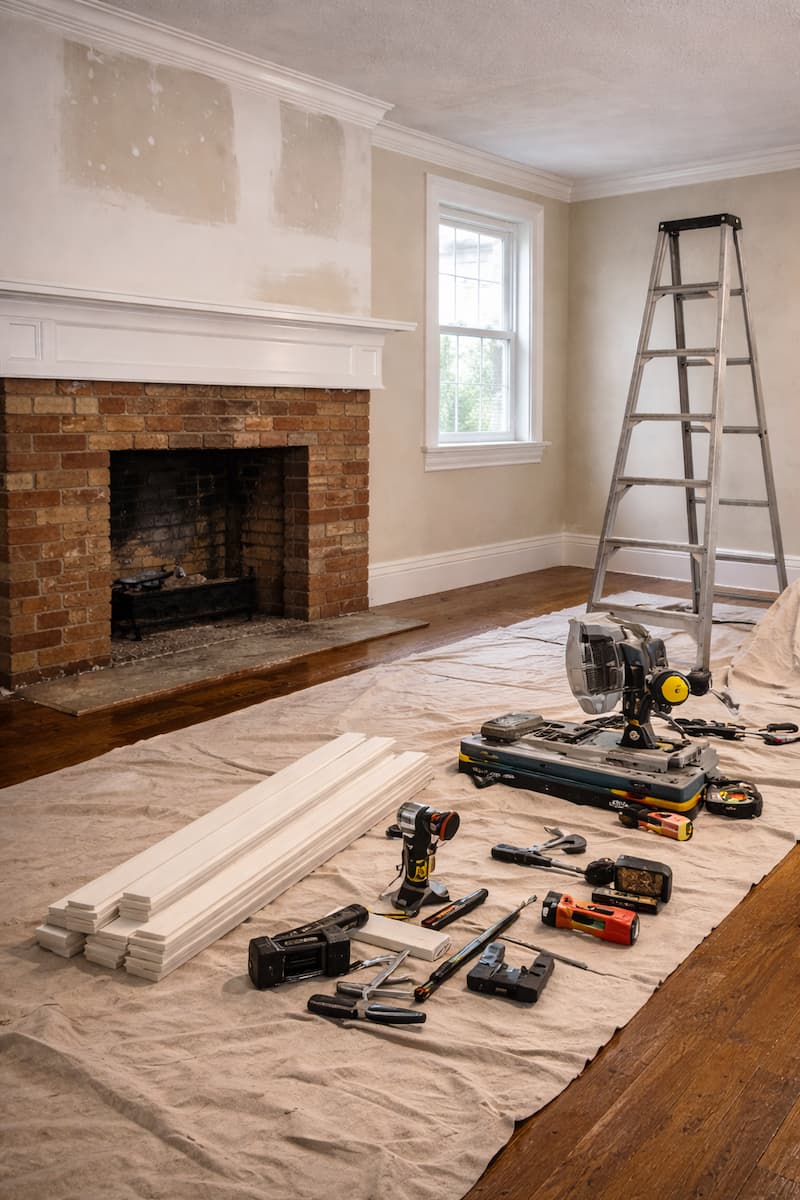
A strong repair plan reduces downtime, rework, and uncertainty during the rebuild
Owners usually want to know when the real repair work can begin, how long rooms may stay out of service, and whether the fire-damaged area can be rebuilt without turning the property into an open-ended construction site. Those answers come from a clear scope and a realistic sequence.
What a well-managed reconstruction phase should account for
- How mitigation findings affect the repair scope and trade order
- Which repairs need to happen before finish work or materials can be installed
- Whether occupied areas, condo access rules, or business operations require phased scheduling
- How progress updates, approvals, and finish decisions will be communicated as the job advances
Not every fire repair happens at once, because the rebuild moves from core assemblies to finished surfaces
A proper fire reconstruction scope usually starts with the parts of the assembly that support the room, then moves outward into closure, finish carpentry, surfaces, and the items that make the space complete again. That order matters because each later layer depends on the earlier work being stable and ready.
In practical terms, framing and substrate repairs may need to happen first, followed by drywall or plaster reconstruction, then trim, flooring, cabinetry, painting, and final finish details. Breaking the work into layers helps owners understand where the project stands and why some visible finishes come later.
Structural elements
Targeted framing and support repairs where the fire loss damaged members, backing, or load-related components that have to be corrected before the interior can be closed back up.
Drywall and plaster systems
Rebuilding opened or removed wall and ceiling sections so the rooms can move from exposed assemblies into a stable, enclosed condition that is ready for finish stages.
Trim and finish carpentry
Reinstalling or replacing baseboards, casings, doors, detailed millwork, and other visible finish elements after the underlying wall, ceiling, and opening repairs are complete.
Flooring, cabinetry, and surfaces
Coordinating floor finishes, built-ins, counters, and related surfaces once the room has reached the point where accurate fit, finish alignment, and final adjustments can be completed reliably.
A practical reconstruction process from stabilized scope to final readiness
Fire damage repair projects move more smoothly when each phase is defined before the next one starts. That helps owners understand what is happening now, what comes next, and when the rebuilt area is getting close to normal use again.
Review the stabilized scope and rebuild priorities
Start with the documented loss area, confirm what mitigation already addressed, and identify the spaces and assemblies that now need actual repair or reconstruction.
Define the repair plan and sequence
Separate structural work from finish work, clarify access and occupancy constraints, and build a sequence that limits interruptions while protecting completed portions of the project.
Perform core repairs and reconstruction
Complete the framing, wall, ceiling, substrate, and other underlying repairs that have to be in place before the space can move into finish-ready stages.
Move into finish restoration
Install trim, coordinate flooring and cabinetry, complete surface prep, and bring the rebuilt rooms closer to their pre-loss appearance and function as practical for the project scope.
Final readiness, walkthrough, and completion logic
Review the repaired areas, address punch-list items, confirm the next steps for occupancy or handoff, and make sure the space is ready to return to service in a controlled way.
Fire reconstruction in Boston often means tighter layouts, older materials, and finish matching that takes care
Post-fire repairs in Greater Boston are rarely happening in wide-open, easy-access buildings. Many projects involve older homes with plaster and trim details, condo rules in multi-unit buildings, narrower work areas, and finish matching decisions that need to respect the age and character of the property.
Older homes and detailed interiors
Boston-area properties often include plaster walls, layered finish histories, custom millwork, and room-by-room variations that affect how the reconstruction scope should be approached after a fire loss.
Condos and multi-unit coordination
Shared entries, elevator access, quieter work windows, and communication with associations or neighboring units can shape how the rebuild is phased, especially when repairs have to be completed without disrupting the entire building.
Residential and smaller commercial interiors
We regularly plan around occupied homes, rental units, offices, and street-level businesses where fire damage repairs need to be practical, well-communicated, and aligned with how the space will return to service.
Fire damage repair and reconstruction questions
When can fire damage repairs begin after a loss?
Repairs usually begin once the property has been cleaned and stabilized enough to define the scope, unsafe materials have been addressed, and moisture conditions from firefighting efforts are no longer delaying the rebuild.
Do repairs usually start only after cleanup and drying are complete?
In most cases, yes. Reconstruction should not race ahead of mitigation. The rebuild phase works best when cleanup, documentation, and drying have already brought the loss area to a condition where repairs can proceed reliably.
What kinds of fire-damaged materials can be rebuilt or repaired?
Common post-fire repair scopes include walls, ceilings, framing, trim, flooring, doors, cabinetry, and other interior finish systems, depending on what remains after the damaged materials were removed and the area was stabilized.
Do you repair walls, ceilings, trim, and flooring after fire damage?
Yes. That is a central part of the reconstruction phase. The exact scope depends on the fire exposure, the condition of the underlying assemblies, and what has already been opened or removed during mitigation.
Is this the same as the emergency cleanup phase?
No. Emergency response, board-up, soot cleanup, debris removal, and structural drying belong to earlier stages of the fire loss. This page is focused on the repair and reconstruction phase that follows those steps.
Can reconstruction be phased for occupied homes or condos?
Yes. Many Boston-area projects need to be scheduled in phases to work around occupancy, building rules, shared access, and the need to keep unaffected portions of the property usable during the rebuild.
Do you work on smaller commercial fire rebuild projects?
Yes. Smaller offices, suites, and neighborhood commercial interiors often need the same structured reconstruction approach as residential losses, especially when business operations or tenant use need to resume in stages.
What happens after the reconstruction phase is complete?
The final stage is usually walkthrough, punch-list review, and readiness for normal use or reoccupancy. At that point, the repaired space should be in a much more functional and serviceable condition for handoff.
Request a Fire Damage Repairs & Reconstruction Quote
Tell us what needs to be rebuilt after the fire loss has been cleaned and stabilized — damaged walls, ceilings, framing, trim, flooring, cabinetry, or interior finishes. We’ll respond with practical next steps and guidance on how to move the property into an organized repair and reconstruction phase.
Get a Fast Estimate
Usually replies within 15 minutes. No spam.

Evan Calloway
- IICRC FSRT — Fire and Smoke Restoration Technician
- IICRC OCT — Odor Control Technician
- IICRC WRT — Water Damage Restoration Technician
- IICRC CPT — Contents Processing Technician
- Xactimate Estimating Training — Level 2
- Restoration Industry Association (RIA) — Membership
- Claims Documentation & Contents Inventory Workflow Training
- Works with an IICRC Certified Firm (Boston Restoration Prime)