
Fire Damage Cleanup & Debris Removal in Boston, MA
After a fire, the first major step is often not rebuilding — it’s clearing the site safely and removing what can’t be saved. We handle controlled tear-out, fire-damaged material removal, debris haul-away, and cleanup planning so the property is safer, easier to assess, and ready for the next stage of restoration.
- Check safe access conditions and identify unstable, burned, or unsalvageable materials
- Separate what may stay from what should be removed, documented, and hauled away
- Set up containment and protect cleaner areas before debris removal begins
- Clear fire-damaged debris in a controlled sequence so the site is ready for further cleaning, drying, or repairs


“They came in after the fire was out, cleared the charred debris carefully, separated what needed to be removed, and left the property far more manageable. The site looked safer, cleaner, and much easier for the next phase.”
“They did not just haul things out randomly. They documented the damaged materials, protected the cleaner areas, and kept the cleanup process organized from the start.”
“Fast response, clear communication, and a very clean worksite. Once the debris was removed, it became much easier to understand what could actually be repaired.”
Fire Damage Cleanup Starts With Safe Removal, Not Random Demolition
After a fire, one of the first major priorities is clearing out what is no longer safe, stable, or salvageable. That does not mean gutting the property all at once. Effective fire damage cleanup starts with identifying burned materials, isolating debris, protecting cleaner areas, and removing damaged sections in a controlled order so the property is easier to assess, safer to enter, and better prepared for the next phase of work.
- Charred drywall, trim, insulation, and flooring
- Collapsed or unstable finish materials
- Fire-damaged debris that blocks safe access or inspection
- Unsalvageable materials separated from areas that may still be restored
- Prevents unnecessary tear-out of materials that may still be evaluated
- Reduces loose debris, dust, and cross-contamination during the cleanup phase
- Creates better visibility for documentation, drying, and structural review
- Makes the next restoration or repair decisions more accurate
- It focuses on cleanup, tear-out, debris handling, and haul-away
- It does not replace full smoke remediation or item-focused contents recovery
- It often comes before deeper cleaning, drying, and rebuilding work
- It helps turn a chaotic fire scene into a more manageable restoration site
This service is most useful when the property needs post-fire clearing, selective tear-out, and debris haul-away before the next stage of restoration can move forward.
Why Fire Damage Cleanup & Debris Removal Matters Before Repairs
A fire-damaged property usually cannot move straight into repairs. Burned materials, unstable finishes, loose debris, and blocked access often need to be addressed first. Cleanup and debris removal create a safer, clearer starting point for inspection, drying, deeper cleaning, and reconstruction planning.
It makes the site safer to work in
Burned finishes, loose debris, damaged trim, and unstable materials can create hazards for owners, crews, and inspectors. Removing what is clearly unsafe helps reduce risks and improve site access.
- Clearer walk paths and work zones
- Fewer unstable or loose materials
- Better access for inspection and follow-up work
It gives the project a cleaner starting point
A cluttered post-fire environment makes it harder to document the loss, evaluate the next steps, and separate salvageable areas from materials that are clearly beyond recovery.
- Improved visibility of actual damage
- More accurate scope planning
- Better staging for the next phase
It helps avoid unnecessary delays
Fire restoration often slows down when debris, unsalvageable materials, or blocked rooms remain in place too long. Controlled cleanup helps other tasks move forward with fewer interruptions.
- Faster transition into drying or repairs
- Less confusion between trades and scopes
- Cleaner sequence from cleanup to rebuild
It supports better decisions about what stays and what goes
Not every damaged material should be removed, and not every item can stay. This service helps define the difference before broader restoration work begins, so the property is not over-demolished or left cluttered.
- More controlled selective tear-out
- Better documentation of removed materials
- Stronger project organization from the start
Our Fire Damage Cleanup & Debris Removal Services
Post-fire cleanup is not just hauling material out of the building. It involves controlled tear-out, separation of unsalvageable debris, cleaner work-zone setup, and a removal sequence that helps the property move into the next stage of restoration with fewer delays and less confusion.
Selective Tear-Out of Fire-Damaged Materials
We remove burned or unstable building materials in a controlled way, focusing on what is clearly damaged without turning the project into unnecessary over-demolition.
Charred Material Removal
Severely damaged drywall, trim, insulation, flooring, cabinetry, and other compromised materials may need to be removed before the property can be cleaned, dried, or properly assessed for repairs.
Debris Collection and Haul-Away
We gather and remove fire-related debris from the affected areas so the site becomes easier to navigate, document, and prepare for the next phase of restoration work.
Cleanup Staging Before Drying or Repairs
Fire cleanup often needs to happen before moisture control, detailed cleaning, or reconstruction can proceed. We help create a more workable site for those follow-up services.
Protection of Cleaner Areas During Removal
Debris removal can create loose particles and mess if it is done carelessly. We use a more controlled cleanup approach so unaffected or less-affected areas are better protected during tear-out.
Scope Documentation of Removed Materials
When materials are taken out, the removal sequence should still make sense on paper. We keep the cleanup stage more organized so owners, adjusters, and contractors have a clearer picture of what changed.
This page focuses on cleanup, tear-out, debris removal, and haul-away after a fire. If the main need is deeper smoke contamination work or item-focused recovery, those are better handled under separate smoke damage or contents services.
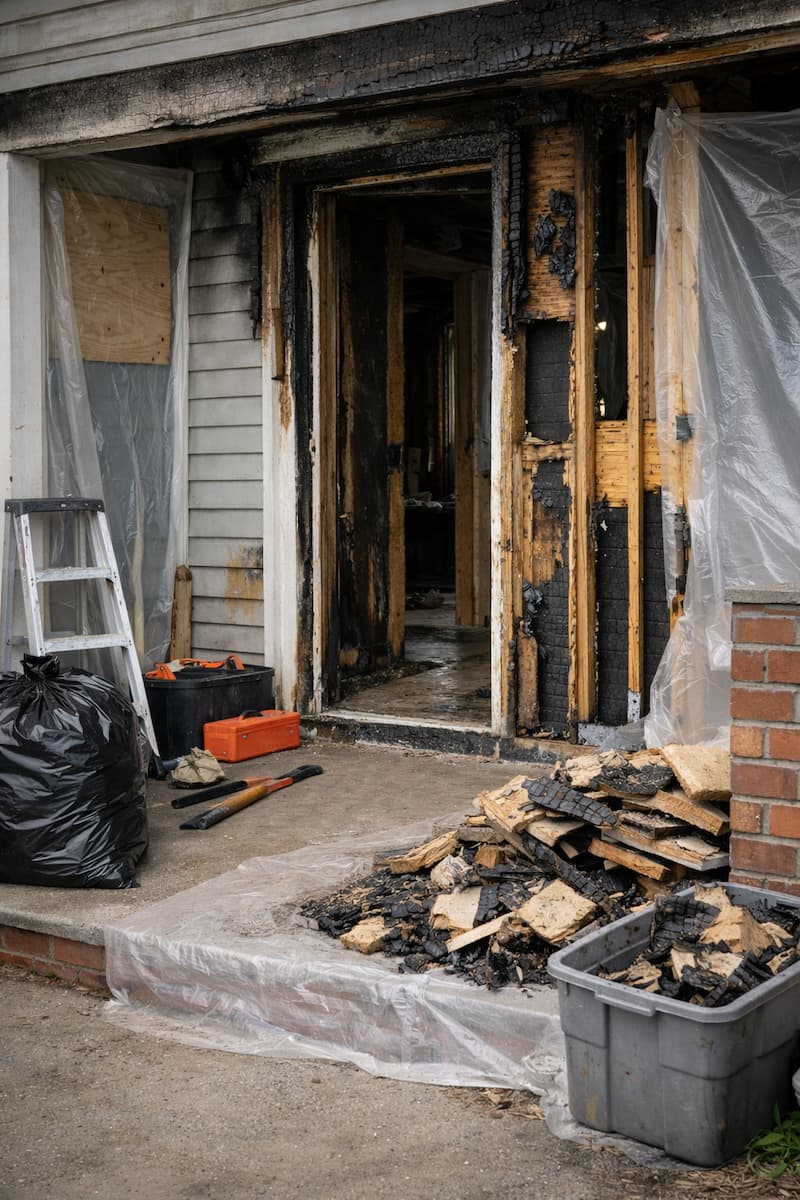
Controlled Cleanup Creates a Better Starting Point
Fire-damaged properties are easier to evaluate and stabilize once unsafe debris and clearly unsalvageable materials are removed in a controlled way. This stage helps clear access, reduce hazards, and make the next decisions around cleaning, drying, and repairs more practical.
How Fire Damage Cleanup & Debris Removal Typically Works
Every fire loss is different, but the cleanup phase usually follows the same logic: assess what is unsafe, protect what should stay, remove what clearly needs to go, and leave the property in a better condition for the next stage of restoration.
Initial site review
We start by identifying the areas that are visibly burned, unstable, debris-heavy, or blocked by damaged materials. This helps define where cleanup should begin and what needs more controlled handling.
Protection of cleaner zones
Before major debris removal begins, we help separate cleaner areas from the affected work zone so the cleanup stage creates less spread, less confusion, and a more manageable site layout.
Selective tear-out planning
Materials that are clearly unsalvageable are identified for removal, while areas that still need evaluation are not automatically gutted. This keeps the cleanup stage more controlled and more useful for follow-up work.
Debris removal and haul-away
Fire-damaged debris, burned finish materials, and tear-out waste are removed from the affected areas so the site becomes safer, easier to document, and more practical for inspection, drying, or repair planning.
Cleanup-stage handoff for the next phase
Once the site is cleared and organized, the property is in a stronger position for deeper cleaning, drying, documentation review, or reconstruction planning depending on what the project requires next.
Fire Damage Cleanup for Boston Homes, Condos, and Urban Properties
Fire cleanup in Boston often comes with practical challenges that do not show up the same way in suburban properties. Older finishes, tighter layouts, shared entries, mixed-use buildings, and occupied spaces can all affect how debris removal and selective tear-out need to be planned.
Older Boston Housing Stock
Older homes and condos may have layered finishes, tighter cavities, detailed trim, and materials that break down unevenly after heat and smoke exposure. Cleanup often needs a more controlled approach than simple bulk removal.
Condos and Multi-Unit Buildings
In condos and multi-family properties, debris removal may need to account for building access, common areas, neighboring units, elevator or stair use, and keeping cleaner areas protected while damaged material is removed.
Tight Access and Urban Logistics
Boston-area cleanup projects often involve narrow entries, limited staging areas, denser neighborhoods, and less room for waste handling. A more organized removal plan helps the site stay workable and less disruptive.
Occupied or Recently Vacated Spaces
When part of the property is still occupied or being accessed regularly, debris removal needs cleaner pathways, better separation of work zones, and more careful sequencing so the site stays safer and easier to navigate.
Frequently Asked Questions About Fire Damage Cleanup & Debris Removal in Boston
These are some of the most common questions property owners ask when a fire-damaged property needs cleanup, selective tear-out, and debris haul-away before the next phase of restoration can begin.
What does fire damage cleanup and debris removal usually include?
Do you remove burned drywall, trim, insulation, and flooring?
Is this the same as full fire damage restoration?
Do you provide haul-away as part of the cleanup?
Can this service be done in condos or multi-unit buildings?
What happens after debris removal is finished?
Do you remove salvageable contents too?
How soon should post-fire cleanup begin?
Request a Fire Damage Cleanup & Debris Removal Quote
Tell us what needs to be cleared after the fire — burned materials, unstable finishes, debris, selective tear-out, or haul-away. We’ll respond with practical next steps and guidance on how to move the site into a safer, more workable condition.
Get a Fast Estimate
Usually replies within 15 minutes. No spam.

Evan Calloway
- IICRC FSRT — Fire and Smoke Restoration Technician
- IICRC OCT — Odor Control Technician
- IICRC WRT — Water Damage Restoration Technician
- IICRC CPT — Contents Processing Technician
- Xactimate Estimating Training — Level 2
- Restoration Industry Association (RIA) — Membership
- Claims Documentation & Contents Inventory Workflow Training
- Works with an IICRC Certified Firm (Boston Restoration Prime)