
Smoke Damage Restoration in Boston, MA
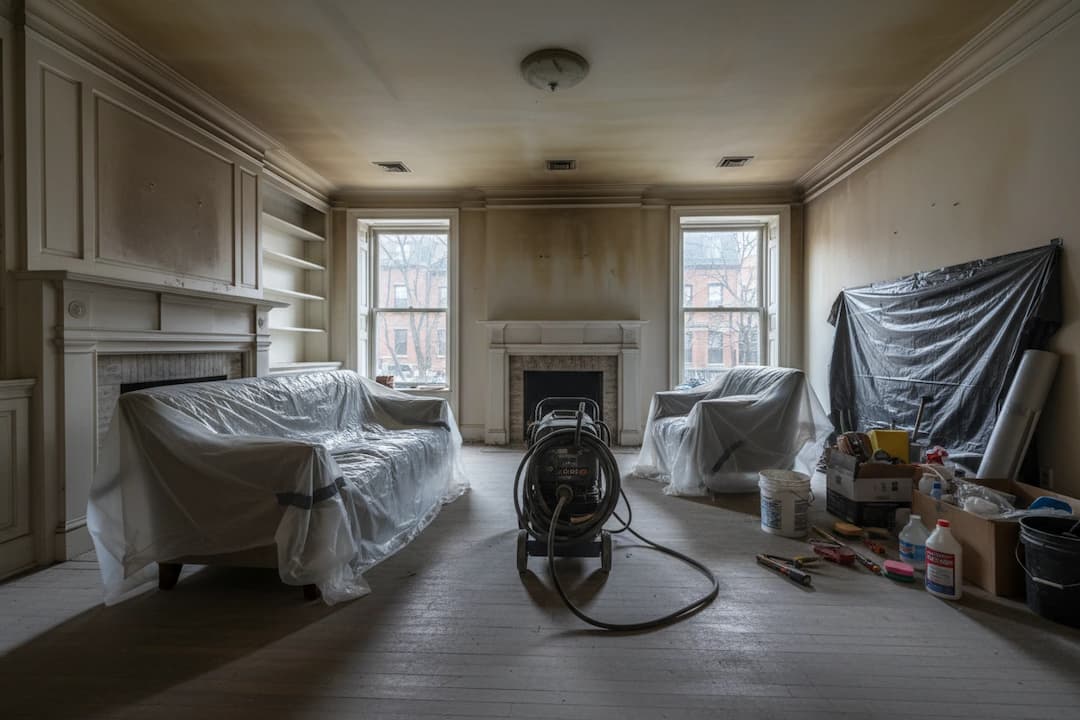
Smoke damage is rarely limited to the room where the fire or smoke event started. Fine soot can settle on ceilings, walls, trim, vents, and contents far beyond the obvious source area, while smoke odor works its way into porous materials, soft goods, and hidden surfaces. A useful smoke damage restoration service should address residue, odor, and indoor contamination patterns in a way that matches how smoke actually travels through a home.
“We had light fire smoke, but the smell had spread much farther than the visible residue. They explained why the walls, air, and soft materials all needed different attention.”
Smoke Moves Through A Property Faster Than The Eye Can Track
Soot and smoke residue do not stay neatly inside one room. Warm air movement, open doorways, stairwells, return vents, and ordinary airflow patterns can carry contamination farther than homeowners expect. That is why one room may look visibly affected while another smells worse, and why ceilings, upper walls, and vent-adjacent surfaces often tell an important part of the story.
Smoke rises and spreads first
Ceilings, upper walls, stairwells, and air pathways often collect residue before lower surfaces look heavily affected.
Fine particles settle unevenly
Some surfaces show dark residue quickly, while others keep a lighter but still meaningful contamination film.
Odor penetrates porous materials
Soft goods, unfinished surfaces, and absorbent materials can keep holding smoke odor after visible cleanup begins.
Air quality concerns remain
Without a proper restoration plan, residue and odor can keep recirculating through the home and make the property feel unsettled.
Soot Cleanup Is Usually About Surface Type, Not Just Surface Location
Smoke residue behaves differently on painted drywall, unfinished wood, ceilings, trim, glass, metal, and soft materials. That matters because a useful smoke cleanup plan should reflect how the residue bonded, how delicate the surface is, and whether odor removal also needs to happen alongside residue treatment.
Ceilings and upper wall lines
These often show the clearest soot pattern because rising smoke deposits residue where warm air collected first.
Trim, corners, and edges
Fine soot commonly settles along detail lines, molding transitions, and upper corners that people do not always inspect immediately.
Contents and soft materials
Fabric, upholstery, rugs, and porous belongings can keep holding smoke odor even when hard surfaces look more manageable.
Airflow-related areas
Return vents, mechanical pathways, and connected rooms may continue carrying a smoke smell if the contamination path is not addressed thoughtfully.
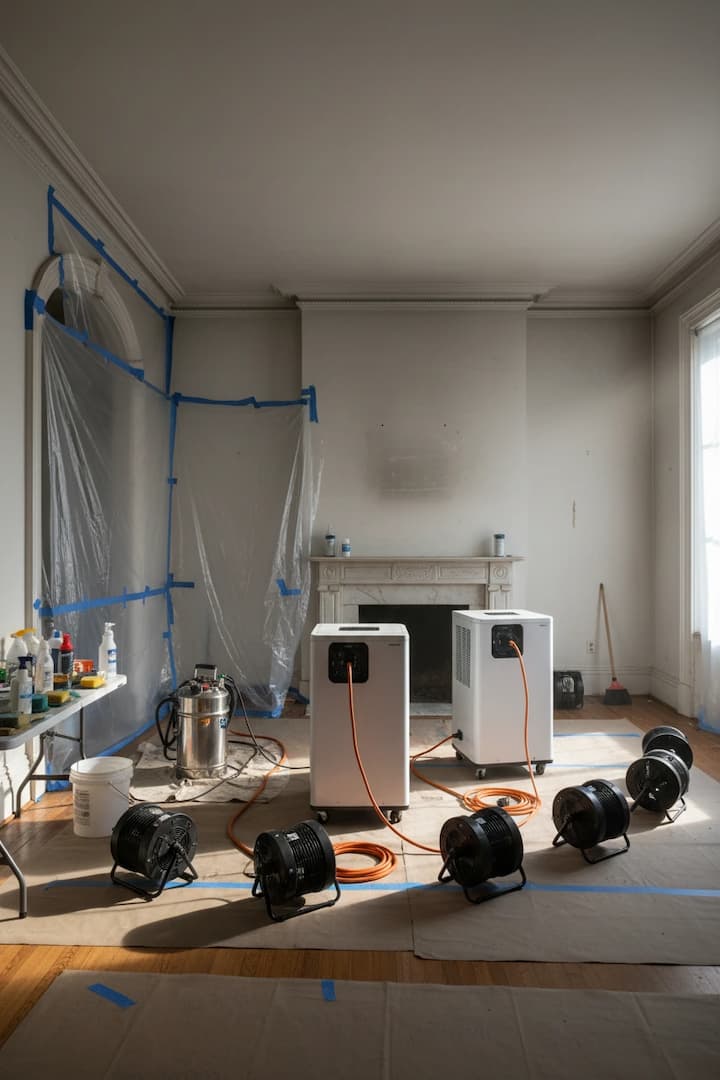
A Good Smoke Cleanup Plan Deals With Residue, Air, And Odor Together
Identify the affected rooms and surfaces
The first step is understanding where residue settled, how far odor spread, and whether the contamination pattern goes beyond the obvious room.
Address soot and smoke residue carefully
The cleanup approach should match the surface type because smoke residue is easy to spread or worsen when handled the wrong way.
Support indoor air and odor recovery
Air scrubber smoke cleanup and deodorization strategies matter because the smell often lingers beyond what the eye sees.
Clarify what still needs follow-up
You should know whether the remaining concern is surface restoration, repainting, contents handling, or additional odor treatment.
Light Smoke Events And Heavier Soot Events Can Need Very Different Restoration Logic
Some homes need help after a lighter smoke event where odor and fine residue spread through the property but major structural fire damage is limited. Others deal with heavier soot contamination that leaves a more obvious residue pattern on ceilings, walls, and contents. Those are not the same service scenario, and a good smoke damage restoration plan should reflect that difference from the start.
- Light smoke events often need wider odor and surface assessment than people expect
- Heavier soot events usually require more direct residue-focused cleaning and restoration work
- Connected rooms and stairwells often show spread patterns that do not match the source room alone
- Indoor air support matters when the property still feels smoky after visible cleanup begins
Questions Homeowners Often Ask About Smoke Damage Restoration
The most important questions are usually about how far the smoke spread, what the odor means, and whether the residue is still affecting the home beyond the visibly darkened areas.
If only one room looks smoky, can the smell still be coming from other areas?
Yes. Smoke often spreads beyond the visibly affected room, especially through open pathways, stairwells, and return-air related areas.
Does soot on walls mean the whole house is equally damaged?
No. Smoke damage is often uneven. One room may carry more visible residue while another holds more odor or lighter contamination on upper surfaces.
Can smoke odor stay even after surfaces are wiped down?
Yes. Odor often remains in porous materials, soft contents, and airborne contamination pathways if the restoration plan does not address those layers too.
What details help when I call?
It helps to know whether the event was a light smoke issue or a heavier soot situation, which rooms smell strongest, and where you are already seeing residue on ceilings, walls, or contents.
Need Smoke Damage Restoration In Boston?
Tell us what kind of smoke event occurred, which rooms smell strongest, and where you are seeing visible residue. We will help you determine whether the main issue is soot cleanup, odor spread, indoor air recovery, or a combination of all three.
Request a Fast Response
If possible, mention where the fire or smoke started, how far the smell has spread, and whether you are seeing visible soot on ceilings, walls, or contents.