
Soot Removal & Fire Residue Cleanup in Boston, MA
Visible soot and fire residue are not something to wipe casually and hope for the best. We clean salvageable surfaces with a controlled, material-specific approach for walls, ceilings, trim, cabinetry, doors, casings, and other finish areas so staining, smearing, and surface damage are less likely to get worse.
- Inspect where black, gray, sticky, or greasy residue is sitting and how far it has spread across finishes
- Separate dry-removal needs from wet-cleaning risks based on surface type, residue behavior, and finish sensitivity
- Test representative areas before broader cleaning starts on painted trim, cabinetry, doors, and detailed profiles
- Clean salvageable surfaces in a controlled sequence so residue is reduced without unnecessary smearing or over-wetting


“They cleaned soot from our walls, trim, and cabinet faces without turning everything into a smeared mess. The difference was obvious right away, and they explained exactly which areas were salvageable and which finishes still needed care.”
“They tested the residue first instead of wiping everything the same way. Our painted woodwork and door casings came out far better than we expected.”
“The crew handled the residue around vents, corners, and detailed trim carefully. They were methodical, clean, and realistic about what could be cleaned versus what might still need refinishing.”
Soot cleanup is a specialized surface-cleaning step, not ordinary wipe-down work
After a fire, visible residue can sit lightly in some places and cling aggressively in others. What looks like a simple black or gray film on painted walls, ceilings, trim profiles, cabinet faces, or doors can behave very differently depending on heat, fuel source, air movement, and finish type.
The wrong sponge, cleaner, or amount of moisture can drag soot across the surface, deepen staining at edges and transitions, and push residue into textured paint, wood grain, joints, or detailed trim contours. That is why this work is handled as careful residue removal from salvageable finishes rather than routine housekeeping.
What makes it different
- Residue type has to be identified before broad cleaning begins
- Some surfaces need dry removal first to limit smearing
- Finish sensitivity changes how much agitation and moisture are safe
- Detailed areas around casings, corners, rails, vents, and cabinet edges need slower handling
Where this fits
This service is focused on salvageable surface cleanup in homes, condos, and smaller commercial interiors. It is not a reconstruction page, a debris-haul page, or a broad smoke-odor page.
Residue left on finish surfaces can spread damage long after the fire is out
Soot is not uniform. Some residue is dry and powdery, some is sticky or oily, and some looks light at first but still leaves staining behind. The risk is not only what you can see, but what happens when the wrong method moves that residue across paint, wood, and other finish materials.
Staining can set quickly
Black or gray residue on ceilings, walls, trim, and cabinet faces may discolor finishes fast, especially where heat and airflow concentrated contaminants along corners, vents, and upper transition lines.
Greasy films smear easily
Oily or sticky fire residue often spreads when wiped with the wrong cloth or cleaner. Instead of lifting off, it can streak across the surface and make detailed cleanup harder.
Cross-transfer is common
Residue from one room or surface can move to another through hands, tools, sponges, and footwear. Controlled sequencing helps prevent cleaner areas from getting re-contaminated.
Too much moisture can backfire
Over-wetting paint, trim joints, cabinet seams, or porous finish layers can drive contamination deeper, soften coatings, or leave a larger cleanup problem than the original visible residue.
Targeted cleanup for salvageable surfaces and finish materials
The focus is visible soot and fire residue on surfaces that may still be cleaned and retained, not broad tear-out or rebuilding. We work methodically through affected finish areas so the cleanup scope stays clear and practical.
Walls and ceilings
Cleanup for visible residue on painted walls, ceiling planes, corners, upper transition lines, and areas around vents where soot often collects more heavily.
Trim, casings, and doors
Careful work on painted trim, wood trim, door faces, frames, rails, profiles, and door casings where wiping pressure and cleaner choice can noticeably affect finish quality.
Cabinetry and detailed finish areas
Residue cleanup on cabinet faces, stile-and-rail edges, crown details, hardware-adjacent surfaces, and other detailed areas where black or greasy film tends to build up at seams and transitions.
Hard surfaces with visible film
Controlled cleaning for salvageable hard surfaces affected by gray residue, sticky film, or lighter visible fire residue that still presents staining and transfer risk.
Representative testing and method adjustment
Test-cleaning is used to confirm how residue is responding so one aggressive method is not applied blindly across different materials and finish types.
Preparation for next-phase work
Once residue is addressed, surfaces are easier to evaluate for repainting, refinishing, repairs, or additional restoration steps that may still be needed.
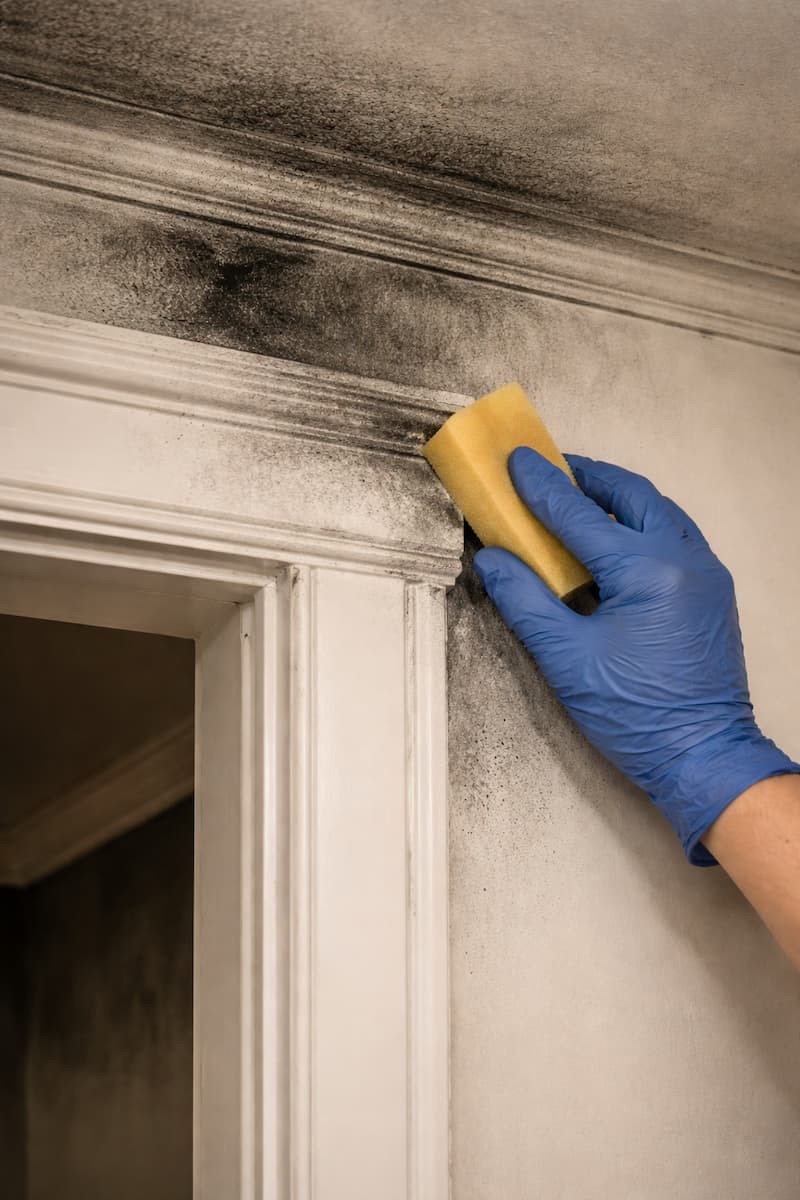
The goal is to clean what can still be saved without making sensitive surfaces worse
A successful soot cleanup plan is built around how the residue is behaving on the actual material in front of us. Painted drywall, wood trim, cabinet coatings, harder non-porous surfaces, and detailed finish areas do not all respond the same way.
That is why cleanup usually moves from inspection and testing into a measured surface-by-surface process rather than an all-at-once wipe-down. The result is a cleaner, more stable interior and a better handoff for whatever finishing work may come next.
The residue matters, and the surface matters just as much
Dry soot, oily residue, and lighter visible fire film do not clean the same way. Painted surfaces, wood trim, cabinetry, ceilings, and detailed finish areas each change how aggressively a surface can be handled and how much moisture or chemistry is appropriate.
Dry soot
Loose, powdery residue may need controlled dry removal first so it is lifted rather than rubbed into paint, ceiling texture, trim profiles, or porous finish layers.
Oily or greasy residue
Sticky film from certain fire conditions can cling to cabinetry, doors, hard surfaces, and coated trim. If the cleaner is wrong or the cloth loads up too quickly, smearing becomes an immediate problem.
Lighter visible residue
Even when the residue looks faint, it can still leave staining on walls, ceilings, and painted finishes. Lighter film often shows up most clearly at edges, corners, casings, and around vent paths.
Surface-specific response
Painted drywall, wood trim, cabinet coatings, and detailed areas around rails, seams, and transitions need different pressure, dwell, and moisture control. One method across every room is usually the wrong method.
A controlled cleanup process for visible soot and residue
The sequence matters. Cleanup is more effective when residue is mapped, tested, and handled in a deliberate order instead of being attacked room by room with one broad method.
Inspect and map residue
We review where residue is visible, where it is concentrated, and which rooms, surfaces, or detail areas need the most careful handling first.
Identify surface and residue type
Painted walls, ceilings, wood trim, cabinet faces, hard surfaces, and coated details are evaluated alongside the type of soot or film present.
Test-clean representative areas
Small sections are used to confirm which approach lifts residue best and which methods risk smearing, dulling, or over-wetting the finish.
Perform controlled cleanup
Cleaning proceeds surface by surface, with attention to trim details, cabinet edges, vents, corners, casings, and other areas where residue collects.
Document results and next-step readiness
We note what was successfully cleaned, which finishes remain sensitive, and where additional work such as touch-up, repainting, refinishing, or broader restoration may still be appropriate.
Boston properties often make residue cleanup more detailed than it first appears
In older Boston homes, soot rarely lands only on flat drywall. It settles into plaster transitions, painted trim, ornate casing profiles, stair details, older doors, built-ins, and layered finish work that needs a steadier hand.
In condos and multi-unit settings, the challenge can also be layout. Tighter spaces, connected common areas, and shared pathways mean cleanup has to stay organized so residue is not carried into adjacent rooms or cleaner sections of the property.
Older finishes and trim detail
Decorative profiles, painted woodwork, and older plaster or coating systems may show residue heavily at edges and may react differently to moisture and agitation.
Condos and tighter footprints
Smaller floorplans often require more careful work sequencing around kitchens, hallways, entries, and connected living areas where cross-transfer can happen fast.
Shared surfaces and connected areas
In attached buildings, residue on doors, trim, vents, and transition zones may need to be documented clearly so the cleanup scope stays specific to the affected unit or area.
Questions about soot and fire residue cleanup
Can I wipe soot off walls and ceilings myself?
Sometimes light residue looks simple, but casual wiping often causes streaking or drives soot deeper into paint, texture, and finish layers. Testing first is usually the safer approach.
Why does soot smear so badly on trim and cabinet faces?
Many fire residues contain oily or sticky components. On smooth painted trim, doors, and cabinetry, that film can spread quickly if the cloth, chemistry, or pressure is wrong.
Do all affected surfaces get cleaned the same way?
No. Painted drywall, ceilings, wood trim, cabinet coatings, and harder detailed surfaces can each need a different combination of dry removal, cleaner selection, moisture control, and technique.
Can lighter gray residue still cause damage?
Yes. Even when the film looks faint, it can still stain finishes, transfer onto hands or tools, and continue to show up around vents, corners, and transition lines if it is not addressed correctly.
Is this the same as smoke damage restoration?
Not exactly. This page is focused on visible soot and residue cleanup from salvageable surfaces. Broader smoke spread, odor migration, and air-quality concerns are related issues but not the main scope here.
What happens after residue cleanup is finished?
Once visible residue is reduced and surfaces are documented, the property is usually easier to evaluate for touch-up, repainting, refinishing, or other next-phase restoration work.
Request a Soot Removal & Fire Residue Cleanup Quote
Tell us where visible soot or fire residue is affecting the property: walls, ceilings, trim, cabinetry, doors, detailed finish areas, or other salvageable surfaces. We’ll respond with practical next steps and guidance on how to stabilize the cleanup scope without making sensitive materials worse.
Get a Fast Estimate
Usually replies within 15 minutes. No spam.

Evan Calloway
- IICRC FSRT — Fire and Smoke Restoration Technician
- IICRC OCT — Odor Control Technician
- IICRC WRT — Water Damage Restoration Technician
- IICRC CPT — Contents Processing Technician
- Xactimate Estimating Training — Level 2
- Restoration Industry Association (RIA) — Membership
- Claims Documentation & Contents Inventory Workflow Training
- Works with an IICRC Certified Firm (Boston Restoration Prime)