
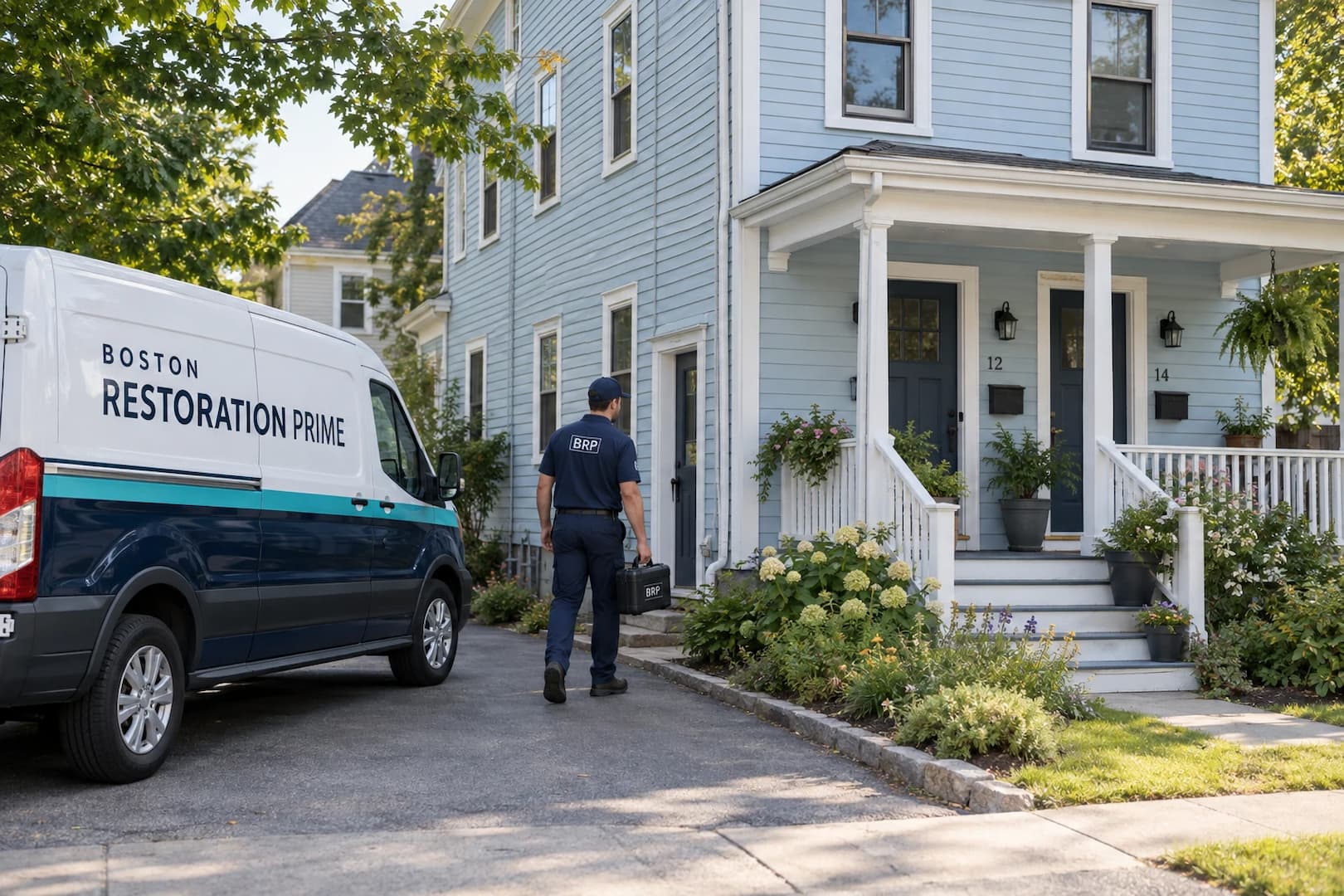
Serving West Newton, a village of Newton
Restoration Company in West Newton, MA
A leak upstairs can leave the unit below with a wet ceiling and no access to the source. Boston Restoration Prime helps West Newton homeowners, residents and property managers organize restoration across the affected area. Call for water, fire, mold, sewage or storm damage, with attention to building access and the people using it.
Get Immediate Help Now
Request your free, no-obligation estimate.
First, get the right people connected
Who has the key to the room above?
The ceiling may be wet downstairs while the leaking plumbing is behind a locked door upstairs. We may need to inspect both spaces before defining the drying area. Share the owner or manager’s contact details and identify occupied units, locked utility rooms and the person coordinating access and work approvals.
For residents and homeowners
Tell us which rooms you can safely access and where water first appeared. Notify the building owner or association when common areas or another unit may be involved. Take photographs from a dry location, keeping out of electrical hazards and rooms with sagging ceilings.
For managers and business owners
Identify who can authorize mitigation and how to reach them after hours. Share entry instructions, operating hours and any restrictions on moving through the property. Tenant belongings, building finishes and shared systems may require separate records and decisions.
Water rarely stops at the visible stain
A pipe opening can carry water between floors without leaving a continuous visible stain. Cabinets can hide another wet pocket after the open floor looks dry. We inspect accessible adjoining areas and use moisture readings to establish where the affected assembly extends.
A room may still need drying after someone has removed the standing water. Extraction clears that water; the drying stage deals with moisture held in flooring, wall material and other affected layers. Our water restoration work accounts for the affected layers and any removal needed for access.
The broken supply line or other source also needs repair by the appropriate trade. Let us know whether a plumber has attended and what was repaired; a source repair record can help connect the event to the remaining damage.
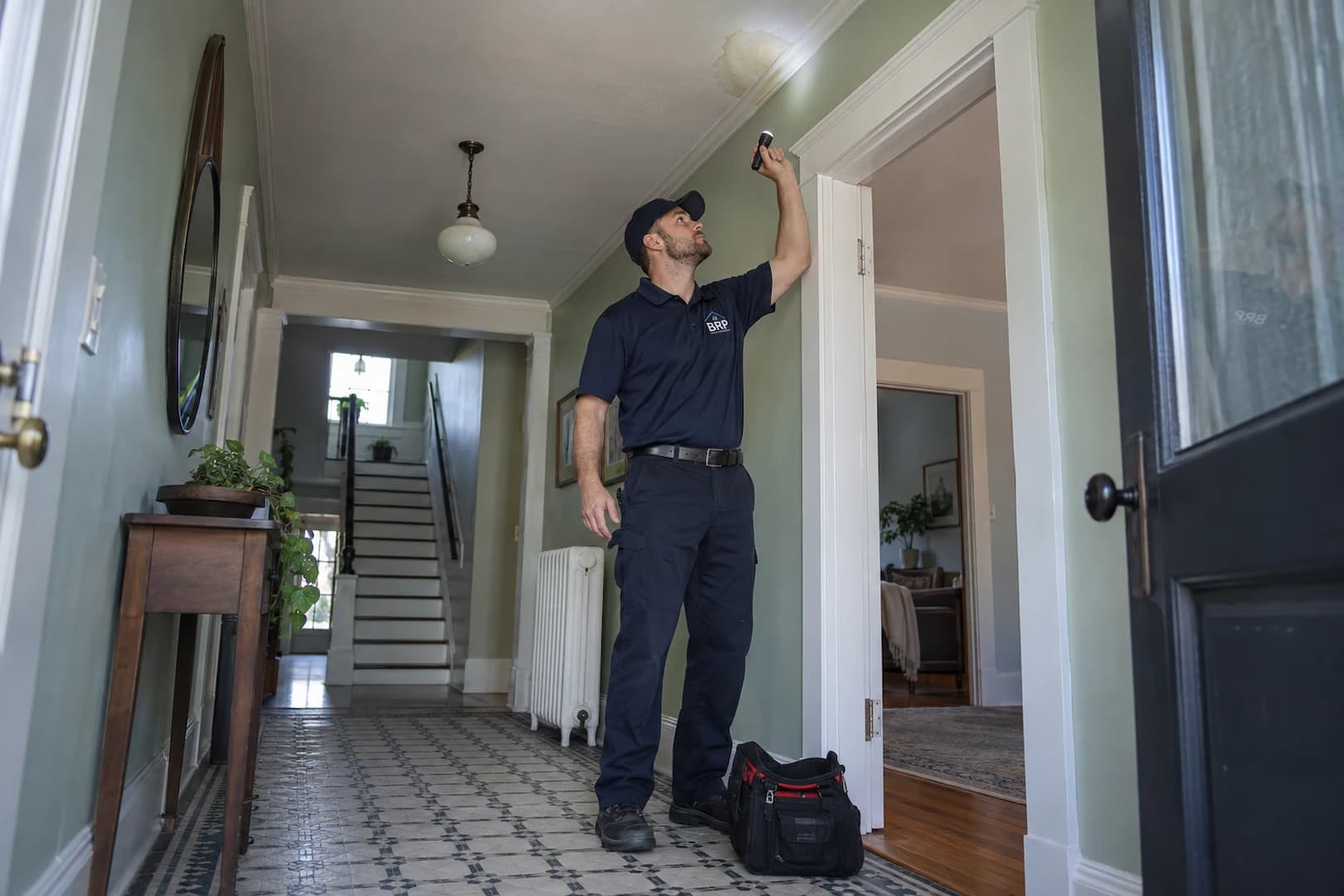
A workable handoff between inspection and drying
Agree on the affected rooms
We document visible damage and findings from accessible materials. If a locked unit or enclosed cavity remains unassessed, that limitation should be clear before the scope is treated as complete.
Separate the work route from daily traffic
Equipment, hoses and removed material need a route that preserves safe exits. We discuss occupied rooms and access windows so residents know which areas must remain clear.
Explain material decisions
Contamination, condition and drying access determine whether a material can remain. We discuss proposed removal and contents movement as part of the authorized work.
Check progress before closing the area
Repeat readings guide drying adjustments. The decision to repair finishes should account for the material condition and source correction, not simply the number of days equipment has run.
Keep the recovery plan usable for a business
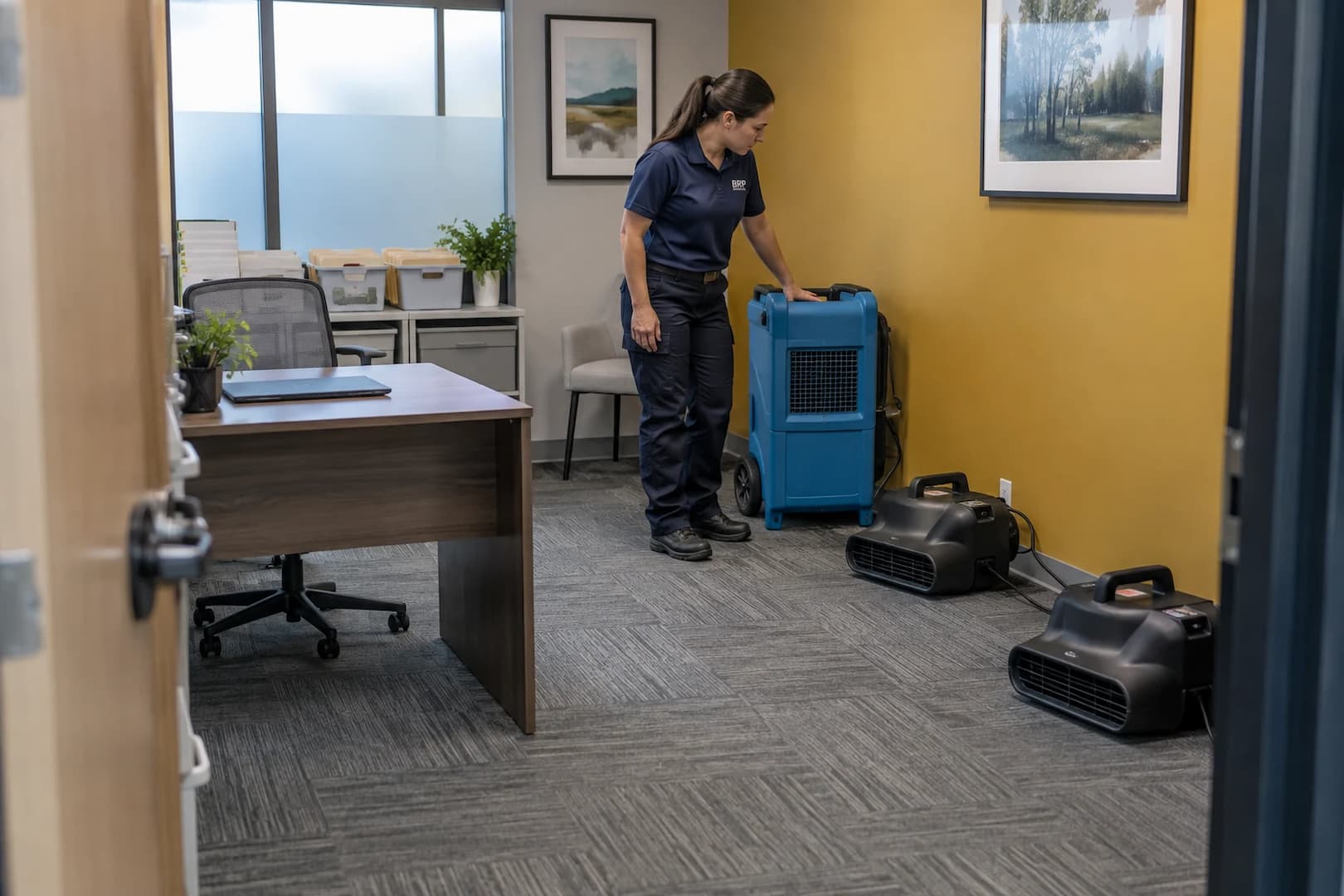
A leak in a back office may block the only convenient route through the premises. Tell us which rooms must remain accessible and what records or furnishings could be relocated. We assess whether a separate work area is practical; safe access and the actual damage determine whether part of the business can operate.
Our commercial restoration services include documenting affected areas and coordinating access with the responsible manager. Equipment noise, power needs and monitoring visits belong in that discussion.
A shared building needs clear contamination boundaries
In a shared basement, a drain backup can wet private belongings and common storage at once. Keep residents and pets away and leave contaminated boxes in place. An appropriate drain professional needs to address the backup while the interior cleanup is planned. Sewage cleanup includes controlled removal and cleaning before drying the structure.
With suspected mold, the starting questions are where moisture is coming from and how far affected material extends. We plan mold remediation around containment and access, including the effect on adjacent occupied spaces. A recurring leak behind a shared wall should not be left unresolved when the finish is replaced.
Do not use ordinary fans to blow air from a contaminated room into a corridor. Tell us about shared air systems and open connections between units during the first call.
After a fire, separate soot damage from water damage
The floor below a fire can collect water even as smoke travels into rooms alongside it. After responders permit entry, both kinds of damage need assessment. Soot cleaning is matched to the residue and finish; wet materials are evaluated separately for drying or removal.
Contents should be documented before movement or disposal when conditions allow. An upholstered chair, paper files and sealed household goods will not have the same recovery options. We explain the findings rather than group everything in one room under a single salvage promise.
Fire and smoke restoration also considers lingering odor sources. Cleaning visible marks without addressing affected contents or concealed residue can leave the problem unfinished.

Make the scope easy to review
| Part of the plan | What should be explained |
|---|---|
| Affected area | Rooms, units and material layers included, plus any areas not yet accessible |
| Mitigation | Extraction, cleaning, proposed removal, contents handling and drying needs |
| Changes after opening | New findings, supporting photographs and the resulting scope revision |
| Later repairs | What depends on drying, source repair, approvals and replacement materials |
Reaching a concealed cavity, handling contamination or finding another wet layer can change the cost. Monitoring shows how the assembly is responding and informs drying time. We provide restoration documentation for the insurance review; the applicable policies and insurer’s determination govern coverage and responsibility.
West Newton address, Newton coordination
West Newton is one of Newton’s village centers. Give us the complete street address and unit number rather than only the village name. For properties around Washington Street or on a residential side street, practical details such as driveway access, the correct entrance and a working contact number help the crew reach the right area.
For wind or rain damage, mention any exterior opening and whether temporary protection or a roof repair has already been arranged. The storm restoration plan needs to account for further water entry before interior finishes are repaired.
Before the crew arrives
Can a tenant call for help?
Yes. Explain the emergency and notify the owner or manager. We will discuss access and who must authorize work on the building.
What if the neighboring unit is locked?
Share the manager’s contact details. An inaccessible area may limit the assessment, and the drying scope may change once access is available.
Should we turn the power off?
Do not approach a wet panel or touch electrical equipment in standing water. Keep clear and have emergency personnel or a qualified electrical professional address the hazard.
Can one unit remain occupied?
Possibly, depending on utilities, contamination, safe routes and the work boundary. We discuss the actual conditions before planning occupied use.
Do you provide claim documentation?
We can document findings, affected materials and restoration work. Coverage, deductibles and responsibility for shared property are decided through the relevant insurer and ownership arrangements.
Do you take calls outside business hours?
Yes. Call 617-639-0909 for emergency restoration help and explain any immediate hazard or access limitation.
Boston Restoration Prime · West Newton
One call to start organizing the cleanup
Call 617-639-0909 with the West Newton address and the units or floors involved. Tell us who can authorize work, whether the source is active and how the crew can reach the damaged area.
in West NewtonCall 24/7 ↗