
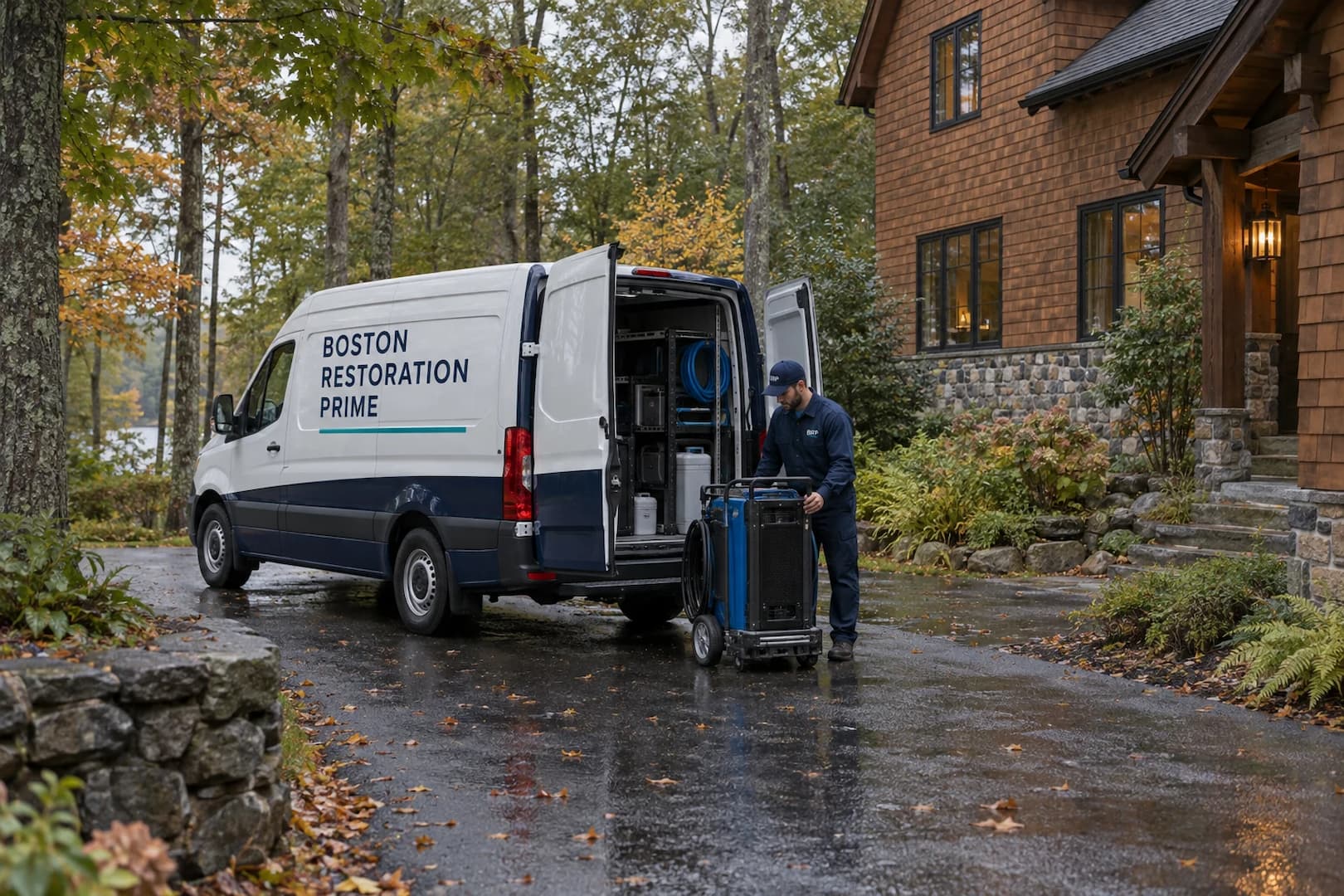
Restoration in Upton, Massachusetts
Restoration Company in Upton, MA
Water can recede from a basement while the wall bottom, insulation or subfloor stays wet. Boston Restoration Prime provides 24/7 emergency restoration in Upton, with a close look at concealed moisture, cleanup for fire and sewage damage, and mold remediation tied to the conditions that caused the problem.
Get Immediate Help Now
Request your free, no-obligation estimate.
Look below the finish
The lowest room is a starting point, not the whole loss
Water in a lower level may reach the wall behind stored boxes or the underside of the floor above. Tell us where it appeared first, whether it is still entering and how long it might have been there. Those details help us follow the affected materials beyond the puddle.
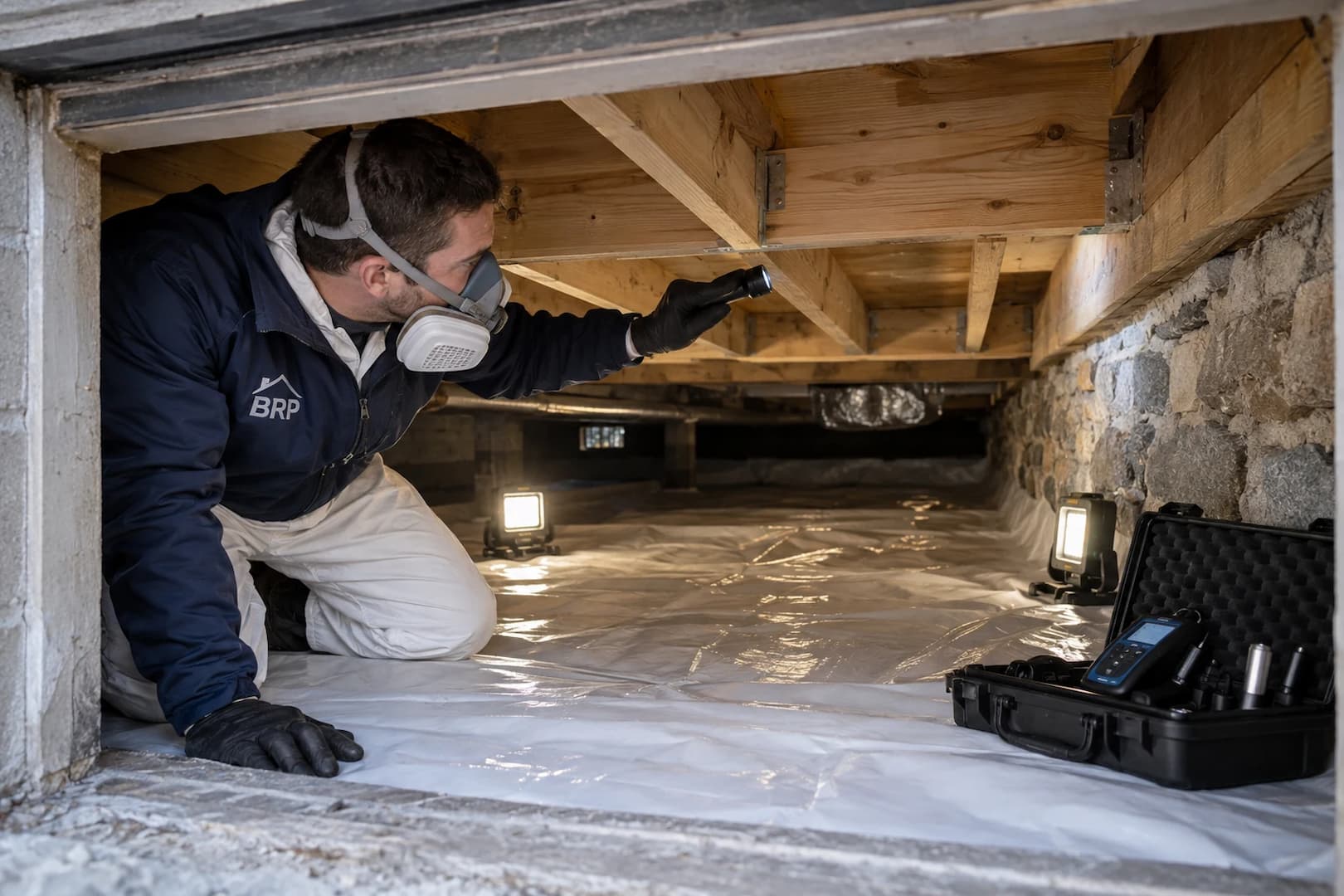
If there is a crawlspace, let us know how it is accessed and whether anyone has observed water there. Do not enter a confined or unsafe space to collect photographs. We can discuss the access needed for an assessment and whether another specialist is required before work proceeds.
A musty odor is a clue, but it cannot identify the wet material. Nor can a dry-looking concrete floor rule out dampness behind a finish. We compare conditions and take appropriate readings to establish where the water reached and what remains affected.
What to do depends on where the water came from
| Suspected source | Your useful next step |
|---|---|
| Supply pipe or appliance | Use an accessible shutoff only from a safe, dry position; arrange the source repair. |
| Rain or exterior entry | Report the first entry location and any ongoing water; avoid roofs and unsafe exterior areas. |
| Drain or septic backup | Stop using connected fixtures, keep people away and identify the system involved. |
| Unknown or old leak | Share when the area was last dry and any earlier repairs or recurring odor. |
For fire, a suspected gas leak or immediate danger, call 911. Stay out of standing water near electricity and keep clear of a bulging ceiling. Tell us about these conditions before arranging entry. You do not need a complete diagnosis to call 617-639-0909 for emergency restoration.
Restoration and source repair are connected but separate tasks. A plumber, septic professional, roofer or drainage contractor may need to correct the cause while we address the affected interior. Water removal alone does not prevent a failed line or exterior opening from releasing more water.
A drying plan built around the hidden layers
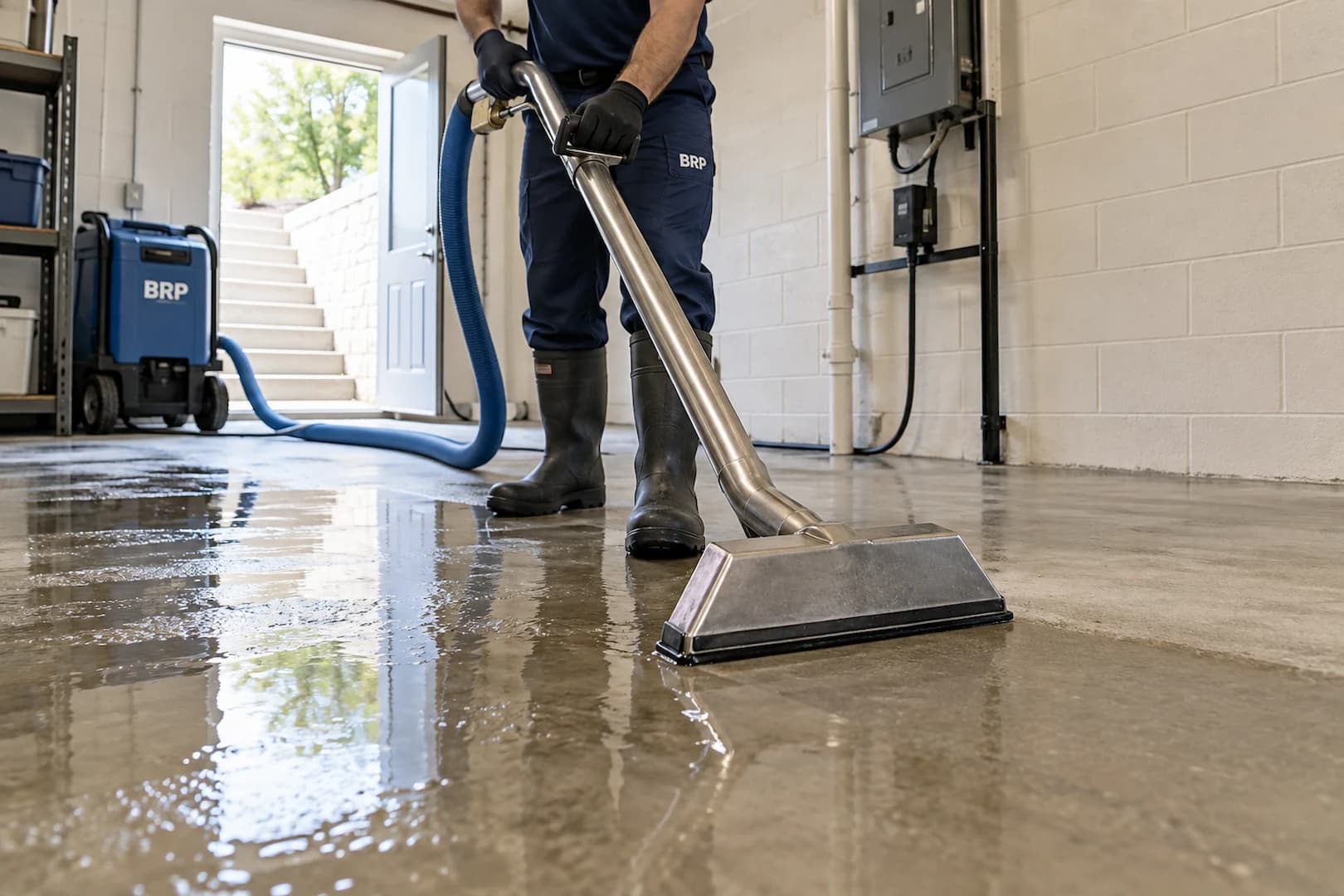
First we remove accessible water and assess exposed materials. Carpet padding, cabinet bases and wall insulation can hold moisture differently from concrete or framing. Some materials can be dried in place; others need removal because of damage, contamination or the access required to reach the assembly.
Each piece of equipment needs a purpose in the affected area. Air movers help suitable surfaces release moisture, and dehumidifiers remove that moisture from the air. Safe power and access routes limit where equipment can go. Adding machines without locating the remaining damp material does not resolve that problem.
Follow-up readings determine whether the drying approach is working. If a section responds slowly, we consider concealed layers, airflow restrictions or a continuing source. Repair work should wait until retained materials and source conditions are suitable for closing the assembly.
Different losses call for different cleanup decisions
Mold after recurring dampness
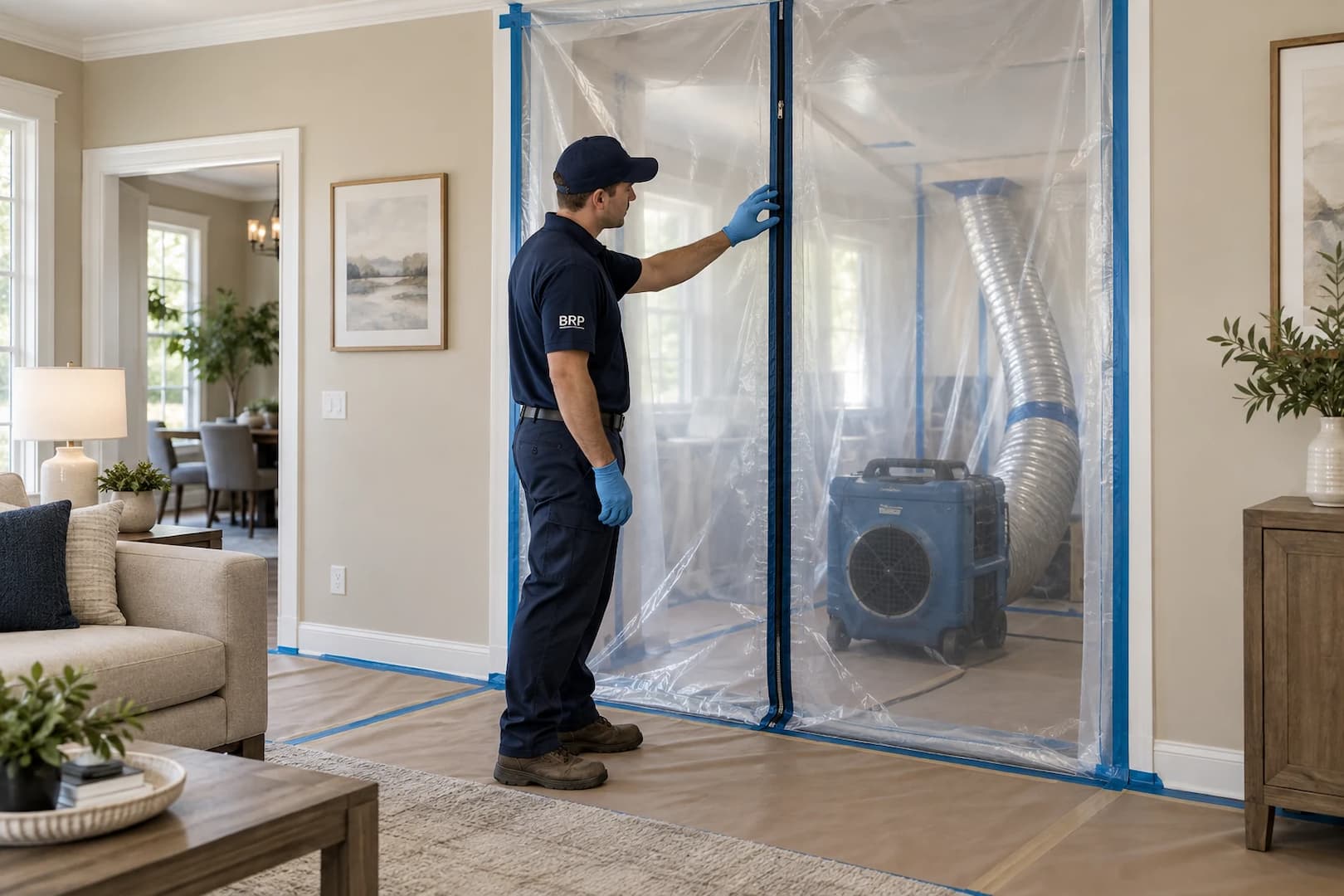
We investigate the affected material and moisture conditions before defining removal or cleaning. Containment may be needed during work to limit spread into clean areas. Correcting the leak or dampness matters as much as addressing the visible growth. Mold remediation
Smoke after a fire
After safe entry is confirmed, soot and odor sources are assessed across surfaces and contents. The room where fire occurred may not be the only area affected. Suppression water can add a second restoration task below the smoke damage. Fire and smoke restoration
Sewage inside the building
Wastewater changes the salvage decision. Porous materials may need disposal, while suitable hard surfaces require appropriate cleaning. Keep affected items and foot traffic out of clean rooms until handling is planned. Sewage cleanup
Wind-driven rain
Water entering a roof or wall can spread behind insulation before a stain appears indoors. We assess connected interior areas and coordinate the restoration plan with the necessary exterior repair. Storm damage cleanup
Overlapping damage should be reported together. A fire can leave smoke, wet finishes and displaced belongings; a storm can affect several levels of a house. The work plan should account for each condition without treating every surface as if it had the same exposure.
Upton’s landscape calls for a site-specific explanation
Upton’s official conservation guidance describes floodplain areas, and its open-space plan identifies the West River and other local water resources. Those references provide context; they do not diagnose water at a particular foundation. The route into the building, the timing and the affected materials determine the restoration response.
If water appeared during rain, share observations about the basement doorway, window wells and sump operation. If the property uses septic, identify that when describing a backup. Drainage changes or work near regulated areas may need input from the appropriate local office or trade before alterations are made.
Keep photographs of the original entry point and waterline if you can take them safely. After water recedes, that record can be useful to the professional addressing the source as well as to the restoration assessment.
Agree on contents, access and cost before the room fills with equipment
Boxes against the wall may conceal the entry point. We plan safe movement and an inventory before clearing the area, keeping dry contents separate from items that need assessment. Let us know which documents, family possessions or devices need particular attention rather than ordinary debris handling.
The estimate should reflect the actual work: extraction, access, removal, drying and any contents handling. Contamination or wet layers behind a finish can change the scope. Reconstruction and the repair of the original source should be identified separately so the full project is understandable.
A timeline depends on measured drying progress, material condition and repair dependencies. We can help organize photographs and work records for insurance review, but your insurer determines coverage. Occupancy also depends on safe utilities, exits and separation from the work, especially if the affected level contains essential household facilities.
Upton restoration: practical answers
Can you inspect a damp space without visible standing water?
Yes. Tell us about odor, stains, recurring dampness and past leaks. An inspection can help define the affected materials and whether moisture remains after the visible water has gone.
Should I run a household fan into a crawlspace?
Do not direct air into an area with suspected contamination or mold. Access, electrical safety and the condition of the space should be assessed before a drying setup is chosen.
Will you repair the septic system?
Interior sewage cleanup addresses the affected building and belongings. The septic source needs assessment and repair by the appropriate professional so it does not release more wastewater during cleanup.
Can wet insulation dry behind the wall?
That depends on the insulation, assembly, exposure and available drying access. Some insulation needs removal to reach and dry the affected cavity. Surface appearance cannot settle that question.
How soon can the basement be used again?
Use depends on the remaining hazards, work zone and condition of the materials. We discuss access as the project progresses; a fixed return date before inspection would overlook those variables.
What information helps when I call at night?
Give the Upton address, your callback number, the suspected source and any unsafe condition. Mention basement or crawlspace access and whether someone can authorize entry. Emergency assistance is available 24/7.
Boston Restoration Prime · Upton
Let us trace the moisture before it is covered up
Call 617-639-0909 to discuss restoration at your Upton property. Tell us where the problem appeared, what may have caused it and whether water is still entering. We will help establish the inspection and cleanup priorities.
in UptonCall 24/7 ↗