
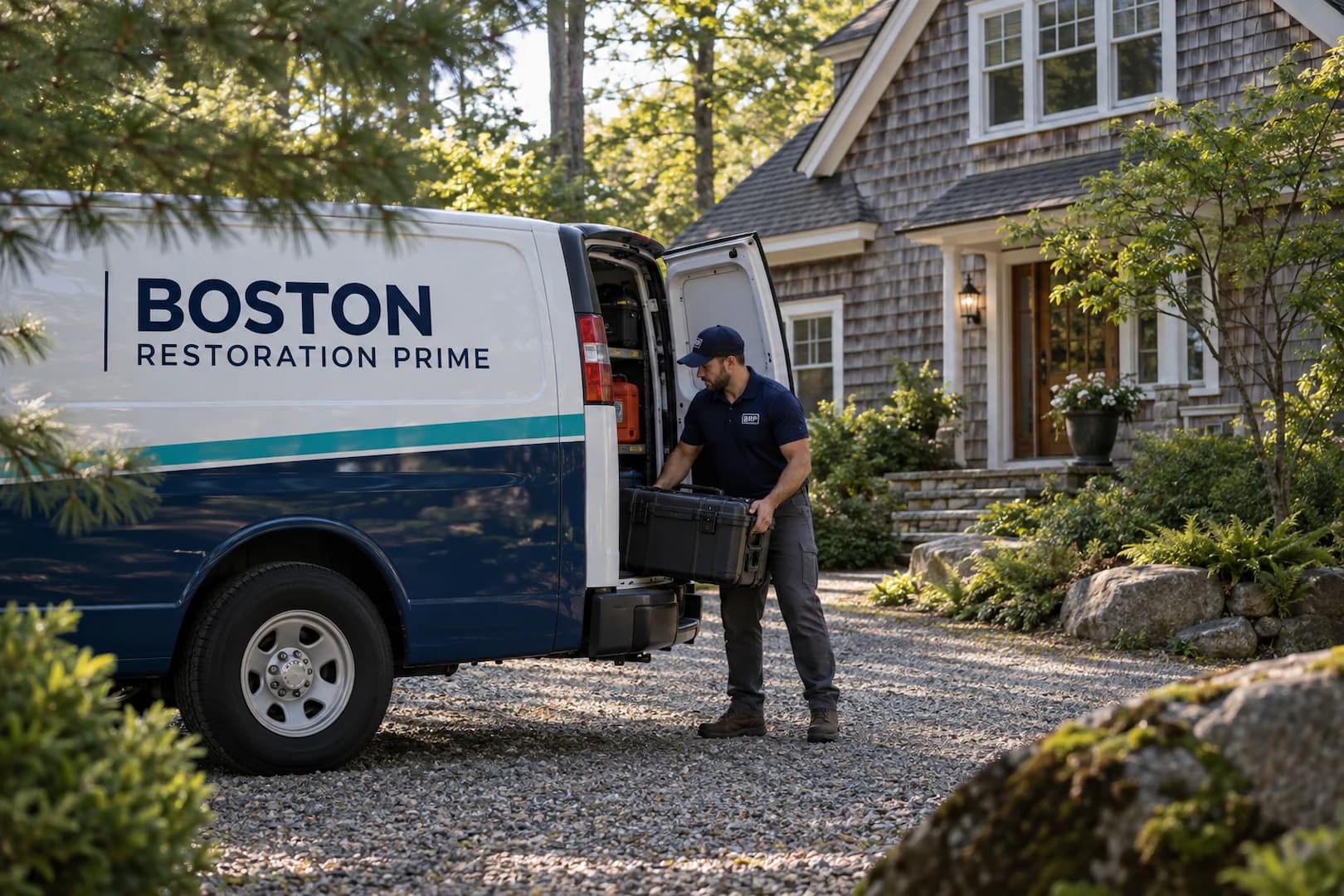
Restoration in Stow, Massachusetts
Restoration Company in Stow, MA
Water at the bottom of the stairs can come from a failed pipe, outdoor runoff or a problem beneath the floor. Boston Restoration Prime helps Stow property owners sort out the damage and plan the cleanup. Our 24/7 emergency response also covers fire, smoke, mold and sewage losses that need careful handling.
Get Immediate Help Now
Request your free, no-obligation estimate.
A wet basement needs more than a pump
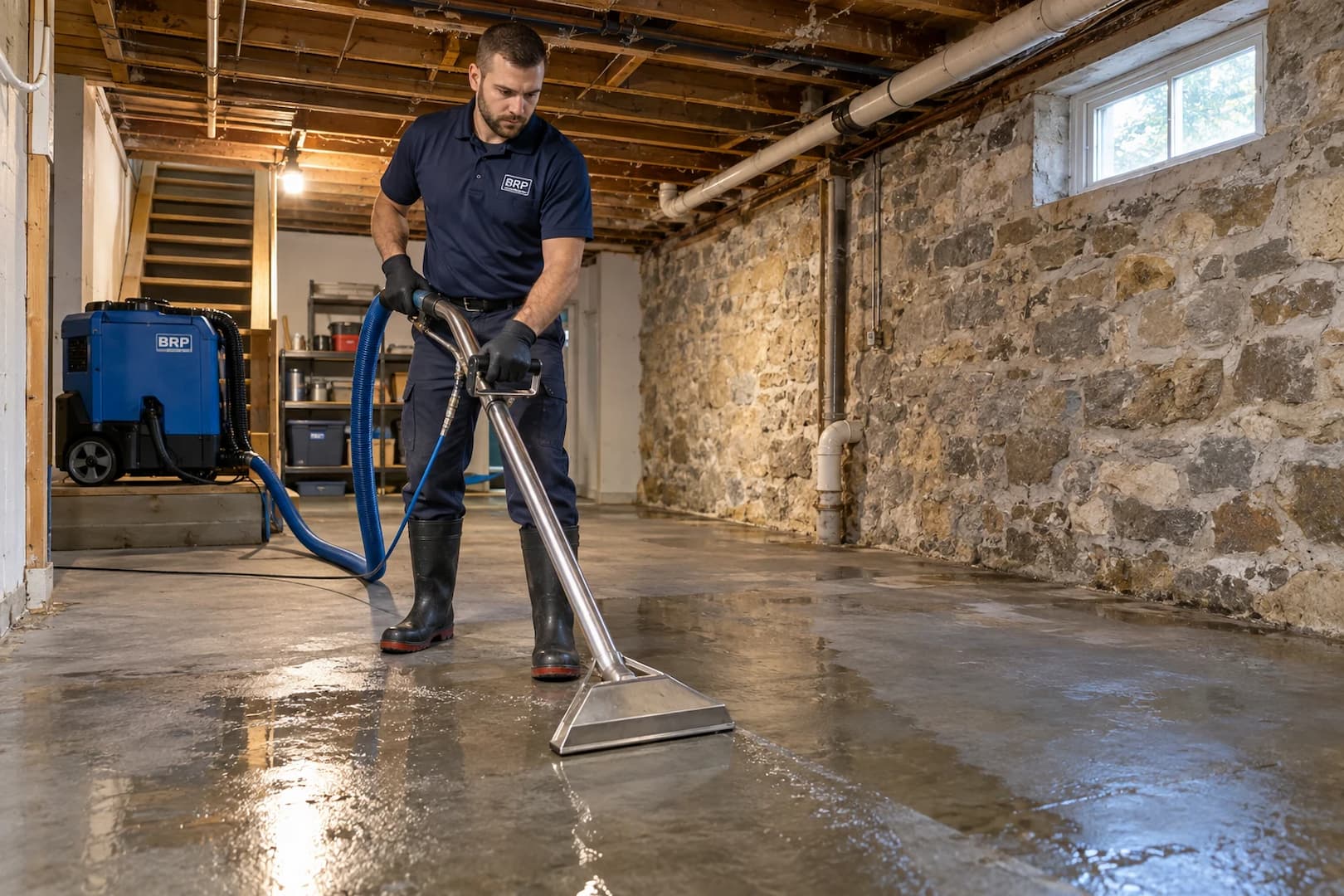
After the standing water is gone, there may still be moisture beneath the floor or inside the walls. We assess those materials and the source before choosing the drying setup. The next step depends on what the water reached.
Keep out of a flooded area if electricity or structural damage may be involved. Leave a sagging ceiling alone. For immediate danger, call emergency services; do not go downstairs simply to turn off a machine or retrieve stored belongings.
Our flooded basement cleanup can address water removal and the damaged interior. A failed sump, blocked drain or exterior entry point needs correction by the right trade so the same space does not keep getting wet.
Before dispatch, describe the way into the property
Around Lake Boon, the route to a house may matter as much as the front-door address. Town planning documents describe narrow roads and small lots in that area. Tell us about parking and the entrance we should use; proximity to the lake alone does not tell us why your property is wet.
- Share the full address, any private-road directions and an accessible place to stop.
- Tell us whether the affected floor has an exterior door or only an interior stairway.
- Describe the available power and whether a utility has been shut off.
- Give us a contact who can meet the crew or arrange entry.
For an unoccupied property, arrange a person who can authorize work and answer questions about the building. Recent photographs help, but they cannot replace access to inspect wet assemblies or verify that the source has stopped.
Follow the entry point, then the material layers
From outside the house
Wind-driven rain, a roof opening or runoff can wet several layers before an interior stain appears. We assess the resulting damage while the appropriate contractor investigates and corrects the entry point. Keep records of when the water appears, especially if it follows particular weather.
From a fixture or appliance
A supply line, water heater or appliance discharge may send water beneath cabinets and into the next room. Tell us when the appliance last ran and whether a valve was closed. A plumber handles the failed component; we assess the damage left behind.
We check moisture in accessible materials, document the affected area and discuss any opening needed to inspect a concealed layer. Wet insulation and a dry-looking painted surface can coexist. That is why the visible stain is a starting point rather than a complete repair scope.
What can stay in an affected room?
A room does not become a total replacement just because water crossed the floor. We examine each affected material. Sound framing may be dryable; a swollen composite panel may already have lost the condition needed for reuse.
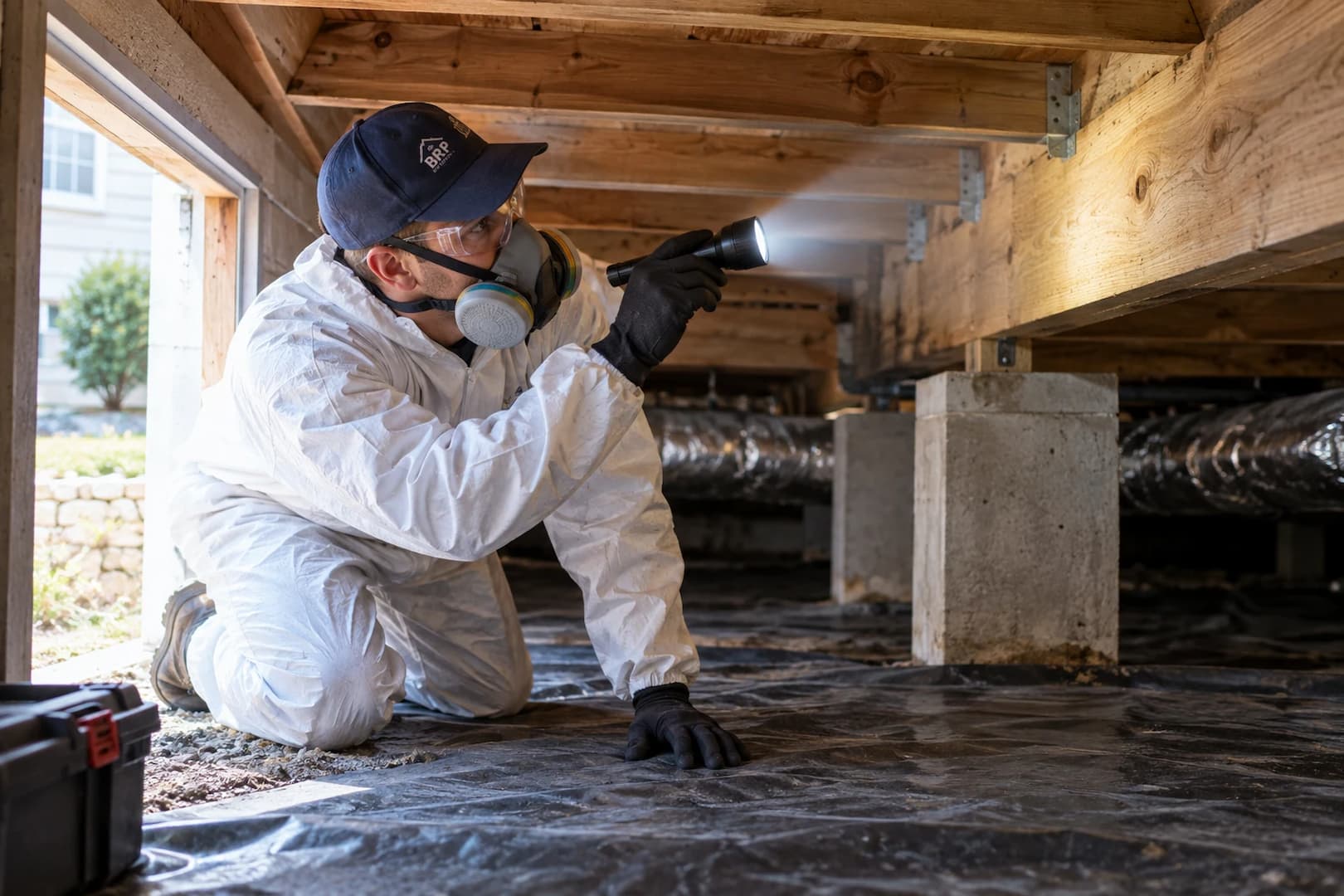
A low crawlspace or enclosed floor can be difficult to inspect and dry. Tell us about its access hatch and any known service lines. The work plan should account for how technicians reach the material and how drying progress will be checked.
For stored belongings, separate handling from disposal decisions. Photograph the damage when it is safe, then discuss what can be moved or evaluated for cleaning. Keep boxes that have contacted sewage or outdoor floodwater out of clean living areas.
Three other reasons to call for restoration
Smoke remains after the flames are out
Once responders release the property, we assess residue and water from firefighting. Smoke can affect rooms outside the burned area. Fire and smoke restoration may include surface cleaning, contents assessment and odor-source treatment before repairs. Avoid washing soot into a finish.
Mold returns where a wall was repainted
Recurring growth calls for a moisture investigation. We plan mold remediation around the affected materials and discuss containment where needed. A leak, condensation problem or persistent dampness needs correction; surface treatment alone does not resolve that cause.
A drain backs up into living space
Stop using the affected area and keep pets and children away. Sewage cleanup requires decisions about contamination, porous materials and safe handling routes. Do not set household fans across the spill or carry soaked rugs through occupied rooms.
Know what the equipment is doing
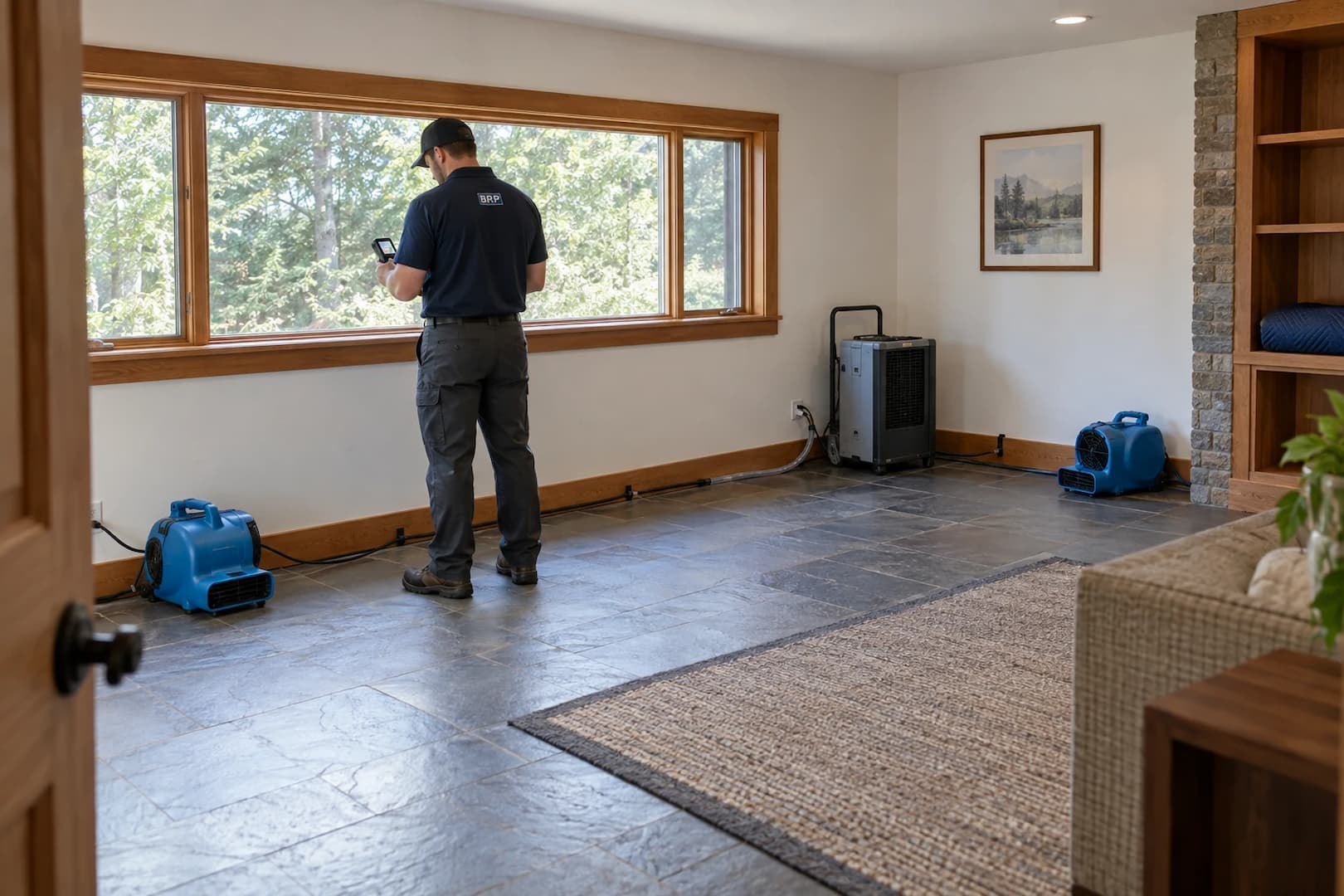
A fan count does not measure progress. Material readings do. We monitor the affected assembly and adjust air movement or dehumidification when the response shows a change is needed.
Tell us if equipment stops, a breaker trips or another contractor needs to enter the area. Keep the agreed settings and work boundaries in place between visits. If the house is occupied, discuss noise, sleeping areas and daily access before the setup is finalized.
Drying time varies with material thickness, trapped moisture and the condition of the building. We can explain the next checkpoint after inspection. Replacing a wall finish or floor depends on the assembly being ready, not just on a calendar date.
A record that follows the work
Ask what is included in the emergency work and what will be estimated afterward. Access difficulty, contamination and hidden wet layers can change labor or equipment needs. A scope change should identify the finding behind it.
We document observed damage and restoration work for your records. Save any source-repair invoice and your photographs of the initial condition. Insurance coverage depends on the policy and cause of loss; your insurer determines the claim outcome.
Stow property owners often ask
Do you take calls for homes near Lake Boon?
Yes. Give us the full Stow address and any road or driveway access details. We will discuss the response for the specific property.
Should I drain a heavily flooded basement myself?
Keep out when electrical or structural safety is uncertain. Significant flooding needs professional assessment before entry or water removal; do not assume the depth is the only hazard.
Can you restore a room after a roof leak?
We can assess and restore the water-damaged interior. A suitable roofing contractor must correct the exterior entry point so new water does not undermine the work.
Will everything stored downstairs need to go?
No blanket decision is appropriate. The material, contamination and condition determine whether an item is a cleaning candidate or needs disposal.
Can I leave drying equipment running while away?
We discuss operation and monitoring for the actual setup. Arrange access for checks and a contact who can respond if equipment or power fails.
Boston Restoration Prime · Stow
Describe the damage at your Stow address
Call 617-639-0909 with the affected area, source status and the best entrance to use. If a private road, locked gate or utility shutoff may affect the visit, mention it while we plan the response.
in StowCall 24/7 ↗