
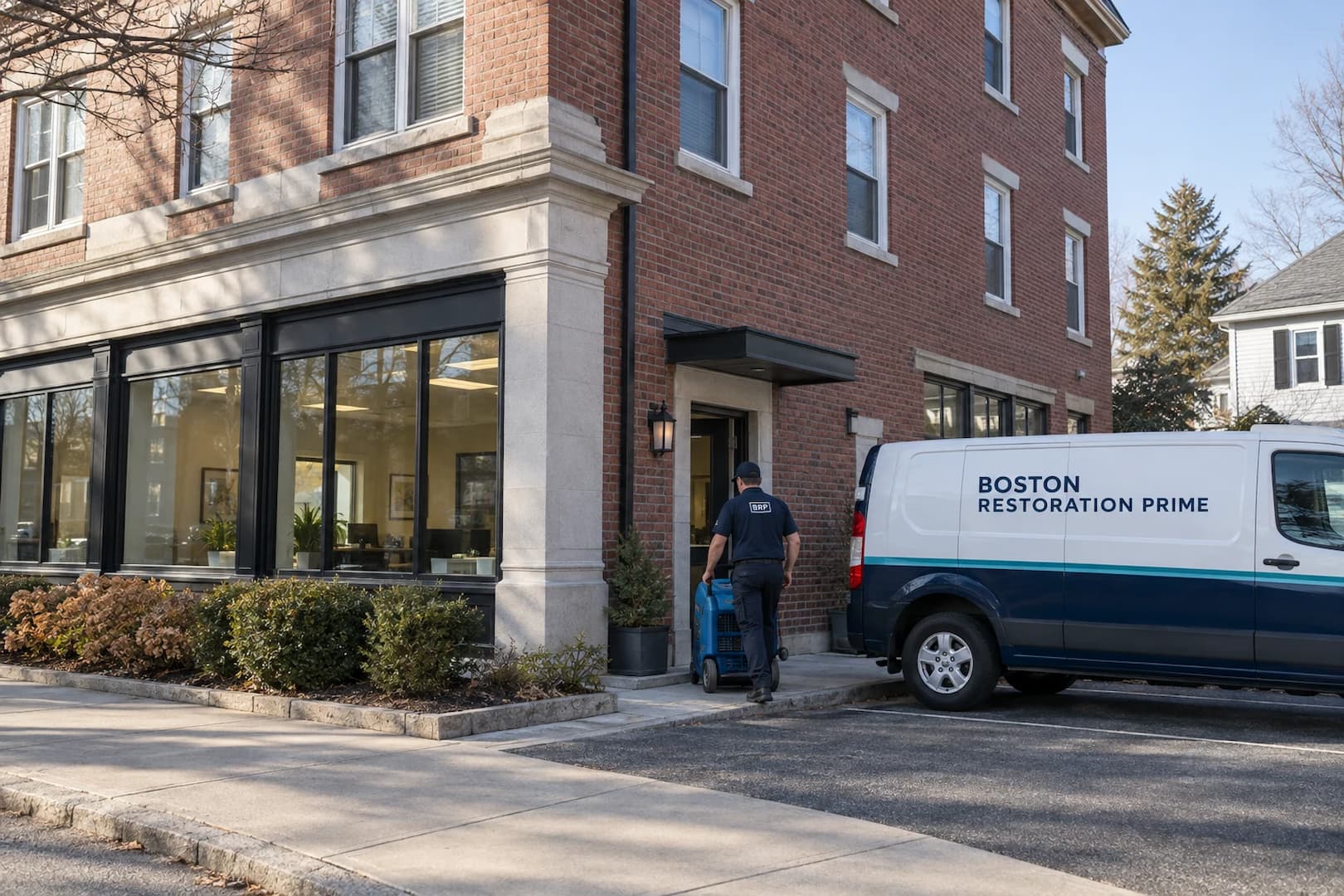
Norwood, Massachusetts • Residential & commercial
Restoration Company in Norwood, MA
A leak in the stockroom and water in the family room leave you with different decisions. Boston Restoration Prime helps Norwood homeowners and businesses plan cleanup around the affected materials and the space they need. We provide water, fire, mold, sewage and storm restoration, with emergency calls answered 24/7.
Get Immediate Help Now
Request your free, no-obligation estimate.
The first conversation
Which part of the property needs to work again?
At home
Tell us which room the household needs most urgently and what route is blocked. A wet kitchen interrupts meals; a basement loss may reach utilities and storage. Once the materials are assessed, we can discuss whether occupied space can be kept separate from the work.
If water may contact electrical equipment, keep out. For an immediate danger, fire or gas odor, call emergency services before attempting cleanup.
At work
Identify the affected rooms, stock or equipment, then tell us which routes staff and customers use. A small leak near a shared corridor can have a larger operational effect than its wet footprint suggests. The cleanup arrangement has to account for safe access.
Give us one responsible contact for work authorization and after-hours entry. If the building has tenants, identify who controls common areas and utility rooms.
Make the work boundary practical
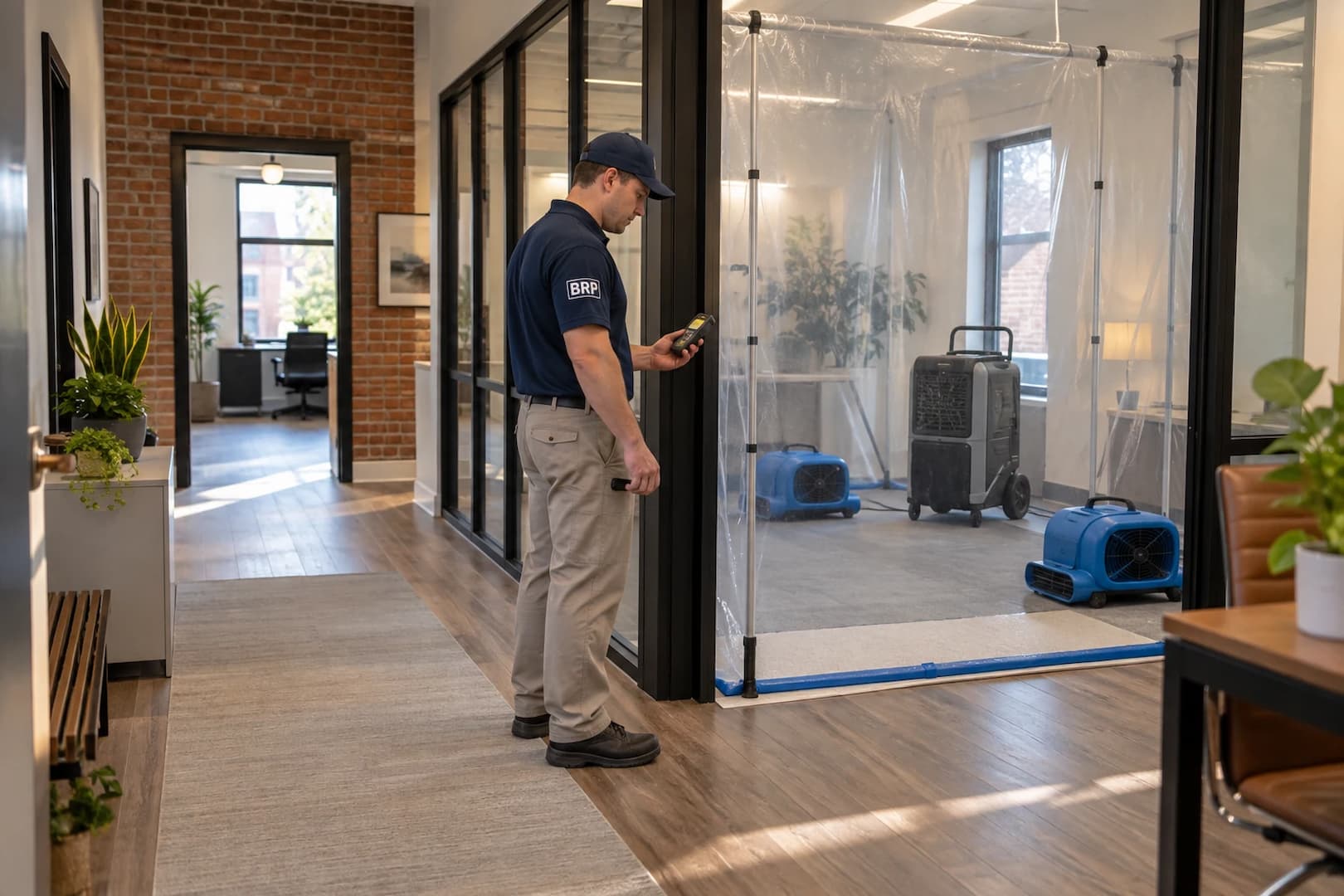
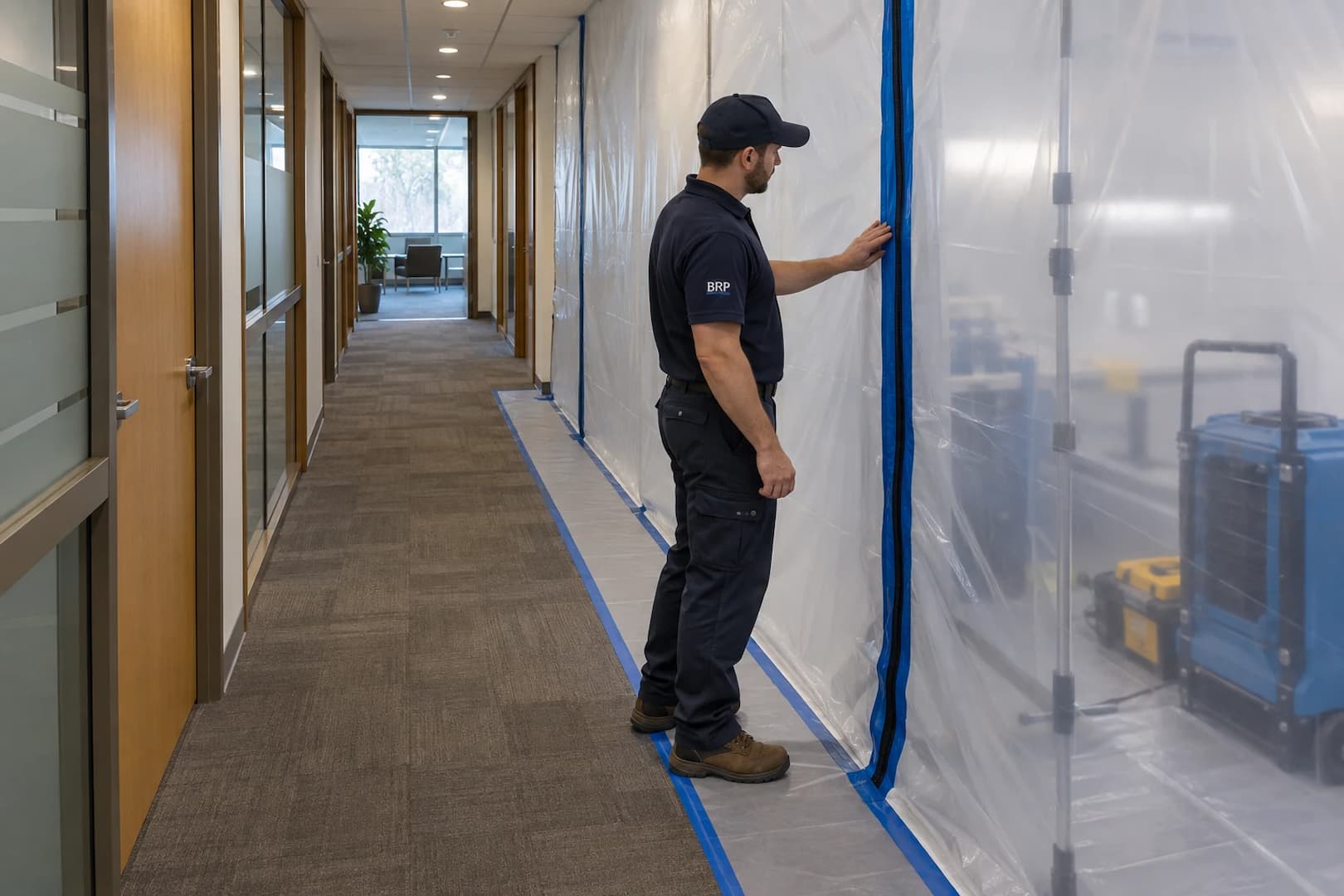
A common stair or stockroom door may be the access point everyone relies on. Identify those routes before equipment is placed. We discuss how people and materials will move through the property and whether conditions allow a separate cleanup zone.
Continued occupancy or business operation depends on contamination, utilities and safe exits. It should not be promised before inspection. Our commercial restoration work includes considering equipment noise, power requirements and monitoring access alongside material damage.
Before anything is moved, identify exposed records, electronics and inventory. Some items need specialist assessment. Do not switch on wet equipment to test it; when conditions are safe, use photographs and an initial item list to record what was exposed.
Answers that help you arrange the first visit
Can you help outside normal business hours?
Yes. Call 617-639-0909 for emergency restoration help. Explain whether the damage is active and how the crew can safely enter the property.
Can part of my business remain open?
Possibly, if safe access and appropriate separation can be maintained. The answer depends on the contamination, utilities and the affected area, so we review it after inspection.
Do you work on homes as well as commercial buildings?
Yes. We assess residential losses, including wet rooms, basements, smoke damage and mold. Tell us about the household’s access needs and important contents.
Should I wait for an insurance decision before calling?
Report the loss to your insurer promptly and ask about its requirements. You can contact us to discuss conditions and necessary mitigation; coverage and payment decisions remain with the insurer.
What should the property manager send?
Send the address, affected units or rooms, discovery time, safe photographs and an authorized contact. Include access restrictions and any source repair already completed.
Different incidents need different cleanup decisions
The incident history gives the assessment its starting point. A leak may travel beyond the visible wet edge; a backup may contaminate materials throughout its path. We use those findings to decide what equipment is appropriate and which materials need access or removal.
| Incident | Inspection focus | Work that may follow |
|---|---|---|
| Pipe or appliance leak | Wet materials, cavities and adjacent rooms | Extraction, access and monitored structural drying |
| Rain or storm entry | Entry route and continuing inflow | Interior mitigation coordinated with exterior source repair |
| Drain backup | Contamination and porous material contact | Controlled removal, cleaning and drying |
| Fire or smoke | Residue, contents and firefighting water | Material-specific cleaning, odor treatment and water mitigation |
For water damage restoration, extraction is followed by checks of the material left behind. A dry-looking surface does not demonstrate that the underside of flooring or the enclosed wall base is dry.
Smoke damage can interrupt rooms that never burned
Once entry is released, we check soot deposition on surfaces and contents and consider how smoke moved through doors or air openings. The lower floor needs attention too if firefighting water collected there. That water can add extraction and drying work to the smoke cleanup.
Our fire restoration services match cleaning to the residue and the surface. We discuss test cleaning where appropriate and explain when removal or replacement is more reasonable. Wiping soot indiscriminately can smear it into a finish.
Belongings, paper records and stock need individual handling decisions. Photograph their condition and retain an item record when safe. Contents restoration considers exposure and material condition rather than assuming everything in a room can be saved.

Keep contamination inside the work zone
Keep people out of a sewage-affected room and leave contaminated items out of clean corridors. An appropriate professional needs to address the drain source. We assess what the water touched before choosing cleaning methods or removing material. Mopping the exposed floor can leave contamination in porous layers. Sewage cleanup includes assessing porous material, controlling removal and cleaning accessible surfaces before drying.
For suspected mold, we investigate moisture and the extent of affected material. A leak behind a partition can remain active after staining is repainted. Mold remediation should be coordinated with correcting that condition, using containment appropriate to the work.
Tell us about shared heating or cooling systems and nearby occupied rooms. Do not set up household fans to push air from a contaminated space into an unaffected area.
Budget and timing need an explained scope
What changes the cost?
The affected material layers, contamination, access and contents handling all matter. A wall that needs opening is different from an accessible wet surface. We identify the immediate mitigation work and later repairs separately, with an explanation if new findings change the scope.
What determines the drying stage?
Moisture readings and material response guide equipment adjustments. Enclosed assemblies can slow the process even when the room’s air feels dry. The schedule should account for those findings, source repair and the conditions needed before replacement finishes go in.
What belongs in the claim file?
Keep the discovery date, photographs, source repair information and receipts. We can document restoration findings and work performed. Your insurer decides coverage, deductibles and payment; a cleanup estimate cannot guarantee the outcome of the claim.
Return to use after the source is addressed
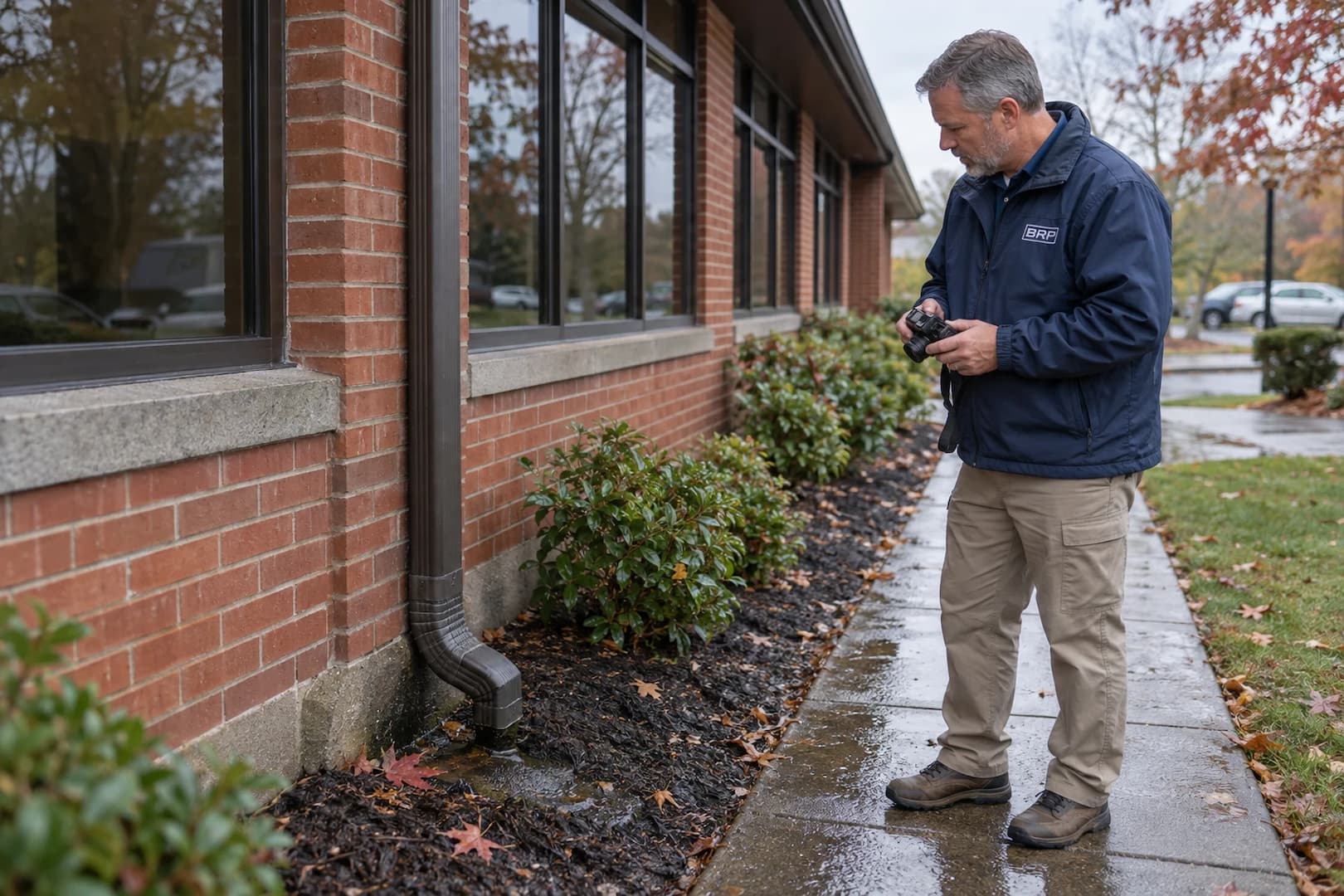
Norwood’s Meadow Brook drainage work and Neponset River setting show why water sources deserve careful attention. They do not establish the cause at your address. If water appears with rain, we investigate its observed route instead of assuming every loss is a river flood.
For storm damage, the interior plan must account for an opening or drainage problem that still allows water inside. Appropriate source repairs are separate from drying the damage. Share what has been done so the two parts of the work can be coordinated.
Before resuming normal use, review which repairs remain and when equipment can be removed. Any continuing restriction should be clear to the person using the space. The handoff records completed work and outstanding needs for a family room just as it does for a customer-facing office.
Boston Restoration Prime · Norwood
Tell us what has stopped your day
Call 617-639-0909 with the Norwood address, affected rooms and the source if known. For a business, include operating hours and the person authorized to arrange access and work.
in NorwoodCall 24/7 ↗