
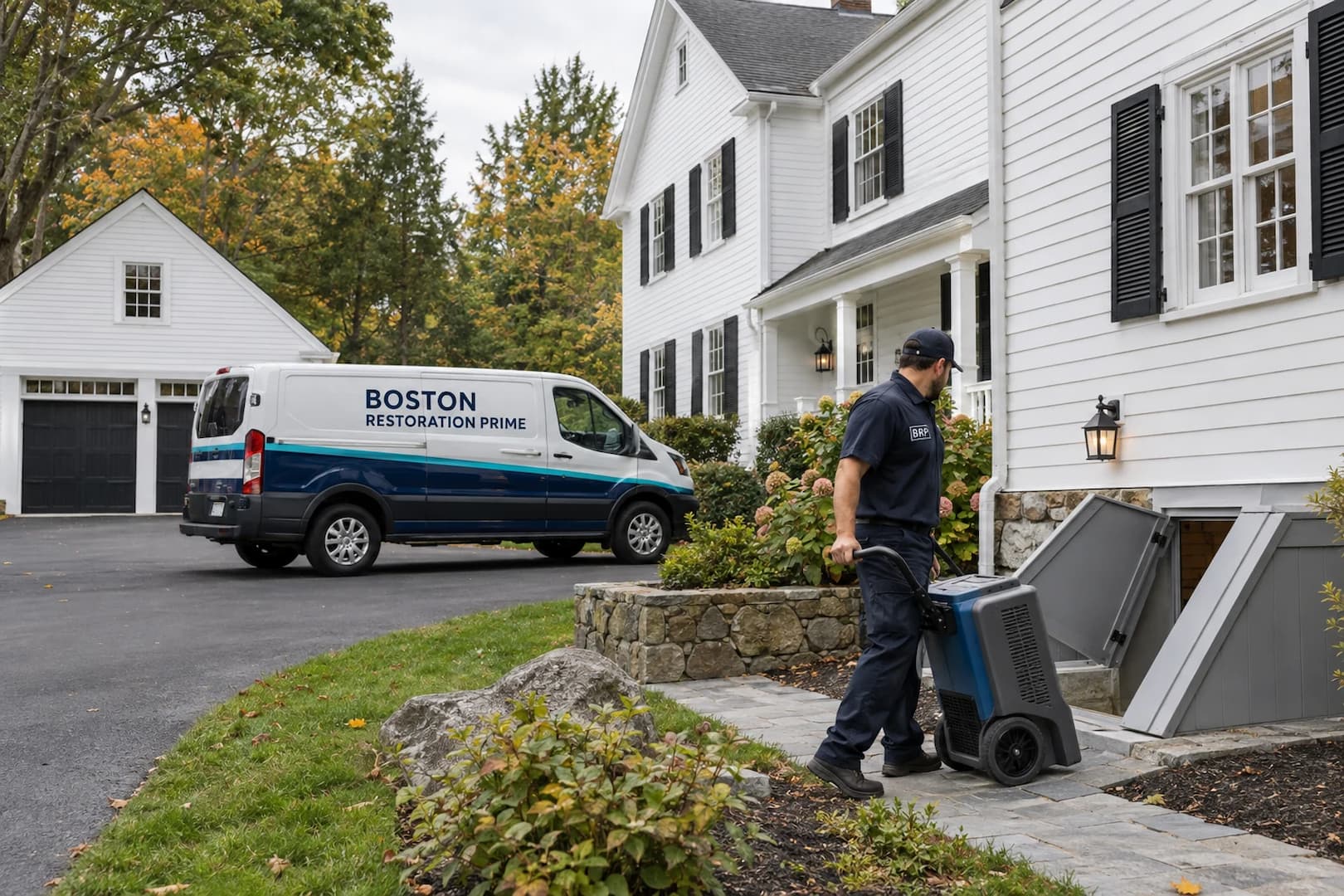
Medfield, Massachusetts • 24/7 restoration help
Restoration Company in Medfield, MA
The first stain may appear downstairs while the leak starts in a room above. Boston Restoration Prime helps Medfield property owners follow that damage through the house, assess the affected materials and organize cleanup. We provide water, fire, mold, sewage and storm restoration, including emergency response at any hour.
Get Immediate Help Now
Request your free, no-obligation estimate.
One incident can involve several parts of the house
The stain and the source may be in different rooms
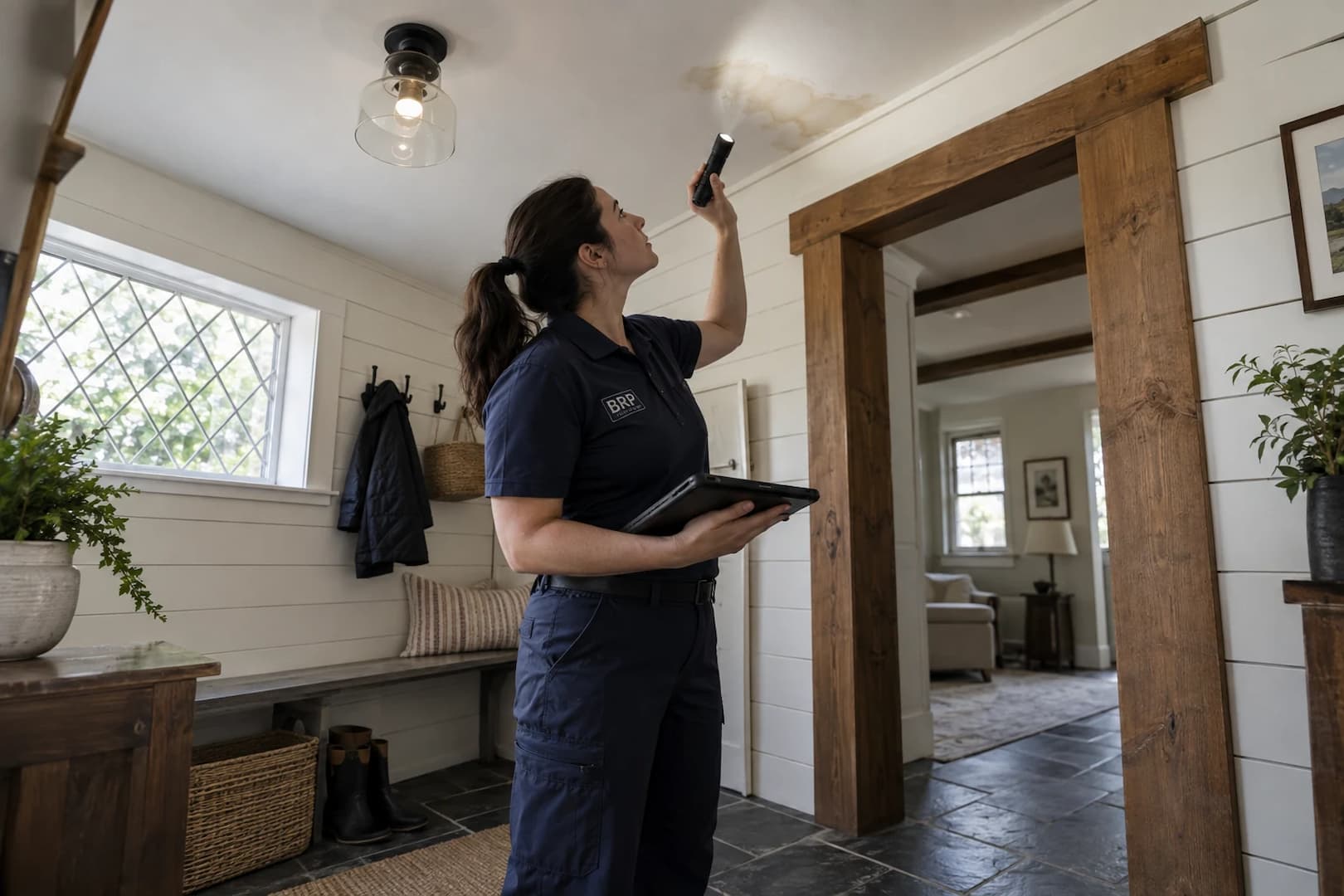
Tell us which fixture was being used when the mark first appeared below the bathroom. Supply water, a drain leak and water escaping around a fixture can take different routes. That history helps guide the inspection before anything is opened, with an appropriate plumber needed to correct a continuing leak.
A stain that grows after rain raises a different set of questions about exterior entry. Water may follow framing before becoming visible. Tell us whether a roof or window repair was recently made and whether the mark changes between storms.
The investigation continues into accessible finishes and cavities below the original room. Moisture readings can identify wet material before staining appears. Where a concealed space remains out of reach, we explain what is still unknown and the access needed to assess it.
Our water damage restoration plan connects extraction, material handling and drying to those findings. The goal is to address the damage left behind after the source is controlled.
Check above, below and beside the visible damage
A narrow brown edge on a ceiling may be the visible part of wet insulation or framing above. Pipe openings and wall cavities can also carry water down another floor. We check accessible adjoining areas, then discuss controlled access wherever the concealed damage still needs assessment.
Material condition changes the options. Loose ceiling finishes, swollen cabinet panels and saturated insulation cannot all be treated like a damp painted surface. We explain what can be considered for drying and what needs removal to reach or clean the affected assembly.
Do not puncture a bulging ceiling yourself. Keep the space clear and describe the condition when you call, especially if lighting or other electrical fixtures are nearby.
What to do while help is being arranged
- Keep a dry route. Stay out of water that could contact appliances, outlets or the electrical panel. Have the hazard addressed by the appropriate emergency or electrical professional.
- Stop an accessible supply leak. Use a shutoff only if it can be reached safely. Do not enter a hazardous room to find it.
- Record what you can see. Take photographs from a safe location and note when the damage was discovered. Keep source repair invoices with those records.
- Protect access. Keep pets and children away from affected rooms. Tell us which entrance reaches the damage without crossing an unsafe area.
For fire, gas odor or an immediate threat to safety, call emergency services first. Restoration begins once entry and work can be planned safely.
The lowest space deserves its own inspection
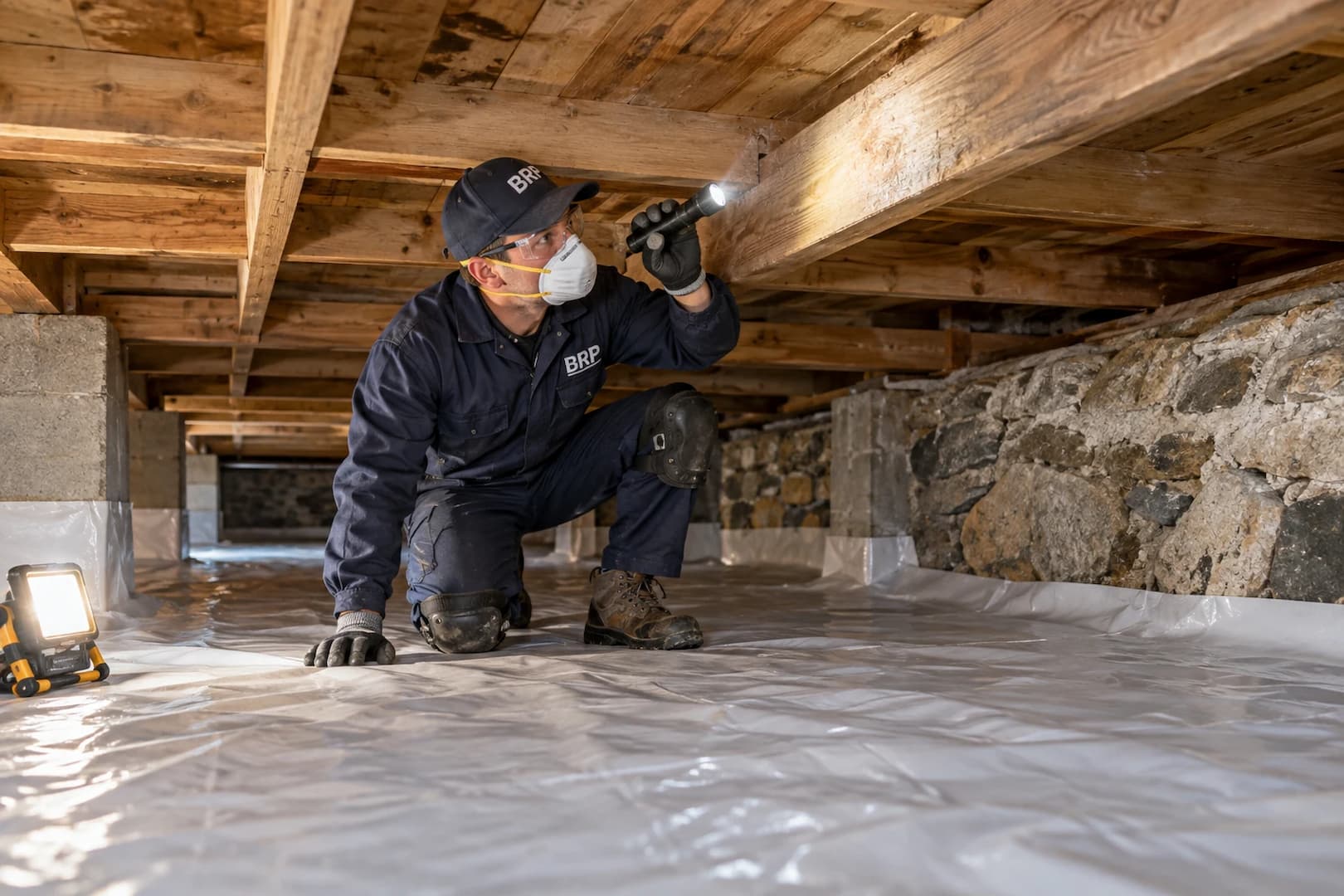
Water from upstairs or a failed appliance may collect in the basement; foundation entry can affect the same area for a different reason. Stored belongings and covered wall bases may hide its spread. Describe the entrance, including a bulkhead or low crawlspace opening, and tell us which spaces have not been entered since the loss.
We assess standing water, accessible framing and affected finishes before setting the cleanup boundary. Basement cleanup may involve more than pumping: wet contents, contamination and trapped moisture can all change the work.
If the space gets wet again during rain, the source needs another look. Medfield’s Charles River landscape does not identify the cause at a particular home. Drainage conditions and the building’s actual entry points have to be assessed on site.
Fire recovery involves the house and its contents
Once responders permit entry, the assessment follows smoke residue beyond the source room and checks water left by firefighting. Doors and air openings help explain that spread. The cleaning or removal decision then rests on each material’s condition and the residue it holds.
Our fire restoration services include assessing soot and odor sources before choosing treatment. Wet wiping can smear some residue or damage a finish, so leave delicate surfaces undisturbed until the approach is reviewed.
Odor can signal unfinished work
A musty room after an old leak
We look for continuing moisture and assess accessible affected material. Mold remediation uses a work boundary appropriate to the conditions, with removal or cleaning as needed. Closing a cavity without correcting the moisture cause can leave the same problem in place.
A basement drain backup
Keep people and pets away from sewage and avoid moving contaminated items through clean rooms. An appropriate drain or septic professional should investigate the source. Our sewage cleanup addresses affected materials, controlled handling and cleaning before drying.
Fragrance does not resolve either situation. Tell us where the odor is strongest and whether it changes after rain, fixture use or the heating system running. Those observations can help guide the inspection.
Drying needs a plan for the occupied home
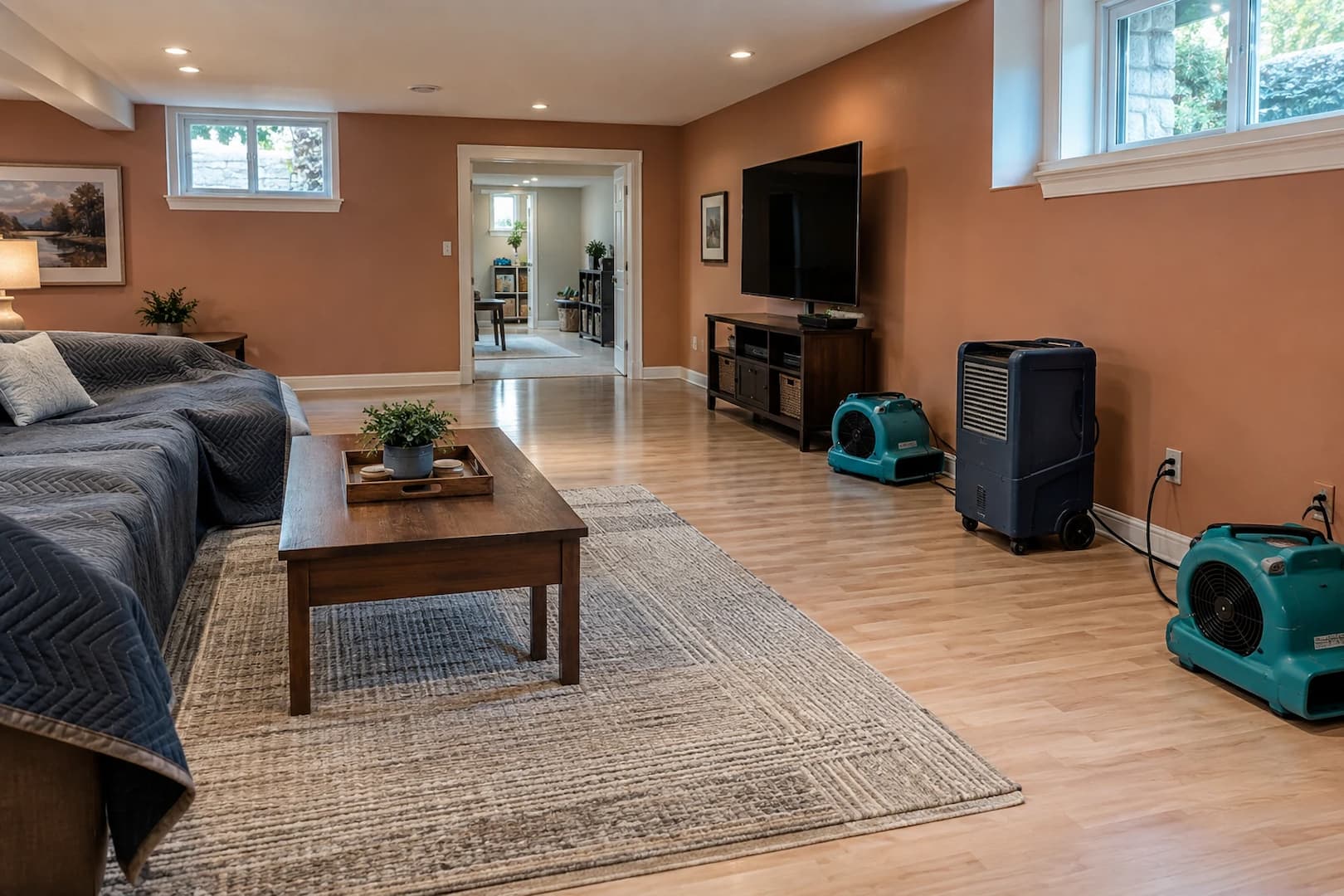
Equipment placement depends on the wet materials, available power and the work boundary. We discuss walking routes, rooms that must remain restricted and access for monitoring. Tell us about pets or a bedroom next to the work area before setup.
A concealed wet layer may respond more slowly than the surface facing the room. Monitoring shows that difference and guides equipment changes and completion decisions. If the household needs a machine moved or switched off, contact us so the drying arrangement can be reviewed.
Rain or wind damage may need coordinated exterior work. Storm restoration should account for the roof, window or other opening before the restored room is exposed to another leak.
Questions about the scope and schedule
Can you assess more than one floor?
Yes. Explain where water started and where it later appeared. We inspect accessible affected areas and identify any access limitations before defining the work.
Why might a wall need opening?
Access may be needed to reach wet insulation, inspect a cavity or remove damaged material. We explain the reason and proposed extent before authorized work proceeds.
Will I know the price before every hidden area is opened?
The initial scope reflects what can be assessed. Concealed findings can change the work. We discuss the new conditions and resulting changes instead of assuming unseen materials are sound.
How long will drying take?
The affected layers, contamination, access and material response determine timing. We give an expected sequence after inspection and use monitoring to guide the drying stage.
Can you help with an insurance claim?
We can supply restoration photographs, findings and work records. Your insurer determines coverage under the policy. Keep the discovery details, receipts and source repair information together.
Plan repairs for the building you have
Medfield includes historic properties and newer construction. Tell us about known original finishes or previous additions; the materials behind a wall can change between parts of the same house. Any required specialist assessment or approval should be considered before repair work proceeds.
Before finish repairs begin, the handoff should record which materials were dried or removed and what source work is still outstanding. It should also identify the areas ready for the next stage. Those details make the remaining repair decisions easier to review than calling an entire room complete.
Boston Restoration Prime · Medfield
Tell us where the damage first appeared
Call 617-639-0909 for restoration help in Medfield. Share the affected floors, any active leak and whether utilities or safe entry are a concern. We can then discuss the next step for your property.
in MedfieldCall 24/7 ↗