
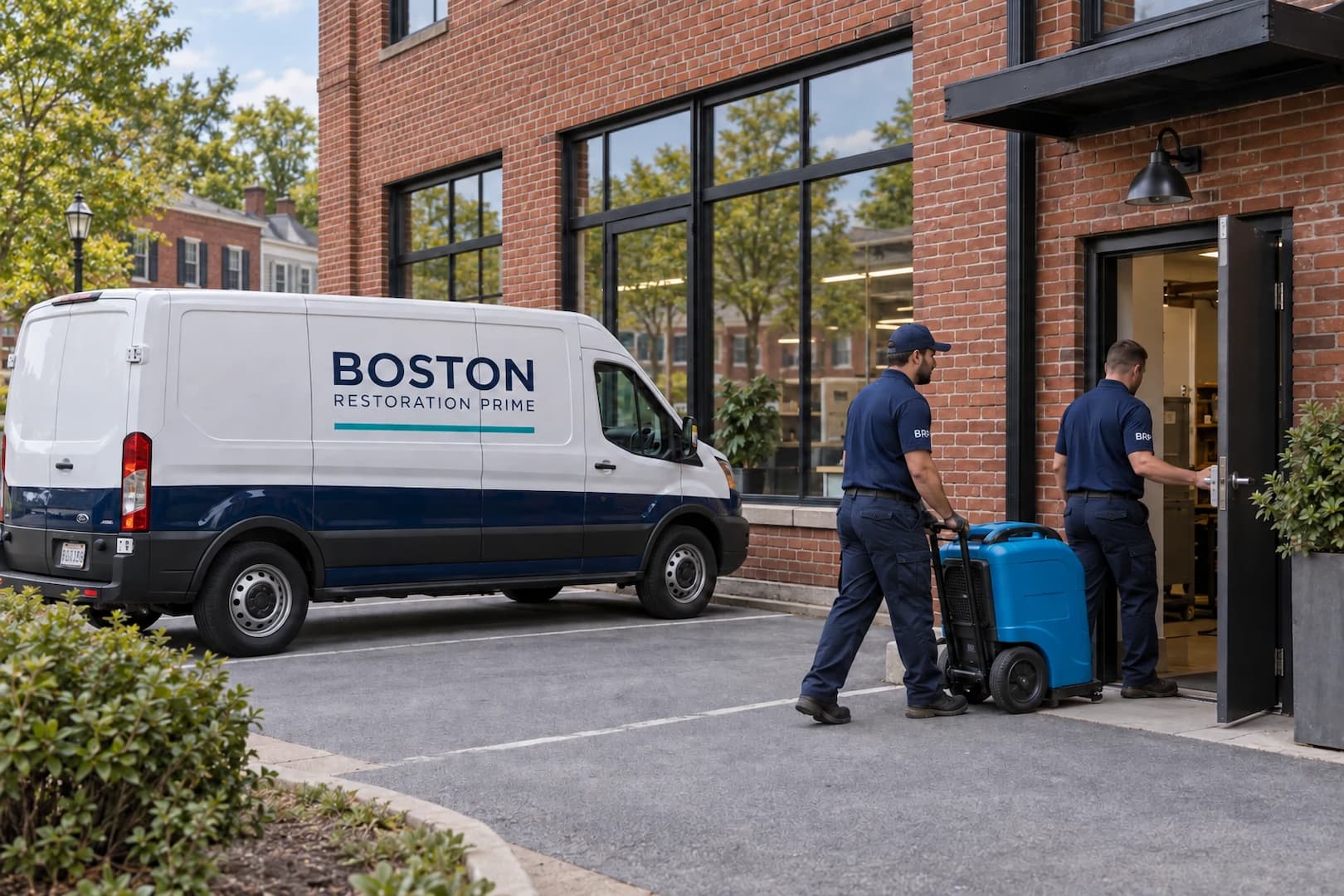
Restoration in Maynard, Massachusetts
Restoration Company in Maynard, MA
A damaged room can stop a household routine or close a business for the day. Boston Restoration Prime helps Maynard owners assess the loss, protect usable spaces and organize cleanup through repair. We offer 24/7 emergency help for water, fire, mold, sewage and storm damage, with the next steps explained as the scope develops.
Get Immediate Help Now
Request your free, no-obligation estimate.
What has to work tomorrow?
Start with what the damage has interrupted. Is it the only bathroom, a customer entrance or the room that holds your business stock? We use that information when planning access and the work area, while keeping unsafe spaces out of use.
Maynard’s Assabet River Cultural District includes downtown and the Mill and Main campus. For a business or mixed-use address, describe the actual suite and loading entrance. We will need permission to inspect any neighboring space the damage may have reached.
Move away from active fire, unstable ceilings or water near electrical equipment and call emergency services when danger is immediate. Do not cross standing water to save merchandise. A safe exterior photograph can wait; entering a dangerous room cannot be justified by an insurance record.
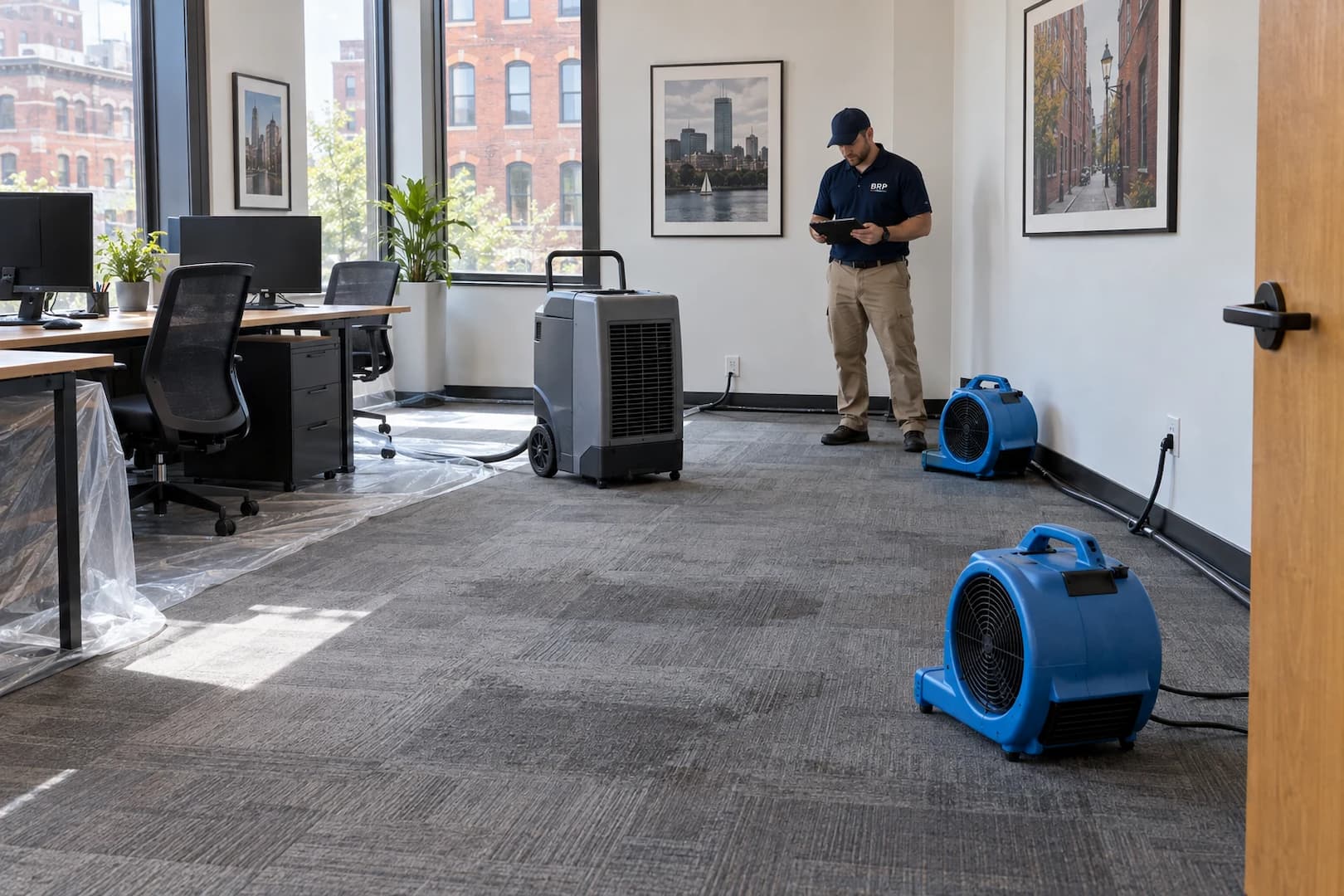
Put the incident on the right track
| What you found | What needs assessment | What to avoid |
|---|---|---|
| Water under flooring | Source, layers below and adjoining rooms | Covering a wet floor with new material |
| Soot or smoke odor | Residue type, contents and spread beyond the fire | Scrubbing residue into finishes |
| Visible mold | Moisture history and extent behind surfaces | Opening the area without a containment plan |
| Sewage or floodwater | Contamination and safe removal routes | Tracking wet items into clean rooms |
If a pipe or roof is still leaking, arrange source repair with the appropriate contractor while we discuss mitigation. Storm damage can involve both an exterior opening and water inside the building. The interior drying plan cannot replace that exterior correction.
Our water restoration and fire restoration services address different materials and cleanup methods. We explain where the scopes overlap, such as water from firefighting or smoke-exposed belongings in an otherwise dry room.
Protect the rooms that are still usable
Work routes belong in the plan
The path into the room matters. A cart of damaged material should not have to pass through unpacked stock or a child’s sleeping area. Agree on the route, clear what can safely move and keep the work boundary in place.
Let us know about opening hours, alarm arrangements and the person holding the keys. A business owner should identify stock or records that need early attention. We can discuss staged access, but reopening depends on the actual condition of the space and any applicable approvals.
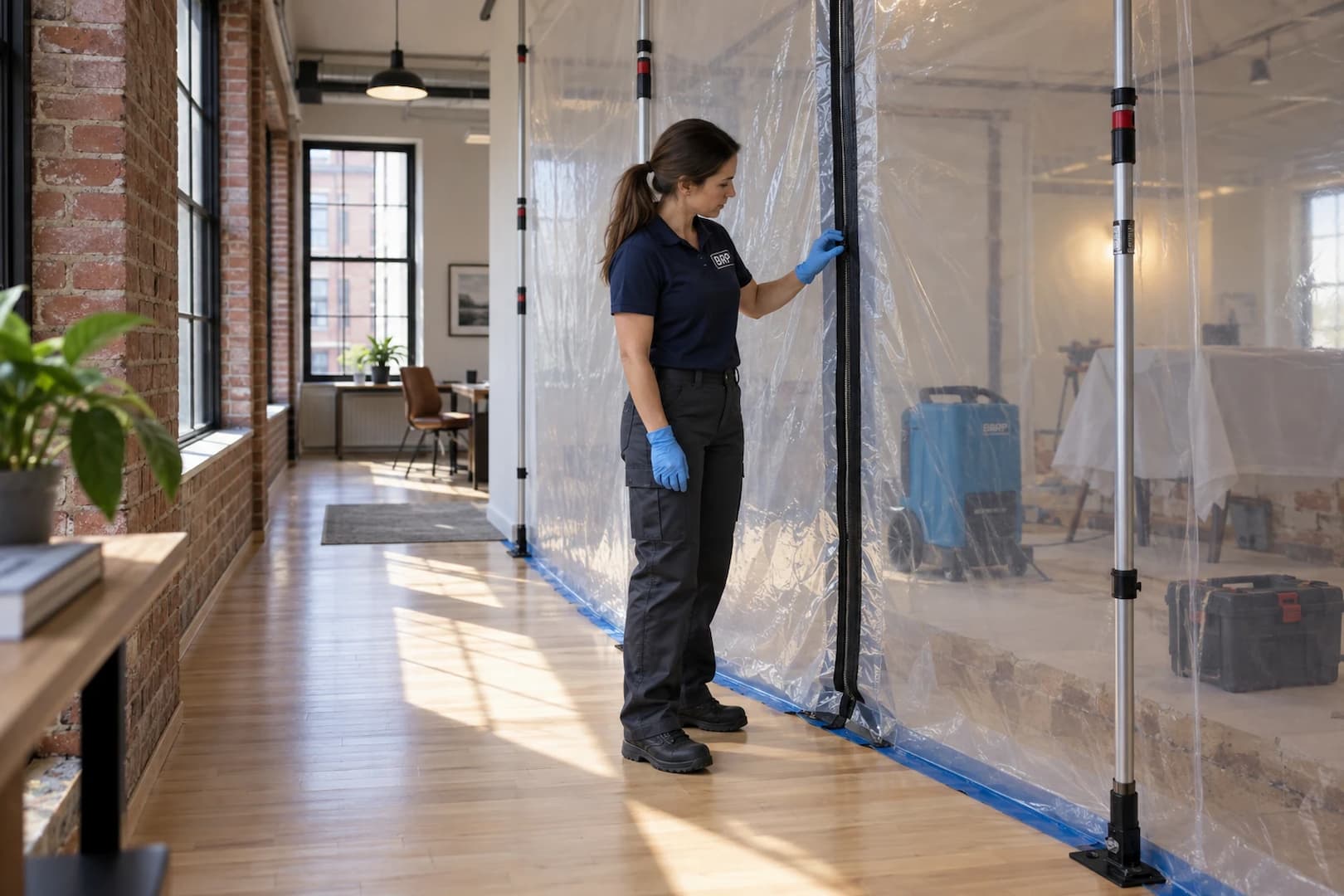
Drying equipment needs space and dependable power. Tell us if machinery, refrigerators or other essential equipment shares the available circuits; the setup needs to account for that demand.
Find the damage that changes the scope
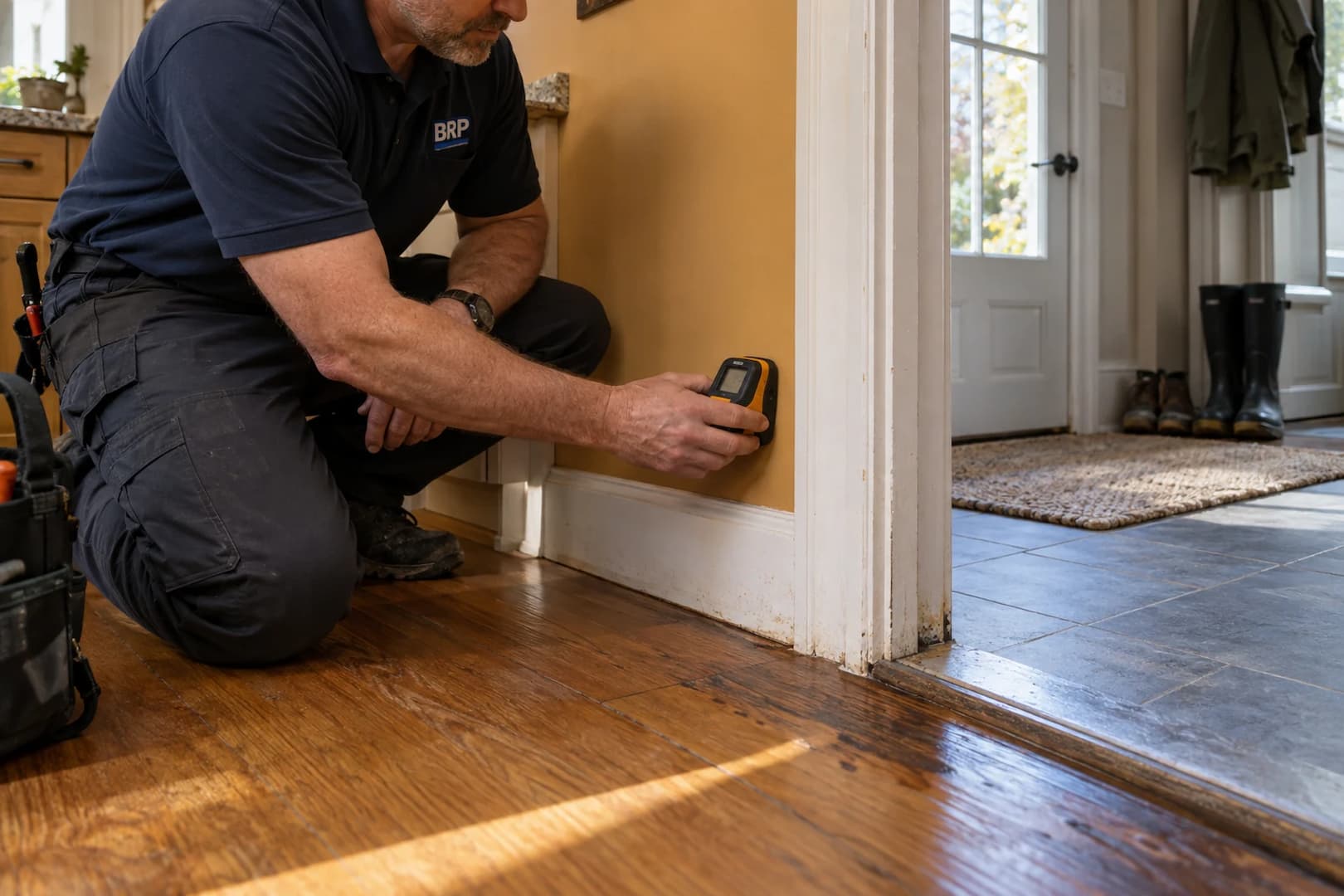
The edge of a visible puddle is not the edge of the job. We follow the water into nearby materials and check accessible voids. A small opening can reveal the wet insulation or hidden floor layer that changes the drying plan.
That finding does not automatically mean a full strip-out. We compare material condition, exposure and contamination before deciding what may be dried in place. Where removal is needed, the reason and location should be clear.
A suspected mold problem needs its own handling plan. We can discuss mold remediation and the moisture issue behind it. A coating applied over growth or a scented product used for odor does not establish that the affected material has been dealt with.
Separate belongings from building repairs
Keep an item list as belongings move. Record the room, condition and destination, with photographs where practical. That prevents a box awaiting assessment from being mistaken for disposal or returned to a room still under treatment.
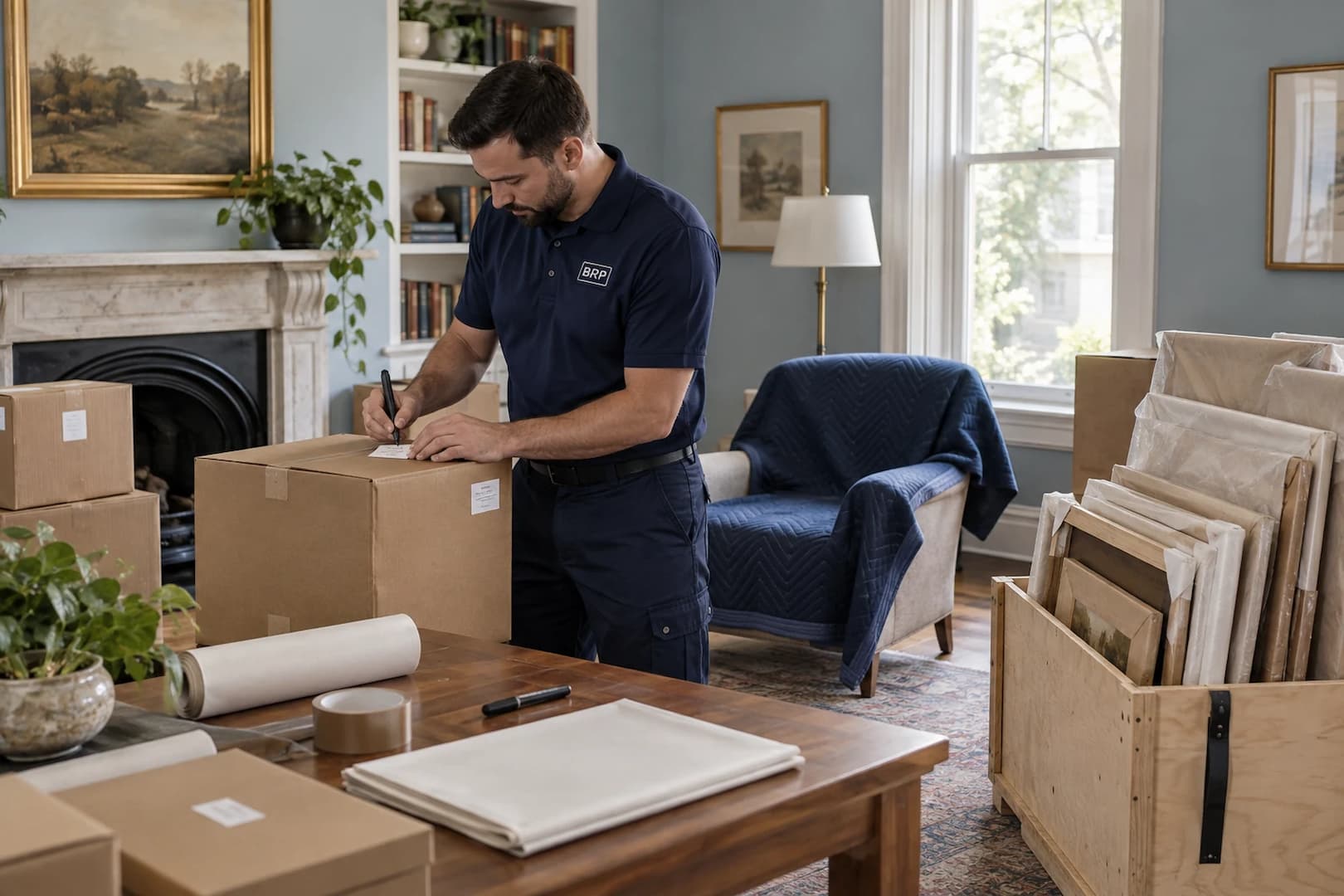
Cleanable hard surfaces, upholstered furniture and paper records require different decisions. Tell us about priority items before handling starts. Contents restoration is assessed separately from the question of whether a wall, floor or ceiling can remain.
Leave affected electrical devices unplugged until the appropriate professional has assessed them. Looking dry is not a reliable basis for reconnecting equipment. This applies to a home office computer as much as a piece of commercial machinery.
Follow progress by conditions, not a promised date
During mitigation
Standing water removal is followed by material drying where appropriate. We monitor the response and change the setup if readings or conditions warrant it. Contaminated losses need cleaning and material decisions before a normal drying arrangement is suitable.
Before repairs
The source needs to be addressed and the affected assembly ready for the next trade. Finishing over damp layers risks another repair. We discuss what remains open, what has been completed and what the repair scope needs to include.
The estimate should identify labor, material handling, equipment use and the work needed afterward. Access restrictions, contamination, hidden layers and the time equipment is required can all change the price. Request an explanation when the scope changes instead of relying on a square-foot allowance.
We support insurance documentation with observed damage and work records. Keep emergency invoices and your discovery timeline together. Your insurer decides what the policy covers; neither cleanup authorization nor a contractor estimate guarantees reimbursement.
Questions before you book Maynard restoration
Can you help outside normal business hours?
Yes. Emergency help is available 24/7. Tell us the type of loss and the address so we can discuss the response and immediate access needs.
Can my shop operate while the back room dries?
It may be possible if access, utilities and the work boundary allow it. Contamination or shared systems can change that answer. We assess the building before planning occupied use.
Do you handle a small apartment leak?
A small visible leak can still wet a ceiling or floor cavity. We assess its extent and discuss a suitable scope, including access to other units when needed.
Should I use a shop vacuum after a sewage backup?
Keep the affected area closed to normal use and seek professional assessment. Household equipment can spread contamination and is not an adequate plan for a sewage loss.
Can drying save my hardwood?
Possibly, depending on the wood, subfloor, exposure and contamination. We assess those conditions before recommending a drying attempt or replacement.
Who arranges the repair to the broken source?
A suitable plumber, roofer or other trade handles source correction. We coordinate the damage-restoration scope around that work and explain the remaining dependencies.
Boston Restoration Prime · Maynard
Put your Maynard recovery in motion
Call 617-639-0909 and describe the room or business function that is affected. Share the address, source status and access contact. We will discuss emergency mitigation and the information needed to plan the work.
in MaynardCall 24/7 ↗