
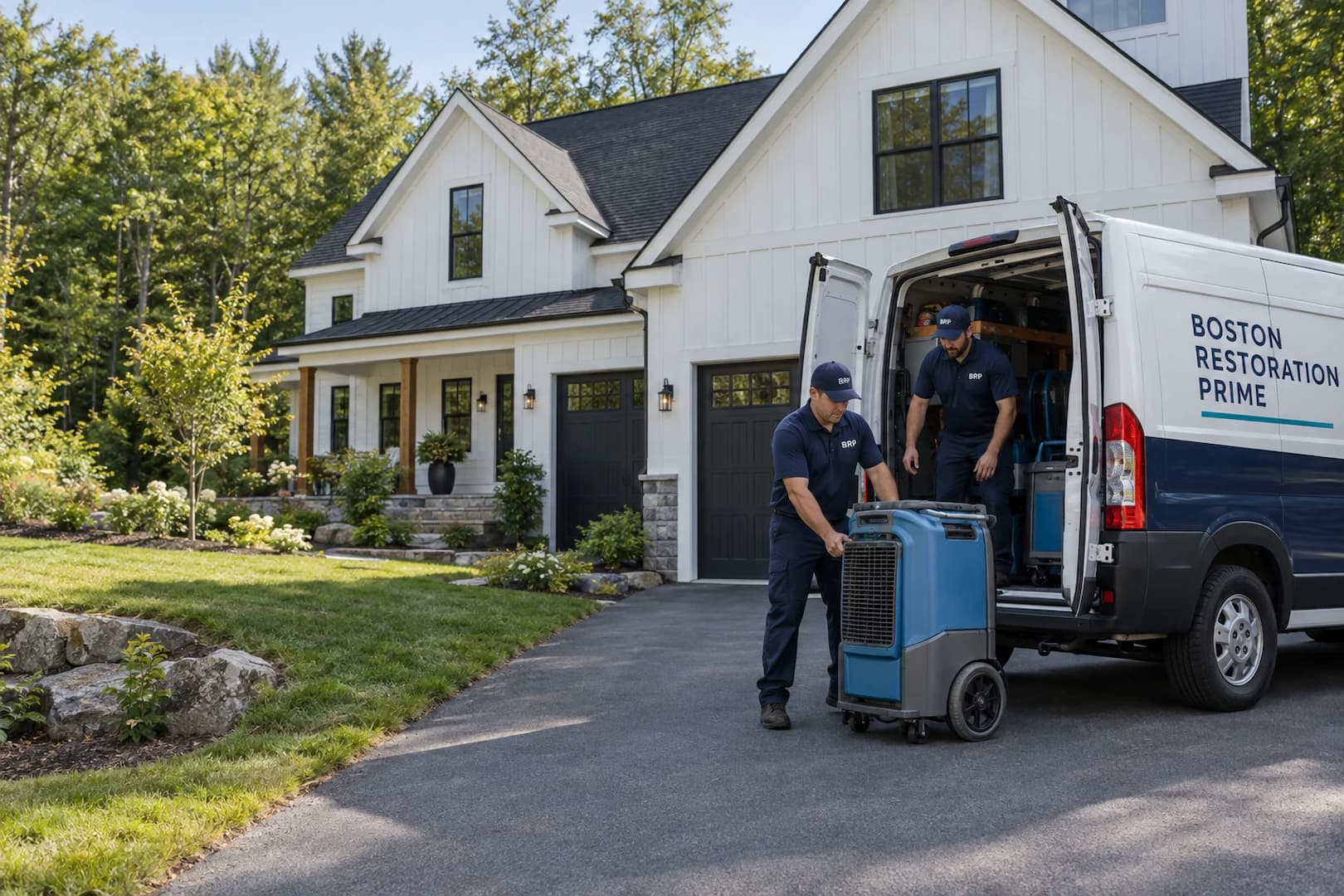
Restoration in Hopkinton, Massachusetts
Restoration Company in Hopkinton, MA
A finished basement or renovated kitchen can hide water beneath several layers of material. Boston Restoration Prime provides emergency restoration in Hopkinton, from extracting water and tracking moisture to cleaning smoke residue and addressing mold. We explain what needs attention now and what must happen before the room can be rebuilt.
Get Immediate Help Now
Request your free, no-obligation estimate.
Preserve what is sound
What is wet, and what can be saved?
Removing every finish can discard sound material. Leaving every finish in place can trap water behind it. We inspect the source and exposure, then discuss what the flooring, cabinet bases and insulated walls each need. Salvage depends on the condition of that assembly, including contamination.
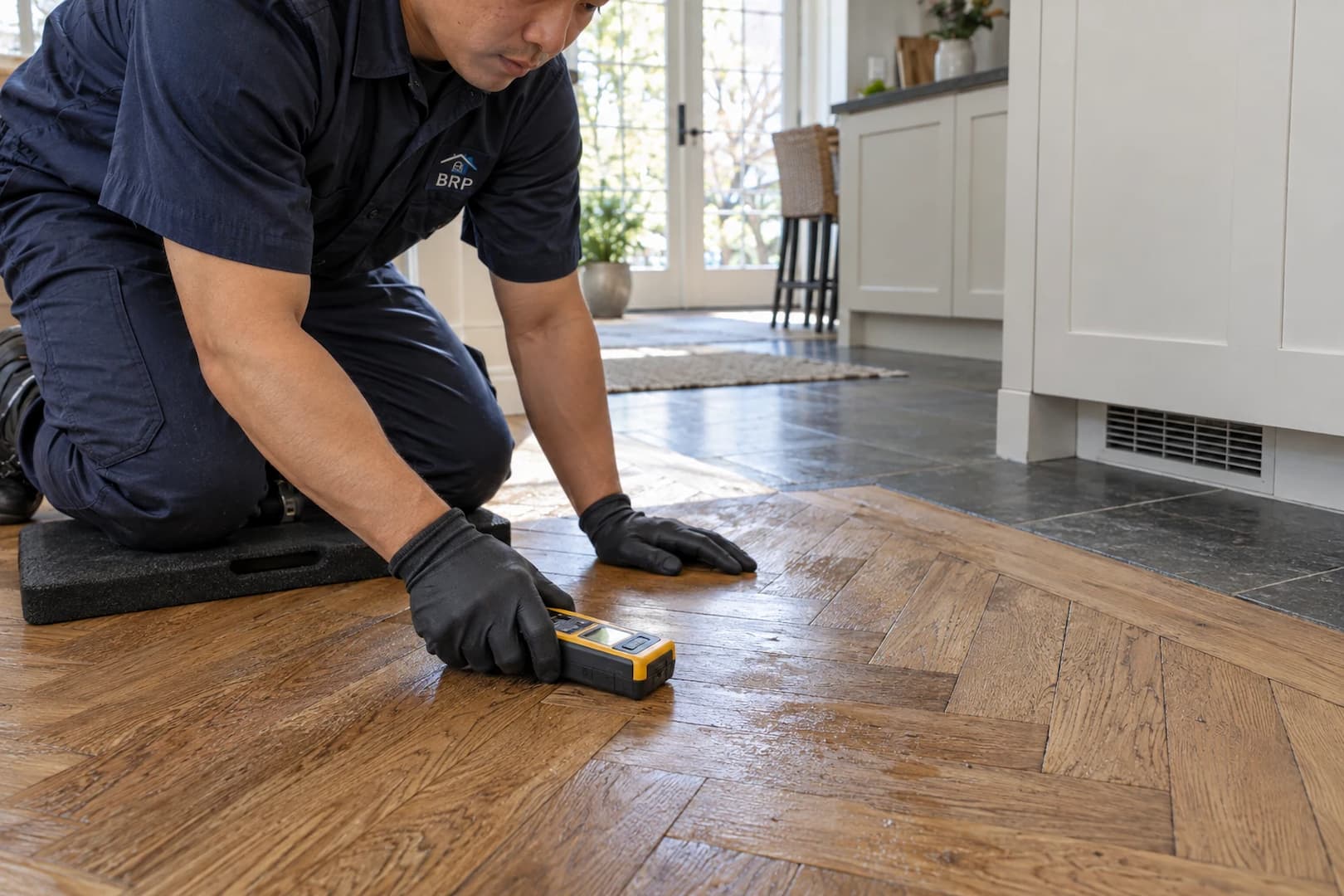
Do you know what is beneath the floor? Tell us about recent remodeling, and share renovation photographs or plans if you have them. Tile over an earlier floor, extra underlayment or a closed cabinet toe-kick can change how we reach the moisture. The visible finish may reveal little of the construction below.
An emergency call does not require a complete diagnosis
You can call with what you know: the address, the affected level and whether water is still arriving. Mention standing water near power, wastewater, a sagging ceiling or smoke from an active incident. Stay outside unsafe areas, and call 911 for fire, a gas concern or an immediate electrical hazard.
For an isolated appliance or supply-line leak, a safely accessible shutoff may stop further release. Avoid unplugging wet equipment or walking through water to reach controls. Our 24/7 emergency service can help establish the restoration response while the appropriate plumber, roofer or other trade addresses the cause.
The sequence changes when the evidence changes
Map the affected assembly
We check the visible damage and connected materials, including adjoining rooms and the level below. Moisture readings create a starting record and help locate places where the surface appearance understates the loss.
Extract and create access
Accessible water is removed. If wet insulation or a damaged finish prevents useful drying, selective removal may be necessary. The proposed opening should have a clear purpose and a documented condition behind it.
Dry, measure and adjust
Air movers and dehumidifiers are arranged for the work zone and available safe power. Repeated readings show progress. If a material stalls, we investigate access, continuing moisture or another limiting condition.
Prepare the repair handoff
Rebuilding follows source correction and an acceptable condition of remaining materials. We discuss what was removed, what was retained and which finishing or trade work still needs to be scheduled.

A storm may leave more than one entry point
Rain through a roof opening can affect attic insulation, a ceiling and a wall below it. Water at a lower-level doorway follows a different route. We ask about the timing and inspect the connected areas instead of assuming every damp surface has the same source.
Hopkinton has published a culvert evaluation and stormwater flooding study, and Woodville has its own historic district. Those local conditions call for property-specific planning: an exterior drainage issue needs the right trade, and work affecting a regulated historic property may need review before alterations. We do not infer flood exposure or restrictions from a town name alone.

When the loss includes residue or contamination
Smoke beyond the fire room
Soot may settle on high shelves, inside closets or on textiles away from the original fire. Once the building is released for entry, we assess surfaces and contents, choose appropriate cleaning, and address affected materials before relying on odor treatment. Firefighting water is assessed separately. Fire and smoke restoration
Mold behind a finish
A lingering leak can support growth where the wall or cabinet hides it. Containment and controlled removal may be needed to avoid spreading affected material during work. We discuss the moisture correction and the cleaning scope together. Mold remediation
Wastewater on a finished floor
A sewage backup changes what can be cleaned and kept. Stop using fixtures connected to the suspected backup, keep the work area isolated and arrange a source assessment. Porous materials exposed to contamination may need disposal. Sewage cleanup
Odor after the visible cleanup
An odor may remain in a material, cavity or item that was not reached. The next step is to locate the source and reassess the affected area. Fragrance or paint does not substitute for removing residue or correcting dampness. Odor removal services
Plan around the rooms you still need
A row of air movers beside the main entrance affects everyday use of the house. Tell us which routes and facilities you need, especially a sole bathroom or access to work equipment. We discuss furniture movement and any containment while there is still time to plan a clean route.
Furniture and personal belongings are assessed according to exposure and material. Dry items may stay protected outside the work zone; affected contents may need separate cleaning or removal. If you have a home office, identify documents and devices that should be inventoried, and avoid powering anything that became wet.

Ask for the reason behind each line of the estimate
A useful scope makes the work understandable: which materials were affected, why access is needed, what equipment is proposed and whether contents handling is included. A large open basement and a small kitchen with wet built-ins can require very different labor even if the visible water looks similar.
Ask what the schedule is waiting on. It may be drying progress now and a source repair, selected material or approval later. Photographs and restoration records can support the insurance review, but they do not decide coverage. That decision belongs to your insurer under your policy.
Hopkinton restoration questions
Can wood flooring be dried without replacement?
Sometimes. Species, construction, distortion, exposure time and contamination affect the decision. Moisture readings and the condition of the subfloor help determine whether drying is reasonable.
Does an upstairs leak require a downstairs inspection?
Often it does when water could have traveled through the assembly. Tell us where the leak originated and which surfaces changed below it; that helps define connected inspection areas.
Do you handle homes in Woodville?
Yes, we serve the Hopkinton area, including Woodville. Give the full street address and note any property access constraints or known historic review requirements when discussing repairs.
Can I move the fans at night?
Contact us before changing the drying setup. Moving or switching off equipment can affect progress. We can discuss noise and access issues while preserving the purpose of the equipment.
What happens after mitigation is complete?
Review the remaining repair scope, source correction and retained-material condition before finishes are installed. The handoff should make clear which reconstruction tasks and specialist trade work remain.
Boston Restoration Prime · Hopkinton
Get a plan for the damage you can see and the layers below
Call 617-639-0909 for restoration in Hopkinton. Tell us what happened, whether the source is controlled and which finished areas are affected. We will discuss inspection, safe access and the work needed next.
in HopkintonCall 24/7 ↗