
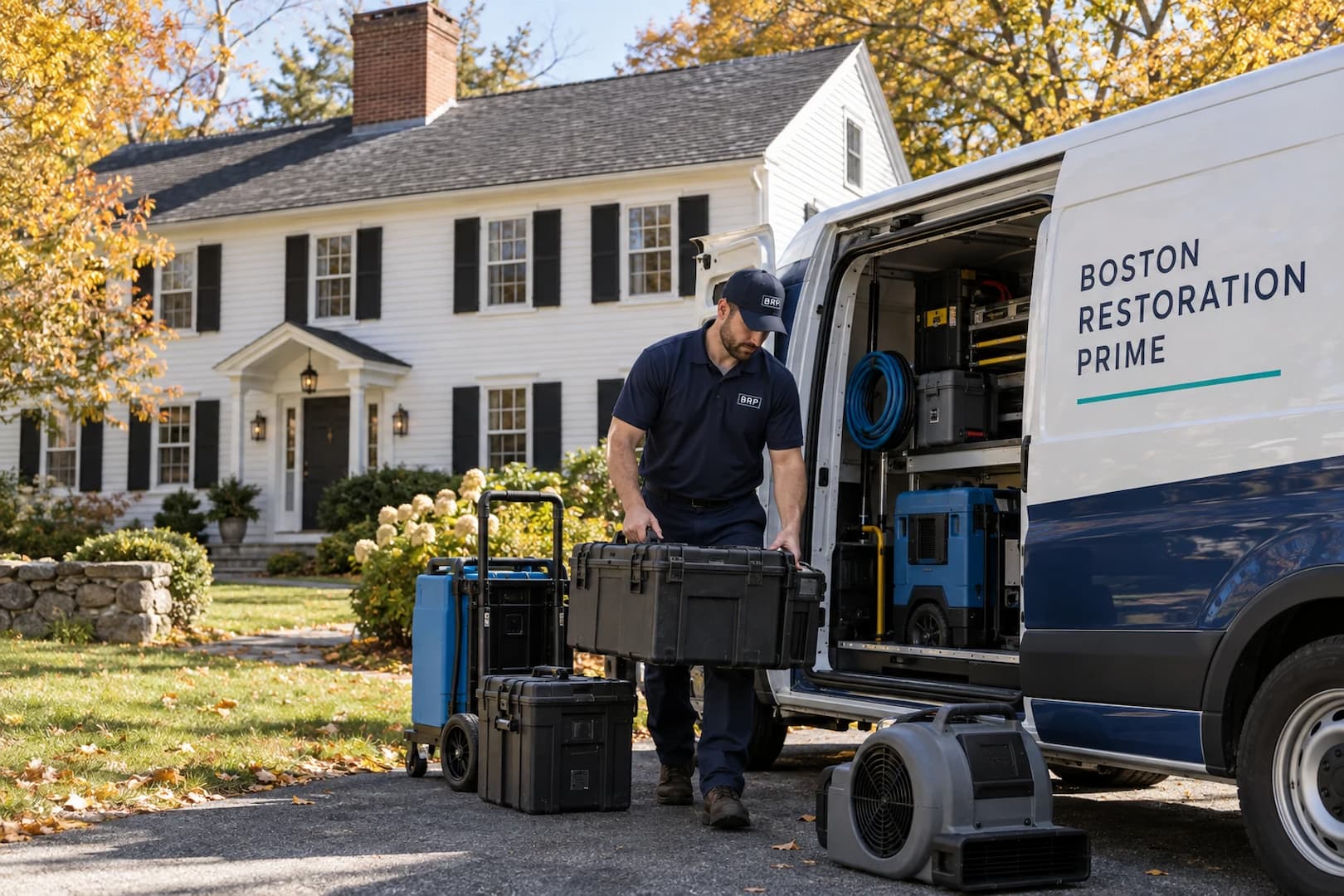
Restoration in Grafton, Massachusetts
Restoration Company in Grafton, MA
Damage does not make every finish a lost cause, but keeping the wrong material can leave a problem concealed. Boston Restoration Prime helps Grafton property owners make informed restoration decisions after water, fire, mold, sewage or storm damage, with 24/7 emergency assistance and a scope based on the actual condition of the building.
Get Immediate Help Now
Request your free, no-obligation estimate.
A considered repair begins here
Begin with the material, not a demolition allowance
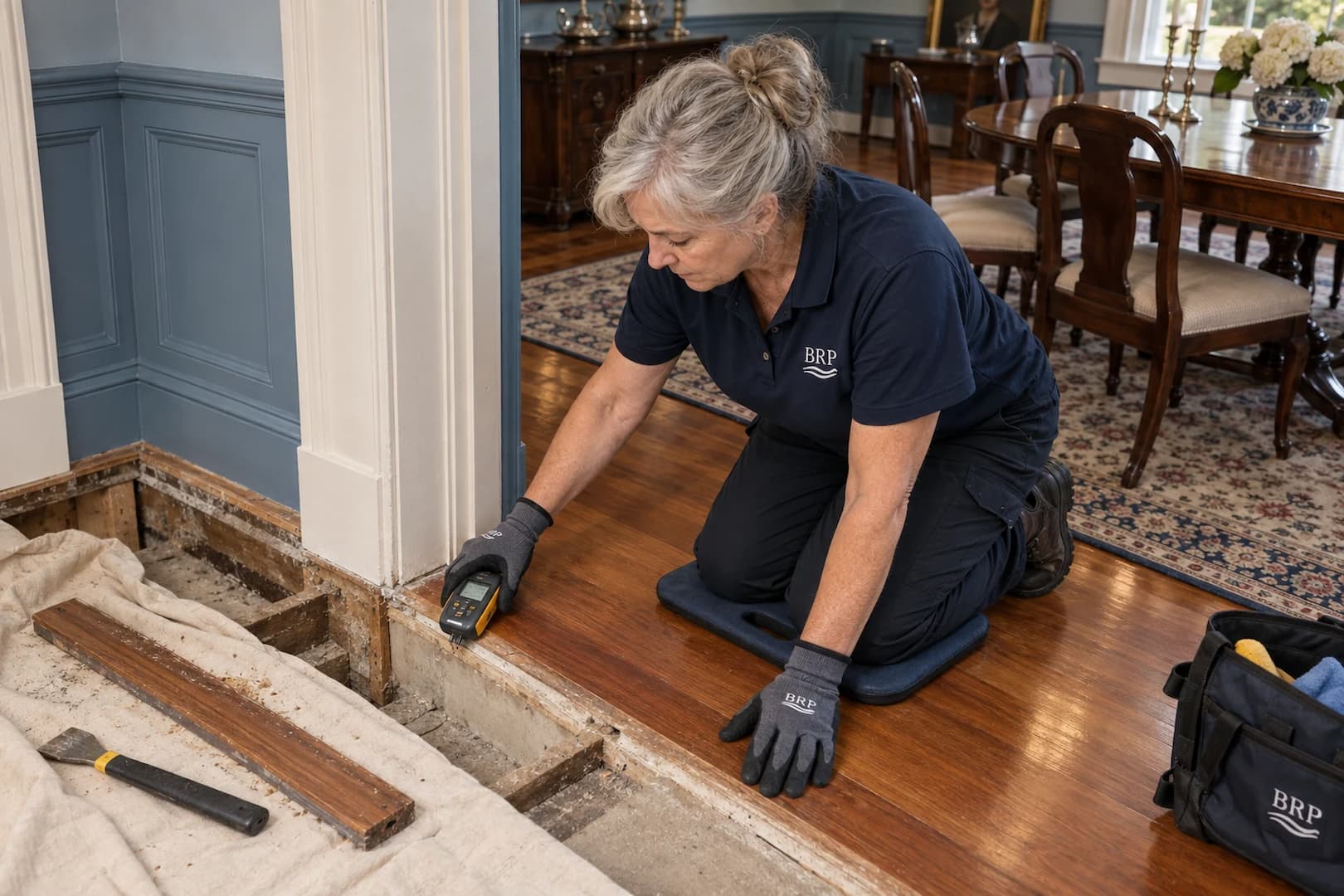
The cabinet base may swell while nearby hardwood remains a candidate for drying. Plaster overhead brings another set of questions. We look at the material and its exposure before choosing cleaning, drying or removal. A finish is worth preserving only if it can be restored appropriately and the assembly behind it is accessible.
Show us the details you hope to keep, whether that is original trim or a floor installed last month. We can consider those priorities during the assessment, although condition will determine what is salvageable. Older photographs may help document the finish as it was before the damage.
The incident sets the cleanup requirements
Water after a leak
We extract accessible water, investigate its path and monitor remaining materials as they dry. Cabinet cavities, subfloors and the room below a leak can be part of the same loss. Water restoration services
Fire and smoke damage
Once access is allowed, we assess fire residue, affected contents and water used in suppression. Cleaning methods are chosen for the finish and residue rather than applied uniformly. Fire damage restoration
Mold in a damp assembly
We investigate moisture, define the affected area and discuss containment or controlled removal where needed. A cosmetic cover-up leaves the moisture conditions unresolved. Mold remediation
Sewage or storm entry
Contamination from wastewater affects disposal and cleaning decisions. Storm entry also requires correction of the opening or drainage problem by the right trade. Sewage cleanup Storm restoration
Keep, clean, open or remove?
| Possible approach | What needs to be established |
|---|---|
| Retain and dry | The material remains sound, can be dried effectively and is suitable to retain given the exposure. |
| Clean in place | The residue and surface can be treated appropriately without leaving inaccessible contamination. |
| Create a selective opening | Access is needed to inspect or dry concealed material, with a clear reason for the opening. |
| Remove and replace | Damage, contamination or inaccessible moisture makes retention inappropriate. |
The choice can change after concealed areas are opened. We explain the finding and the effect on the scope before treating the first estimate as a fixed description of unseen damage.
Grafton buildings need address-specific planning
Grafton’s official planning materials distinguish its village areas and historic resources. A property near the Common, in North Grafton or in South Grafton may have its own construction history and access constraints. We ask about additions and previous repairs rather than assigning a standard building type to the whole town.
If a property is subject to historic review, confirm the applicable requirements before exterior or other regulated alterations. If older finishes may contain lead paint or asbestos, have a qualified professional evaluate them before the materials are disturbed. Those questions can affect repair planning even when the immediate need is simply to remove water.
Drying has to reach the underside
A floor can look better before the subfloor below it has recovered. We check moisture in affected materials and compare suitable dry reference areas to guide the drying plan. Removing accessible water is followed by controlled air movement and dehumidification where the conditions allow.
The amount of equipment and how long it stays depend on the assembly, access and measured response. If readings plateau, we consider whether moisture is still entering or a concealed layer needs better access. Repeated measurements provide a more useful endpoint than a preset number of days.
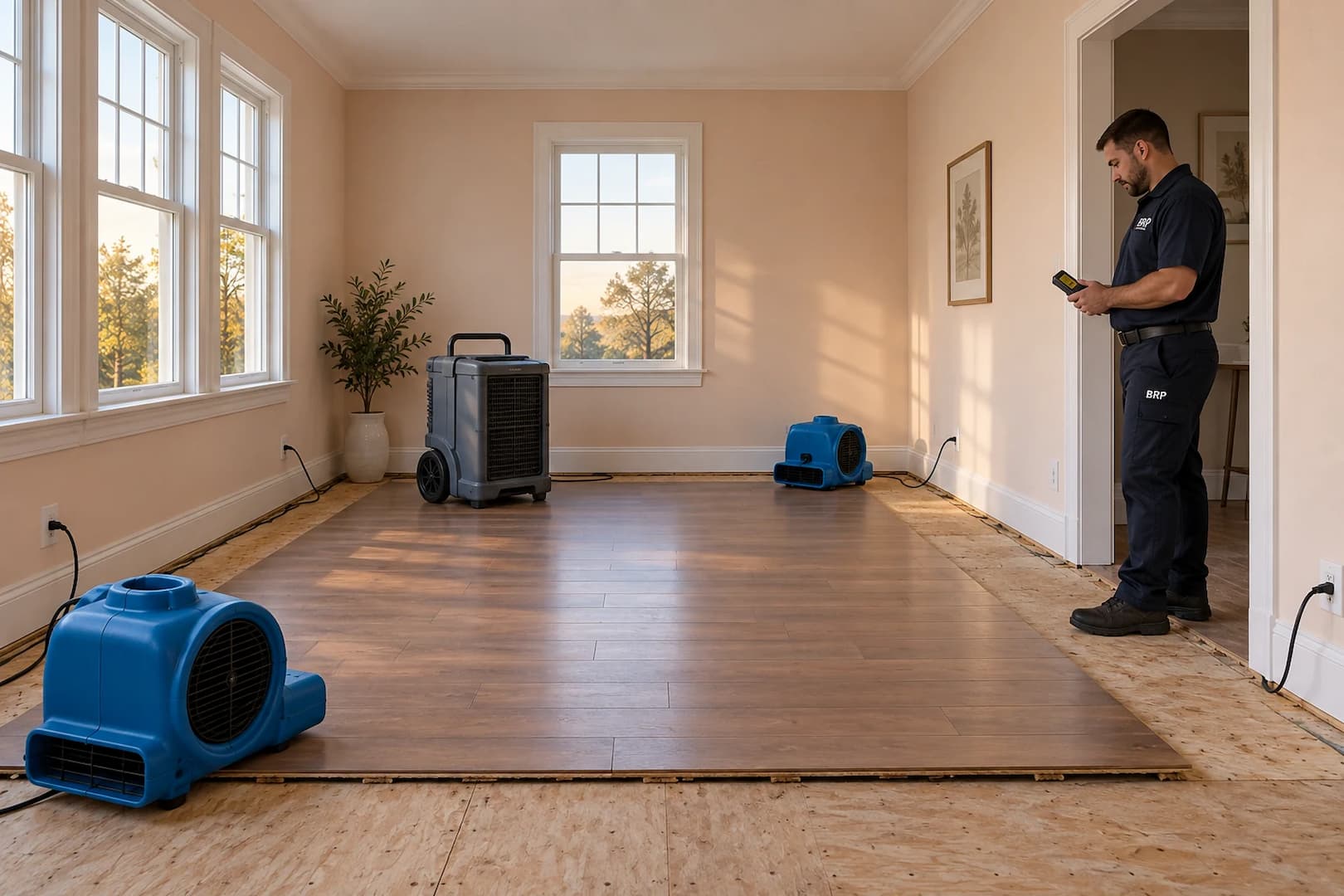
Keep equipment arranged as agreed and let us know if it stops or a circuit trips. A change made for convenience can leave part of the assembly outside the intended drying conditions. Basement cleanup and drying
The contents may need a different restoration path
Open a smoke-affected cabinet and the contents may need several different treatments. Dishes, papers and fabric cannot simply share one cleaning method. We discuss an inventory before movement begins and identify delicate or essential items, particularly when other contractors will be using the room.
Clean contents can be protected from the work zone. Wet or contaminated belongings may need separate treatment or disposal. Keep a record of decisions and avoid powering wet electronics. Sentimental value matters to the discussion, but it does not change whether a material can be cleaned appropriately.

While you arrange help, keep the unsafe area clear
Call 911 for active fire, a gas concern or an immediate danger. Do not stand below sagging ceilings, enter water near electrical equipment or climb onto a storm-damaged roof. If a supply shutoff is safely accessible from a dry area, closing it may limit further water release.
For a drain backup, stop using connected fixtures and keep children and pets away. Tell us about wastewater, unsafe power or damaged access when you call 617-639-0909. Emergency restoration is available 24/7; the response begins with understanding the conditions that affect entry.
A repair plan should separate urgent work from finishing work

Emergency mitigation may include extraction, cleaning, removal and drying. Reconstruction covers the replacement finishes and related repair tasks. Ask for those stages to be identified along with any plumbing, roofing or drainage correction that falls to a separate trade.
Costs change with the affected materials, contamination, access and contents handling, not only room size. Drying follows moisture readings; repair timing can also depend on approvals and selected materials. We help organize restoration documentation for your claim, while the insurer determines coverage and payment under the policy.
Questions about retaining and repairing a Grafton property
Can original trim be saved after water damage?
Sometimes, depending on material, condition and contamination. We assess whether it can be removed carefully, cleaned or dried, and reinstalled as part of the repair plan.
Does stained plaster always need replacement?
No single answer applies to every stain. Moisture, adhesion, structural condition and the need to reach concealed material affect the decision. A sound-looking surface can still require investigation.
Will you restore everything in one visit?
An initial visit establishes conditions and immediate needs. Drying, cleaning and reconstruction can require separate stages, with the timing determined by material response and repair dependencies.
Do I need mold testing before calling?
No. Describe visible growth, odor and moisture history. The inspection can help establish whether testing would answer a useful question and what remediation assessment is needed.
What should I keep for the insurance claim?
Keep safe photographs, receipts, the incident timeline and restoration records. Ask your insurer about its requirements before discarding items where practical. We can support documentation of observed conditions and work.
Boston Restoration Prime · Grafton
Discuss the damage and the details you want to preserve
Call 617-639-0909 for restoration in Grafton. Describe the source, affected rooms and any finishes or belongings needing particular attention. We will help establish what to inspect and what can happen next.
in GraftonCall 24/7 ↗