
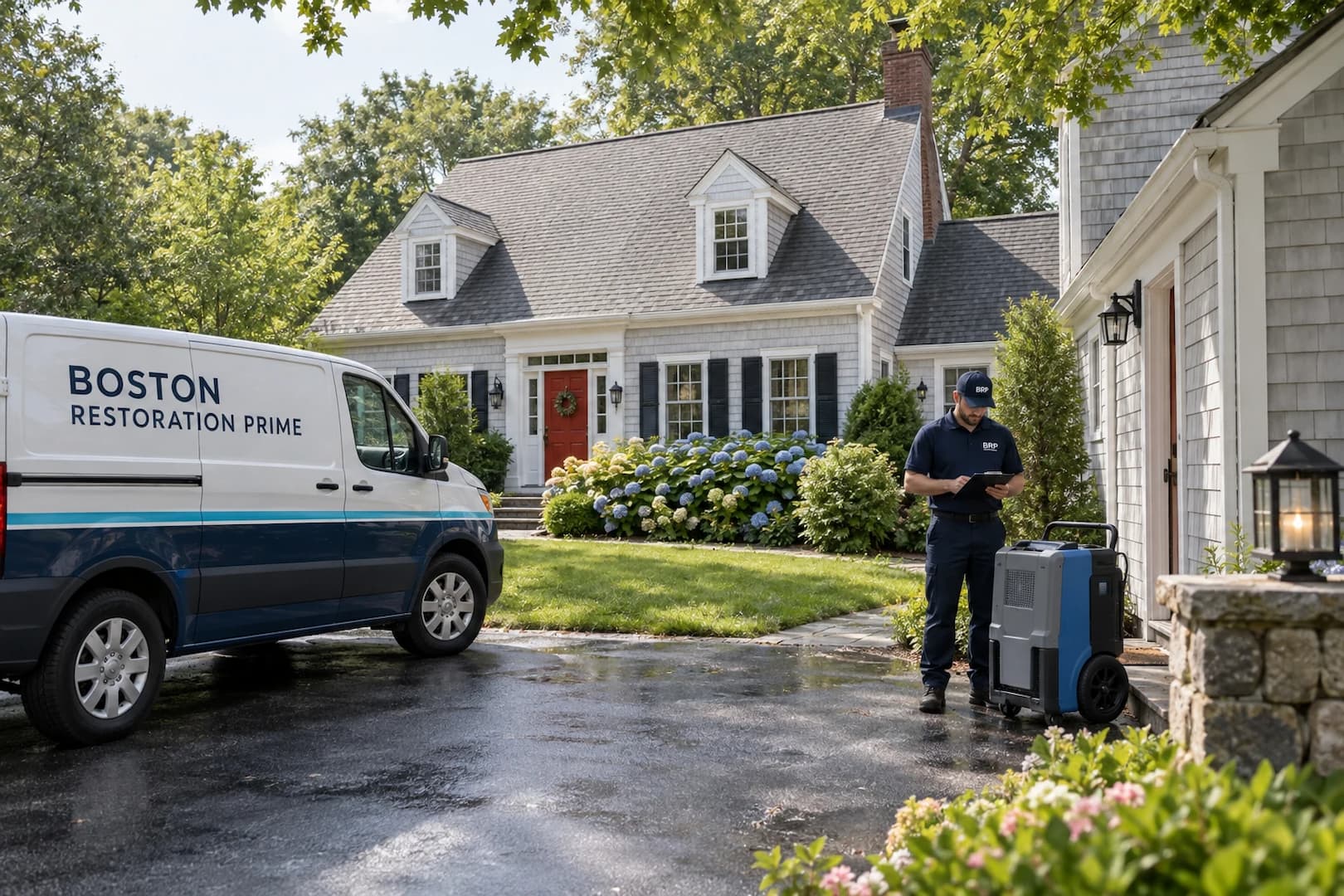
East Walpole, within Walpole, Massachusetts
Restoration Company in East Walpole, MA
Before wet boxes leave the basement, the water source and handling route need attention. Boston Restoration Prime helps East Walpole residents organize that cleanup and assess the materials left behind. We restore damage from water, sewage, mold, fire and storms throughout the property, with emergency help available 24/7.
Get Immediate Help Now
Request your free, no-obligation estimate.
Before moving a single box
Is the water safe to cross?
Do not enter standing water when it may contact the electrical panel, appliances or outlets. Keep children and pets out of the basement. If the water came from a toilet, floor drain or an uncertain outside source, leave the cleanup and affected items undisturbed until the conditions are assessed.
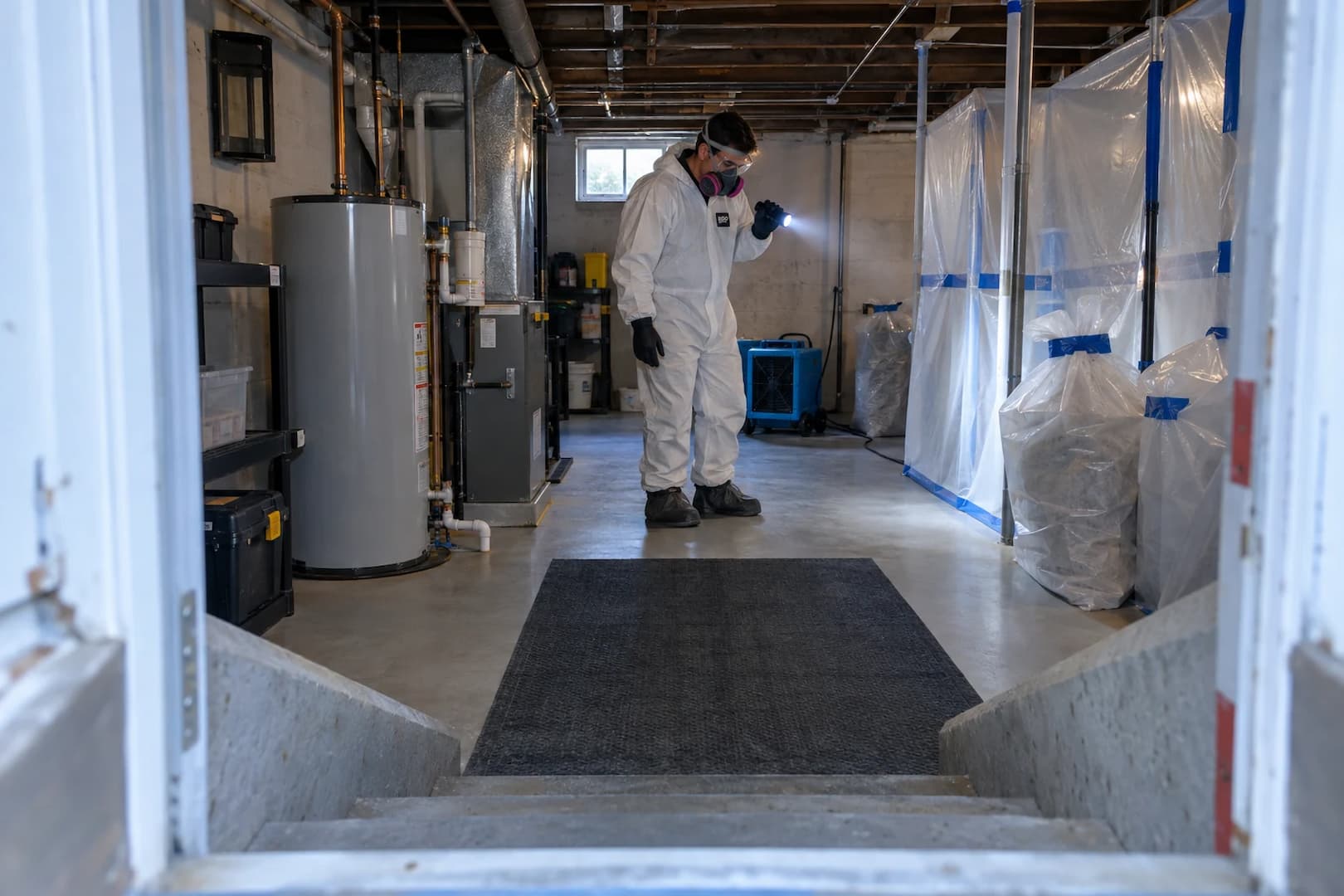
Describe the first place water appeared and whether its level is changing. We also need the route downstairs: a bulkhead or separate entrance may keep equipment and removed material out of the main living space. The work boundary and handling route should be settled before wet belongings are carried upstairs.
For sewage, an appropriate drain or septic professional also needs to address the source. Our sewage cleanup focuses on the contamination and damage left inside, with cleaning and material decisions made before structural drying.
Give stored belongings a separate decision
Dry containers on a shelf may be unaffected while cardboard and furniture at floor level have absorbed water. Identify which items touched water and describe their condition before anything is moved. We discuss safe handling and items needing closer assessment, with separation to avoid carrying contamination into a clean room.
| Contents condition | What to discuss before handling |
|---|---|
| Dry items outside the affected area | A clean storage location and a route that avoids the work zone |
| Wet paper or cardboard | Exposure, importance and whether specialist recovery is appropriate |
| Furniture touching the floor | Wicking into legs, upholstery or composite panels |
| Items exposed to sewage | Material porosity, contamination and whether cleaning is reasonable |
| Electronics near the water | Safe isolation and assessment before anyone tries to power them on |
Record the room and individual items in photographs before disposal when it is safe to do so. Family photographs, documents and valuable possessions should be identified early, before general packing or clearance begins. Contents restoration depends on condition and exposure, so we assess options without promising to save every object.
From a wet floor to a checked structure
Assess the source and safe access
We review how the water arrived, what it contacted and whether the source is still active. A plumbing or drainage repair may need to happen alongside mitigation.
Remove water and assess the layers
Extraction reveals damage at wall bases and under contents. We check accessible flooring, insulation and cavities instead of treating the cleared floor as the end of the loss.
Clean or remove affected material
Material condition and contamination determine what can stay. We explain proposed removal and where an opening is needed to reach a hidden wet area.
Monitor drying before repairs
Moisture readings guide the equipment arrangement and the next stage. Wet layers should be addressed before a new wall finish or floor covering hides them.
See our basement cleanup services for the work that can follow initial water removal.

If each storm leaves a new wet patch
Note when the wet patch returns: during rain, hours later or after a fixture is used. That timing helps us distinguish renewed entry from moisture left by an earlier loss. A bulkhead or foundation opening may need investigation, but the source should be established from the observed conditions.
East Walpole is part of Walpole, with Bird Park and the Neponset River landscape among its local features. That setting does not tell us the flood risk or cause at an individual address. The storm restoration plan follows evidence at the building.
Common decisions after a basement loss
Can I use a household fan to dry the floor?
Do not blow air across sewage, suspected mold or an uncertain contaminated area. An assessment should establish appropriate handling and drying conditions first.
Does all wet drywall need replacement?
No single rule fits every loss. Contamination, material condition, wet insulation and access to the cavity affect whether drying is reasonable or removal is needed.
What if the basement is unfinished?
Accessible framing, stored contents and mechanical areas can still be affected. We assess what became wet even when there is no carpet or finished wall to remove.
Can we use the upstairs rooms during cleanup?
That depends on utilities, contamination, the equipment route and safe access. We discuss whether the affected area can be separated and what restrictions are needed.
How soon will the equipment be removed?
Drying results guide removal. The amount of material involved and hidden moisture can change the duration, so we explain progress through checks rather than a fixed promise.
Do you work beyond basements?
Yes. We handle water, fire, smoke, mold and storm damage in affected rooms throughout the property, including upper-floor leaks and commercial spaces.
When odor is the first thing you notice
Mustiness after water damage
When mustiness persists, the inspection may need to include stored material and accessible cavities as well as any ongoing moisture. Mold remediation addresses affected material within an appropriate work boundary and should be coordinated with correcting the moisture cause.
Painting over a mark or spraying a fragrance does not establish that the damp area has been resolved. Tell us where the smell is strongest and whether it changes after rain.
Smoke beyond the fire room
After responders allow entry, we inspect soot distribution and contents as well as firefighting water. Fire restoration uses cleaning methods suited to the residue and surface, with odor treatment tied to source removal.
Leave delicate surfaces undisturbed until assessed. Wiping soot with an unsuitable product can spread it or damage the finish underneath.
Make room for the work without losing track of the household
Before setup, identify the storage you still need to reach and any downstairs room used for work or sleeping. Pets also affect access arrangements. We discuss the cleanup boundary and a clear route for equipment and materials around those household needs.
Monitoring visits require access to the affected materials. If the equipment noise or position creates a problem, contact us before moving or disconnecting it. Adjustments should preserve the planned drying conditions and safe walking routes.
We separate immediate water mitigation from later finish repairs. Once the source and drying requirements are addressed, the repair scope can identify which walls, flooring or trim need replacement.
Keep the estimate connected to the findings
A finished basement can conceal wet insulation that an open framing area would make accessible. That difference, along with contamination and contents handling, affects the scope and cost. If opening a finish reveals more damage, we explain what was found and the work it adds.
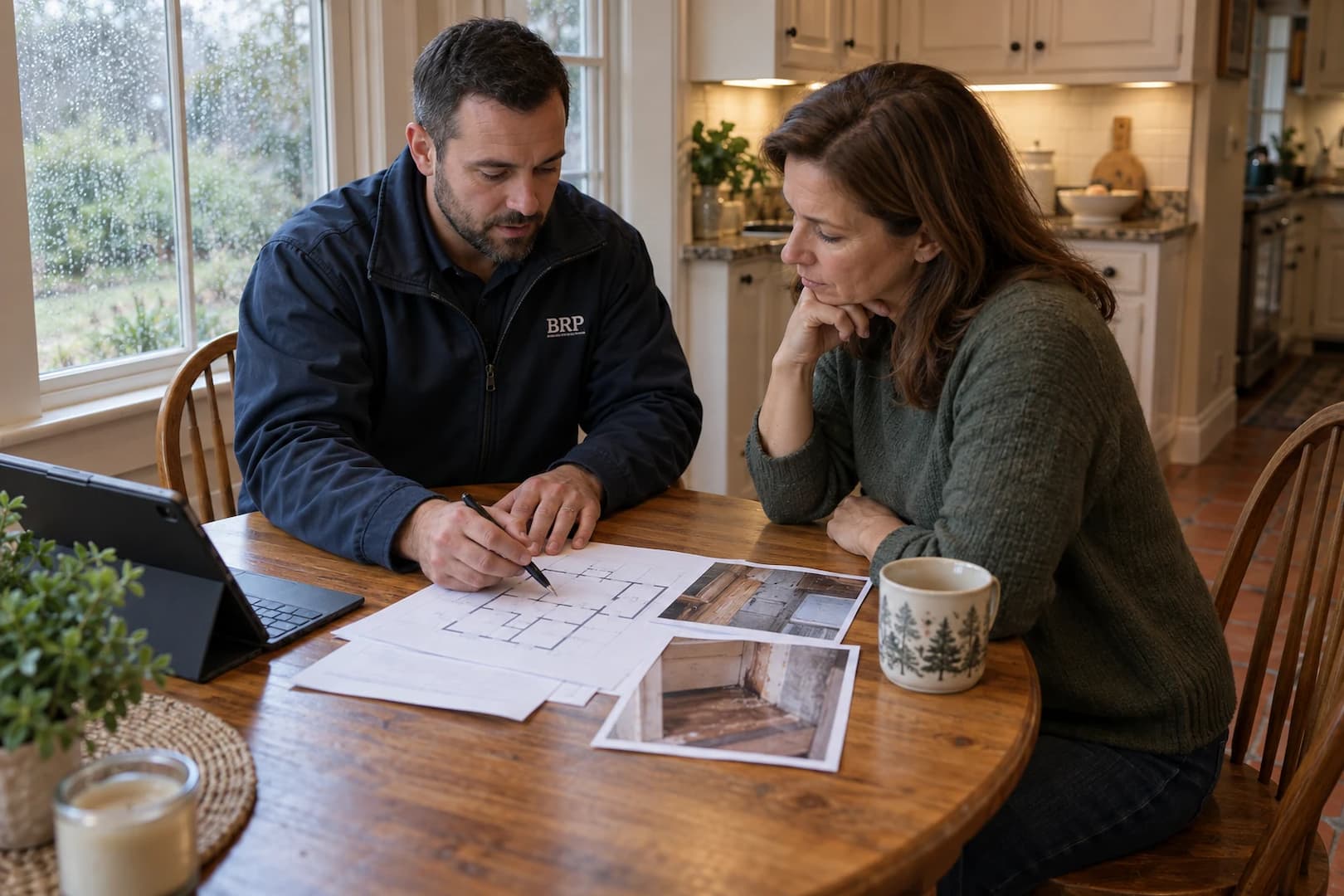
We can provide photographs, findings and work records for an insurance review. Coverage and payment are determined by your insurer. Save receipts and source repair information, and record when you discovered the loss.
Give us the complete East Walpole address and the person authorized to approve work. Clear access information and an agreed scope help move the cleanup toward the next decision without leaving ownership or entry arrangements unresolved.
Boston Restoration Prime · East Walpole
Get the cleanup started with the right information
Call 617-639-0909 for East Walpole restoration. Give us the address, affected area and any signs of sewage or continuing water entry. Tell us whether the basement has a separate entrance and if utilities may be affected.
in East WalpoleCall 24/7 ↗