
Septic Backup Cleanup in Basement — 24/7 Sewage Removal & Safe Remediation
Basement backups are different: sewage often enters through a floor drain, shower, or low-level fixture, then spreads into carpet pad, baseboards, drywall bottoms, storage contents, and the stairwell path. We respond 24/7 to contain the basement, remove contaminated materials safely, disinfect properly, control odor, and document the scope so you’re not guessing about what’s safe to keep.


“We had sewage come up through the basement floor drain. They arrived fast, sealed off the stairs, removed the carpet pad and affected drywall safely, and got the odor under control. They also documented everything clearly, which made the insurance conversation much easier.”
“They handled our finished basement carefully—protected clean areas, controlled the smell, and made the space safe again.”
“They explained what could be cleaned vs what had to be removed, and they kept the whole basement job organized.”
Basement septic backups are treated as black water (Category 3). The goal is safety: contain the basement, prevent tracking upstairs, remove contaminated porous materials, disinfect properly, and control odor—then document the scope so repairs and insurance decisions are straightforward.
Basement Septic Backups Escalate Quickly — Here’s What Proper Cleanup Prevents
In a basement, sewage doesn’t just sit on the surface. It can wick into carpet pad, soak drywall bottoms, collect around boilers/furnaces, and track up stairs on shoes. Professional basement remediation focuses on containment, safe removal, disinfection, and preventing contamination from migrating into clean areas.
Common basement backup situations we respond to
- Backup through a basement floor drain or shower drain
- Overflow near laundry / utility areas (low-level fixtures)
- Heavy rain + saturated soil pushing flow backward into the basement
- Line blockage, root intrusion, or a collapsed section leading to basement entry
Before we arrive (basement-safe quick steps)
- Stop using water: no flushing, showers, laundry, dishwasher
- Keep people/pets out of the basement; close the door if possible
- Avoid fans/HVAC (especially returns near stairs) — it can spread aerosols and odor
- If safe, move clean items off the basement floor and take photos/videos for documentation
Basement Mechanical Room Cautions (Boiler, Electrical Panel, Pumps)
Septic backups in basements often reach utility areas. Treat mechanical rooms as a higher-risk zone: contaminated water + electricity + HVAC equipment can escalate damage and create safety hazards.
Boiler / Furnace
Avoid restarting heating equipment if sewage-contaminated water reached the unit or controls. Moisture and contamination can damage burners, electronics, and insulation. Wait for cleanup + inspection.
- Don’t run heat “to dry it out” — it can spread odor and aerosols.
- Keep the area isolated until sanitation is complete.
Electrical Panels & Wiring
Water near panels, outlets, or extension cords can create shock and fire risk. Do not touch wet electrical components or attempt DIY resets in a contaminated basement.
- If needed, shut off power only from a safe/dry location.
- Have a qualified pro evaluate before re-energizing impacted circuits.
Sump Pump / Ejector Pump
Running sump or ejector pumps during a backup can spread contamination or recirculate sewage. Pumps should be assessed only after the source is controlled and the basement is properly contained.
- Don’t pump to a location that can re-enter the home.
- Confirm the discharge path is safe and compliant.
Basement Backup: What NOT to Do (Common Mistakes That Make It Worse)
With suspected sewage or septic contamination, certain “quick fixes” can spread pathogens, push odor deeper, or create a bigger (and more expensive) scope. When in doubt, treat it as Category 3 and keep the area contained.
Avoid these basement mistakes
- Don’t use a shop-vac on contaminated water (aerosol risk + equipment contamination)
- Don’t run fans/HVAC before containment (can spread particles and odor upstairs)
- Don’t “just bleach it” and assume it’s safe (needs proper cleaning + targeted disinfection)
- Don’t pull carpet/pad and drag it through the house (cross-contamination)
- Don’t start demolition before taking photos/notes (insurance documentation matters)
Do this instead (simple safety wins)
- Stop water use and keep people/pets away from the basement
- Close doors, limit foot traffic, and keep a clean pathway if you must enter
- Take quick photos/videos and call for a remediation plan
- For Category 3 guidance, see Black Water Cleanup / Category 3
Why Choose Boston Restoration Prime for Basement Septic Backup Cleanup?
Basement sewage cleanup needs more than disinfectant. It’s containment, safe removal, sanitation, and clear documentation—with extra attention to stairwells, HVAC returns, and utility areas.
Basement Safety-First Setup
We treat basement backups as Category 3 conditions. That means PPE, controlled handling, and a plan designed to reduce pathogens and prevent cross-contamination upstairs.
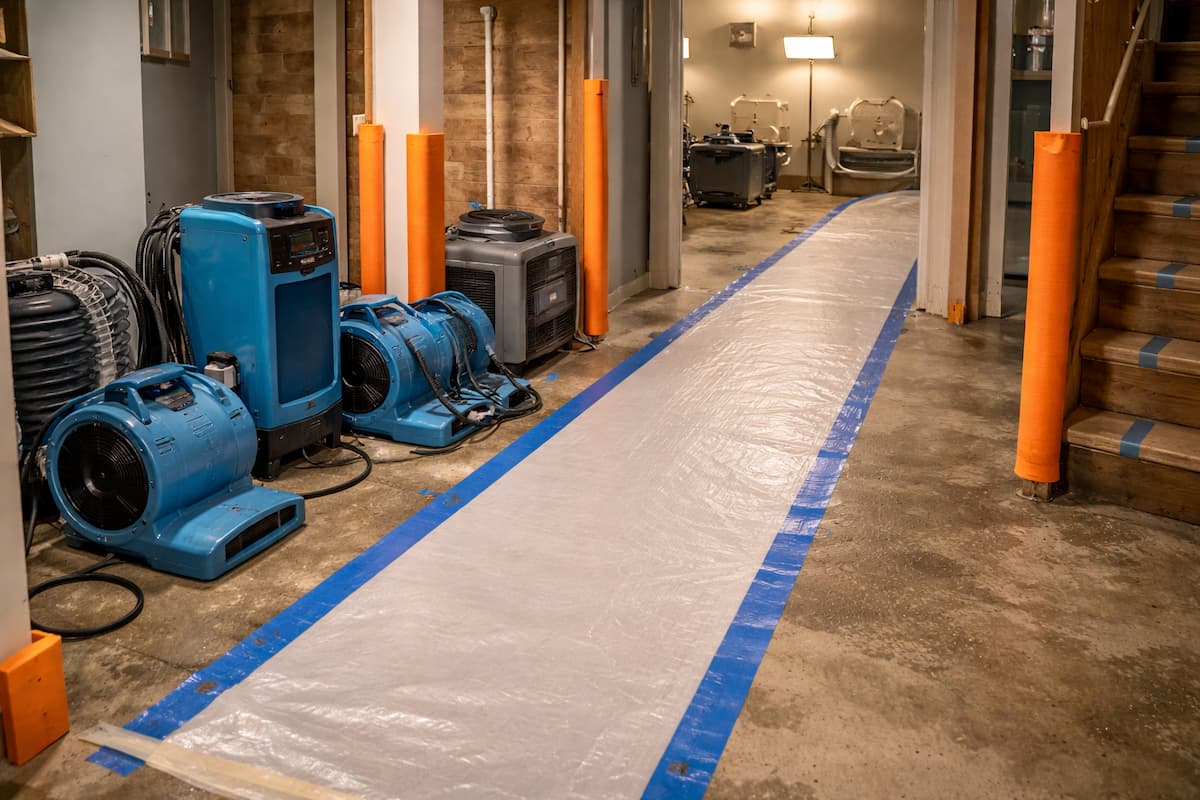
- Containment + protected pathways
- Stairwell / doorway control
- Odor control strategy by materials
HEPA Filtration for Confined Areas
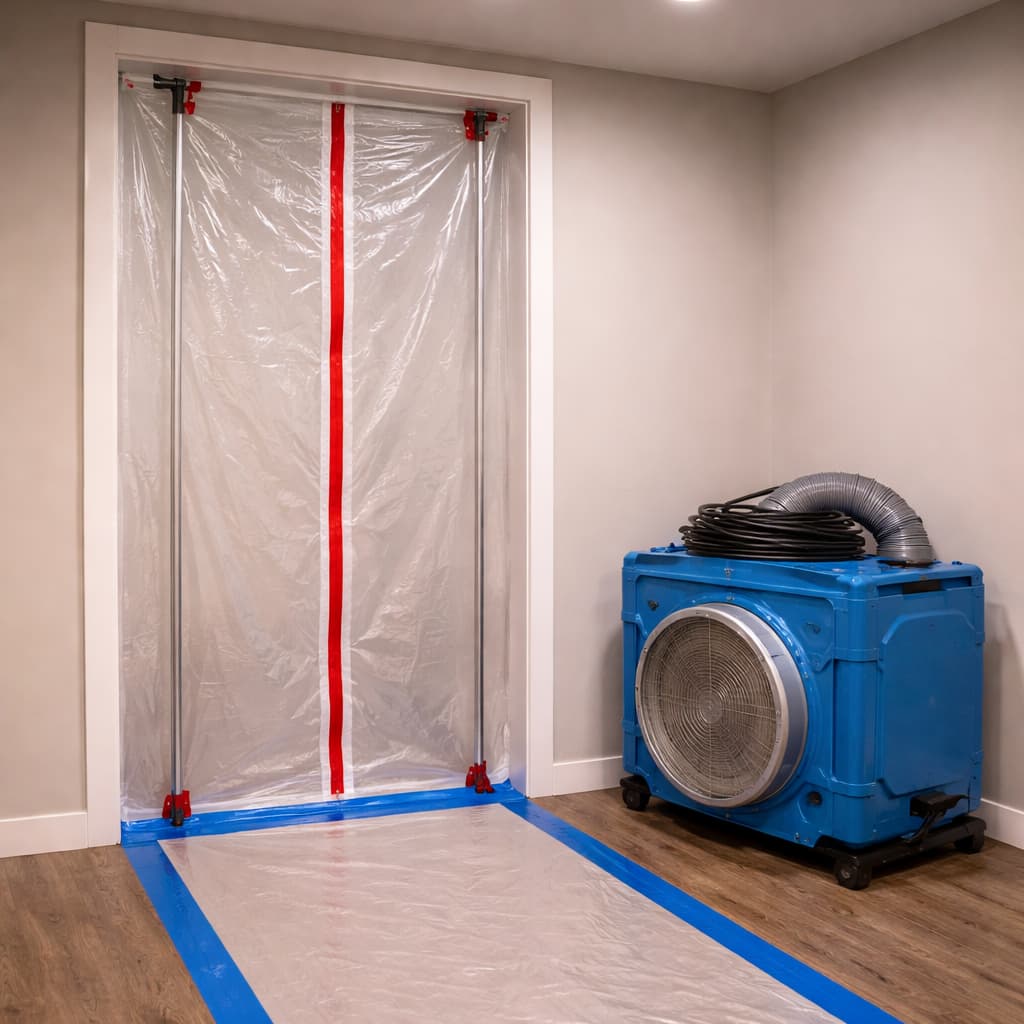
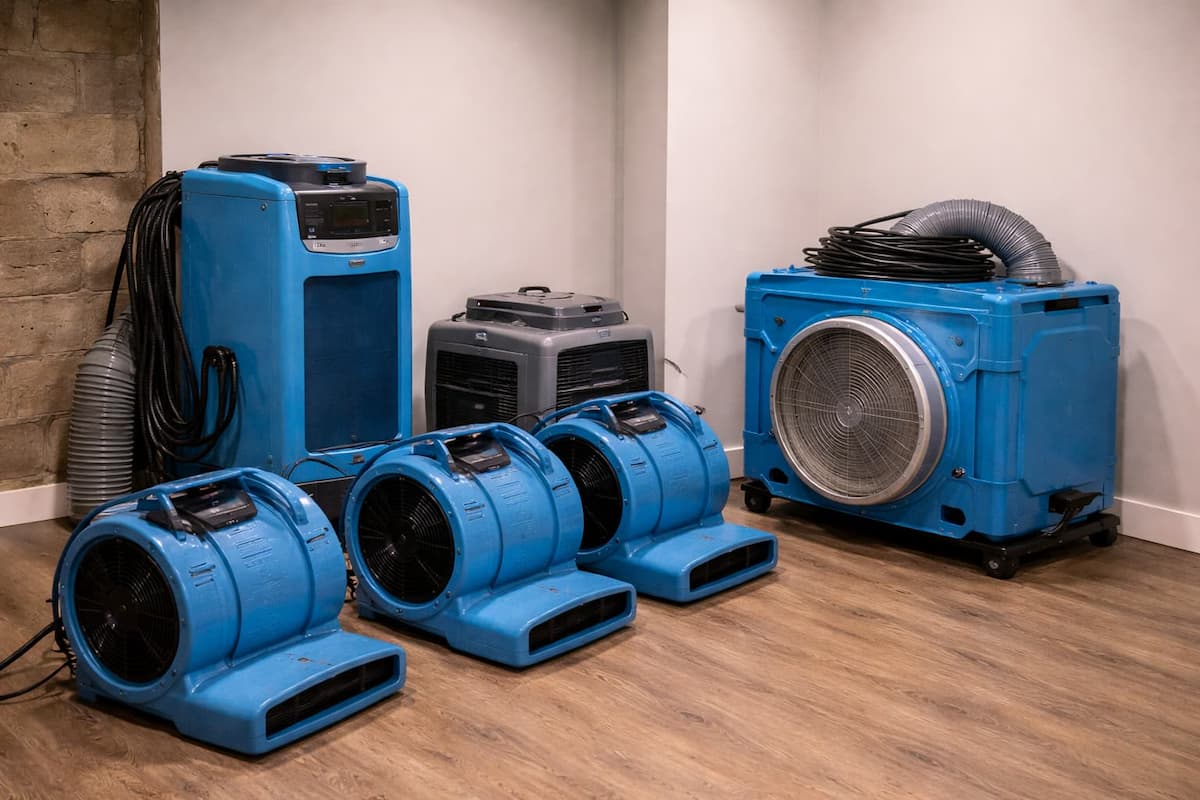
Basements can trap odor and aerosolized particles. We use containment and HEPA filtration when needed so contaminated particles don’t migrate into clean areas.
- Negative air (when needed)
- HEPA air scrubbing
- Measured drying after sanitation
Claim-Friendly Basement Documentation
We document the basement entry point, affected finishes, contents, and remediation steps. Clear notes help keep approvals and next steps moving.
- Before/during/after photos
- Removal list when required
- Adjuster-friendly records
Basement Cleanup vs. Fixing the System — And Why Documentation Matters More Downstairs
A plumber or septic provider addresses the cause (blockage, line repair, pumping, diagnostics). Our job is the basement remediation: contain the area, remove contaminated porous materials, disinfect surfaces properly, control odor, and verify moisture so your basement can be rebuilt safely. When insurance is involved, basement-specific documentation keeps the file clean and easier to review.
Is a basement septic backup covered by insurance?
Coverage depends on your policy and whether you carry a sewer/septic backup endorsement. Even when coverage applies, most policies still require “duty to mitigate” — taking reasonable steps to prevent further damage. With basements, quick mitigation often means stopping spread up stairs and removing contaminated porous layers early.
What we document for a basement loss (claim-ready)
- Where it entered (floor drain / low fixture) and how far it traveled
- Affected finishes: carpet pad, drywall bottoms, baseboards, subfloor edges
- Contents impacted: storage items, furniture, boxes, soft goods (when applicable)
- Containment, sanitation steps, odor control, and moisture verification
The result: a scope that’s easier to understand, approve, and rebuild from.
Basement Septic Backup vs Sewer Backup — What’s Different (and What Isn’t)
Homeowners often use “sewage backup” as a catch-all, but the source can be a septic system or a municipal sewer line. In a basement, both can create Category 3 conditions if the water is contaminated or the source is uncertain — so the remediation plan prioritizes safety first. If you want the dedicated Category 3 overview, see Black Water Cleanup / Category 3 in Boston.
Septic backup (private system)
- Often tied to tank overload, pump failure, saturated drain field, or line blockage
- May flare during heavy rain or high water use (laundry, showers)
- Fix typically involves a septic provider (pumping/inspection/repair)
Sewer backup (municipal line)
- Often tied to a blocked main, root intrusion, or neighborhood line overload
- Can push up through a floor drain, shower, or low-level toilet
- Fix typically involves a licensed plumber or city coordination
Your Partner in Basement Septic Backup Cleanup
Experience the Prime Difference
A basement can “look fine” while contamination lingers under carpet, behind baseboards, or at the drywall edge. We focus on a safe, basement-specific plan: contain the stairwell, remove contaminated porous materials when required, disinfect properly, control odor, and verify moisture so you can rebuild without surprises.
Basement Sewage Contamination Needs Remediation — Not Just “Cleaning”
Basements often include mixed materials—finished walls, carpet, stored items, and utility surfaces. With black water, the plan typically includes containment, removal of affected porous materials, disinfection, and verification—followed by controlled drying if moisture is present.
Basement-specific risks we address
- Porous layers: carpet pad, drywall bottoms, insulation, and some wood trim can hold contamination
- Stairwell tracking: contamination migrates fast if the pathway isn’t controlled
- Confined air: odor and particles can linger without proper filtration and cleaning
- Hidden moisture: damp edges at subfloors or wall bottoms can lead to future microbial issues
After remediation: drying & verification
After sanitation, we confirm what’s wet and what’s stable. If materials remain damp (subfloor edges, drywall, framing), we set a controlled drying plan and verify progress with moisture checks—so you don’t rebuild over hidden moisture or odor sources.
Salvage vs Discard: What Can Usually Be Saved After a Basement Backup?
With Category 3 conditions, the goal is a safe rebuild — not risky “wishful cleaning.” Materials that absorb contamination often require removal, while hard, non-porous surfaces can often be cleaned and disinfected properly. For Category 3 standards and expectations, see Black Water Cleanup / Category 3.
Biohazard Reality: Why Basement Sewage Is Treated as Category 3
In basements, contaminated water can wick into carpet pad, drywall bottoms, and storage items. When the source is septic/sewage (or uncertain), the safest assumption is Category 3 / black water — a biohazard that requires controlled handling. Learn more on our dedicated page: Black Water Cleanup / Category 3 (Boston).
What “biohazard” means here
- Pathogens: bacteria, viruses, and other microbes can remain on surfaces and within porous layers
- Cross-contamination: tracking upstairs spreads contaminants to clean rooms
- Aerosolization: disturbing the area (fans, shop-vac, sweeping) can push particles into the air
How a pro plan reduces risk
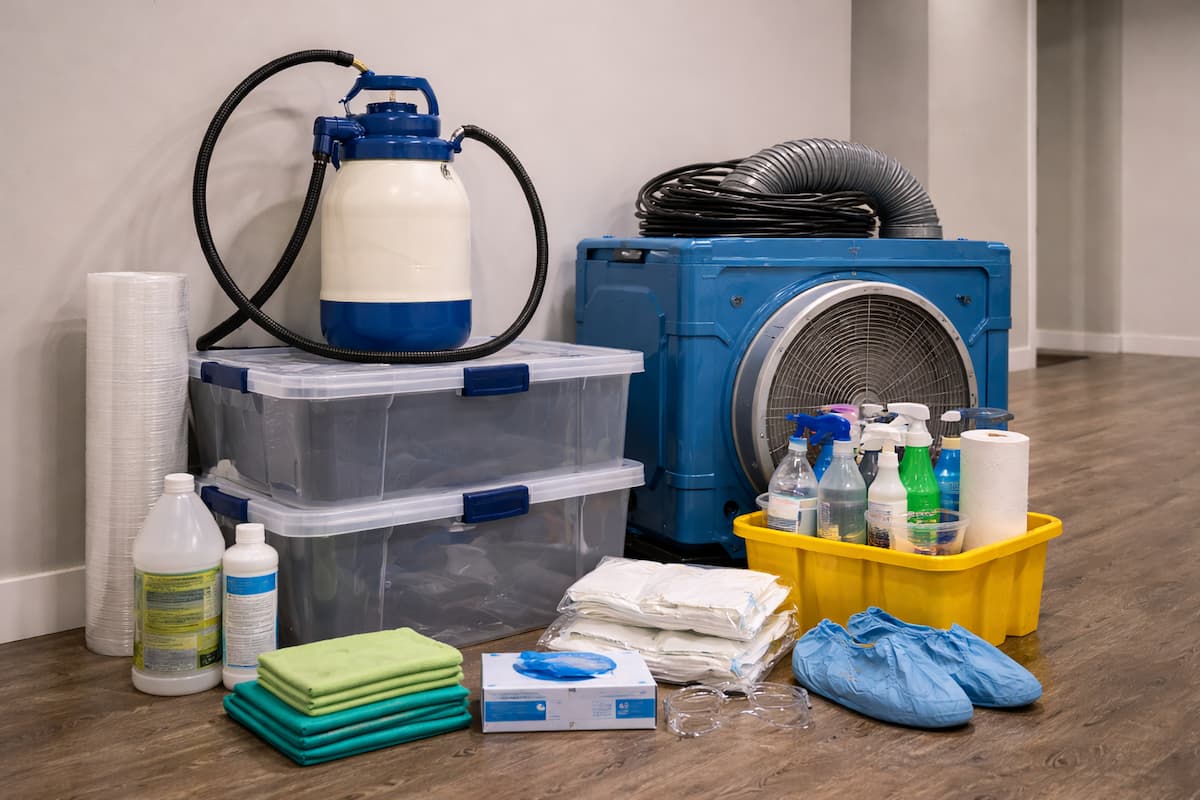
- PPE: gloves, eye/face protection, and controlled work practices
- Containment: barrier zones + protected pathways to prevent spread
- HEPA filtration: helps reduce airborne particles during cleaning
- Disinfection: a step-by-step approach (not “one chemical fixes all”)
Our Basement Septic Backup Cleanup Process
A basement-focused workflow built for safety and clarity—contain the stairwell path, remove affected materials, disinfect, verify, and document.
Containment & Safety Setup
We assess the basement entry point (floor drain / low fixture), then isolate the work area and protect the stairwell. This prevents cross-contamination and limits airborne particles.
Removal of Sewage & Contaminated Materials
We remove sewage and affected porous materials when required (carpet pad, damaged drywall bottoms, insulation, soft goods). This is often the key difference between “looks okay” and a truly safe basement.
Cleaning, Disinfection & HEPA
We clean and disinfect impacted surfaces, use HEPA filtration as needed, and apply odor control strategies. Basements require a careful plan—not shortcuts.
Drying, Verification & Documentation
If moisture remains, we set controlled drying and verify progress. We document scope, materials, and steps taken, then outline next steps clearly—repairs, rebuild, and claim support if needed.
What You Can Expect During a Basement Septic Backup Cleanup in Boston
Boston basements vary—finished lower levels in triple-deckers, older foundations, and utility-heavy rooms. We focus on a clean setup, clear communication, and a workflow designed to protect the rest of the home while making the basement safe to rebuild.
Finished basements & living areas
- Containment to protect stairs and adjoining rooms
- Guidance on what can be cleaned vs what should be removed (carpet pad, drywall bottoms)
- Odor control plan based on finishes and airflow
- Clear next steps for repairs, rebuild, and safe re-occupancy
Utility rooms, storage & mechanical areas
- Safe work zones around boilers/furnaces, water heaters, and electrical areas
- Sorting approach for basement contents and storage items (salvage vs discard)
- Concrete/cinder block cleaning + targeted disinfection
- Moisture checks and drying to prevent lingering odor and future microbial issues
If you’re unsure whether it’s black water, treat it as contaminated and avoid DIY cleanup. A fast basement-specific remediation plan usually reduces overall scope, limits spread upstairs, and helps prevent long-term odor issues.
Basement Category 3 Cleanup Cost in Boston: What to Expect
Every loss is different, but homeowners usually want a realistic range. Basement sewage/septic events are often treated as Category 3 when contamination is present or the source is uncertain. For the detailed Category 3 scope overview, see Black Water Cleanup / Category 3.
Typical ballpark ranges (basement)
These are planning ranges — we provide a scope-based estimate after assessing materials, spread pathways, and safety needs.
What drives the price
- Finished vs unfinished basement (carpet/pad, drywall, insulation)
- How far it traveled (stairwell tracking, multiple rooms, hidden wicking)
- Contents (storage items, soft goods, furniture handling/disposal)
- Containment needs (protected pathways, negative air / HEPA setup when needed)
- Odor control (materials affected + airflow conditions)
- Access + disposal logistics (stairs, tight hallways, parking, multi-unit rules)
Professional Basement Sewage Cleanup Since 1997
Basement losses need a steady plan—containment, safe removal, disinfection, odor control, and scope documentation. We arrive prepared to stabilize the basement and keep clean areas protected.
Helpful Tips to Reduce Basement Backup Risk
Contact Us for Basement Septic Backup Cleanup
Whether it surfaced through a floor drain, shower, or other low-level fixture, we’ll help you stabilize the basement, keep clean areas protected, and outline the next steps clearly. Call anytime or request your estimate—24/7 response.
Need Emergency Basement Sewage Cleanup in Boston?
Tell us what’s happening in the basement—floor drain, shower, toilet, or utility area. We’ll reply fast with a clear remediation plan. If contamination is actively spreading, call us 24/7.
Get a Fast Estimate
Usually replies within 15 minutes. No spam.