
Ice Dam Removal in Boston, MA — Safe Roof Steaming & Non-Damaging Ice Dam Removal (24/7)
Ice dams form when rooftop snow melts, runs to a cold eave, and refreezes — creating a ridge of ice that traps water behind it. That backup can work under shingles and flashing, trigger leaks, and add heavy load to gutters and roof edges. We provide professional ice dam removal in Boston with a safety-first approach, including steam ice dam removal (when appropriate), careful roof-edge clearing, and targeted work around valleys, chimneys, skylights, and problem eaves. If you’re searching for ice dam removal near you, we dispatch across Boston 24/7 to help reduce leak risk and protect your roof — without aggressive chipping that can damage shingles.


“We had a serious ice ridge at the eaves and water was starting to back up. They showed up fast, explained the plan, used a careful steaming approach, and opened drainage paths without beating up the shingles. The photos and notes were super helpful for our records — and the dripping stopped after the removal.”
“Professional and careful. No aggressive chipping — they focused on safe removal and protecting the roof edge and gutters.”
“They told us what to do immediately (and what not to do), then handled the ice dam removal the right way. Very clear communication.”
Ice dams trap meltwater at the roof edge and can force water under shingles and flashing — creating leaks, ceiling stains, and damage that spreads during every thaw. Our Boston team provides ice dam removal with a safe, non-damaging approach — including steam ice dam removal when appropriate — to restore drainage paths and reduce the chance of ongoing backup. We document conditions with photos and clear scope notes so your next steps stay organized. Note: ice dam removal addresses the ice at the roofline; long-term prevention usually involves ventilation/insulation/air-sealing improvements (and sometimes roof repairs) that we can help you plan.
Ice Dams Escalate Fast — What Professional Ice Dam Removal Helps Prevent
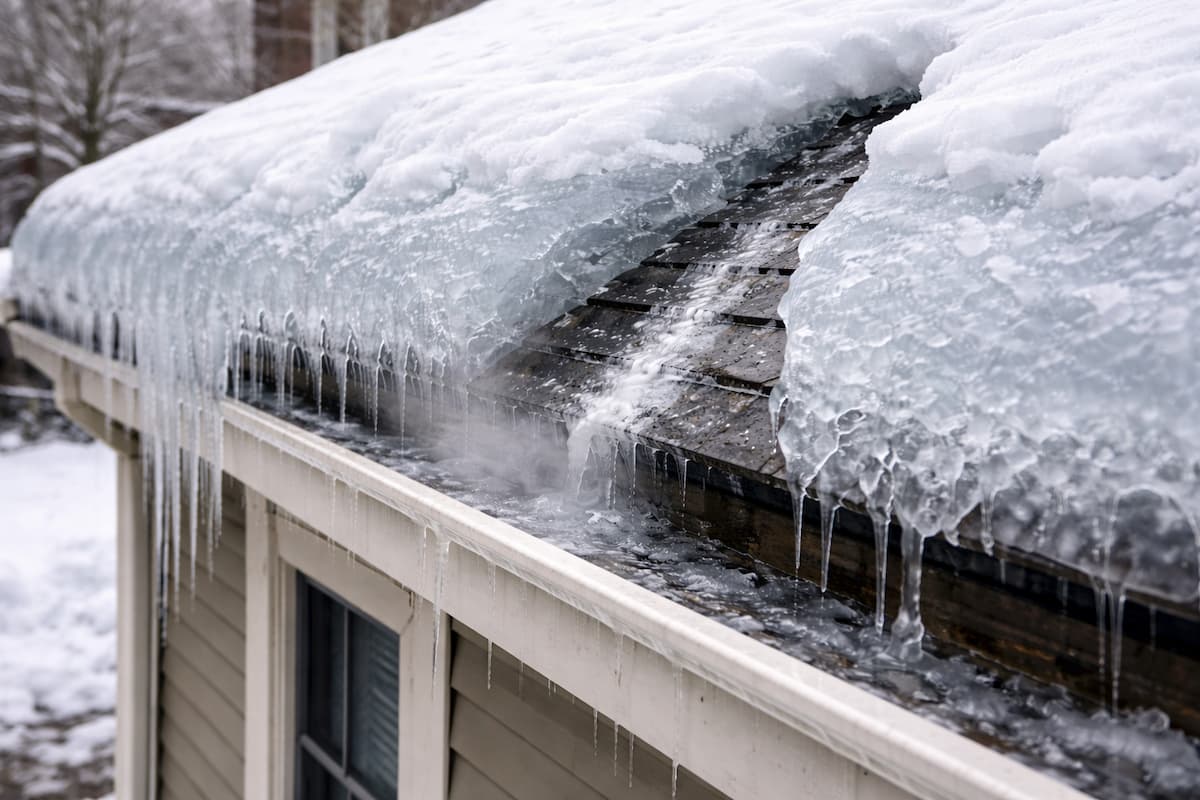
An ice dam isn’t just “frozen snow.” It’s a drainage blockage that keeps feeding the problem: meltwater backs up, refreezes, and can work under shingles and flashing. The priority is safe ice dam removal (often via roof steaming ice dam removal when conditions fit) to reopen flow paths and reduce the risk of leaks, interior damage, gutter stress, and repeat freeze/thaw buildup.
Common ice dam situations we handle
- Thick ice ridges at eaves with water backing up behind them
- Icicles + refreezing runoff along gutters, soffits, and fascia
- Valley and roof-edge buildup near chimneys, skylights, and dormers
- Recurring leaks during thaws, even after “temporary” fixes
- If you already have interior leaking or damage, also see: Water Damage Restoration in Boston
Before we arrive (safe quick steps)
- Stay off the roof: icy surfaces and hidden soft spots are a fall hazard
- Keep walkways clear: falling ice is dangerous — avoid standing under heavy icicles
- Protect inside: if there’s dripping, use buckets/towels and move valuables away from wet areas
- Avoid chipping: hammers and sharp tools can crack shingles and damage flashing
- Take a few photos of the roof edge and any indoor signs for your records
Safety Cautions (Ice Dam Removal in Boston)
Ice dam removal involves winter access, overhead hazards, and slick surfaces. The safest outcome comes from controlled access, roof-aware methods, and avoiding DIY approaches that damage shingles or put people at risk.
Roof access & fall risk
- Snow and ice can hide roof edges, soft spots, and steep pitch transitions — avoid climbing up “just to check.”
- Use extra caution near dormers, valleys, and skylights where meltwater refreezes and becomes slick.
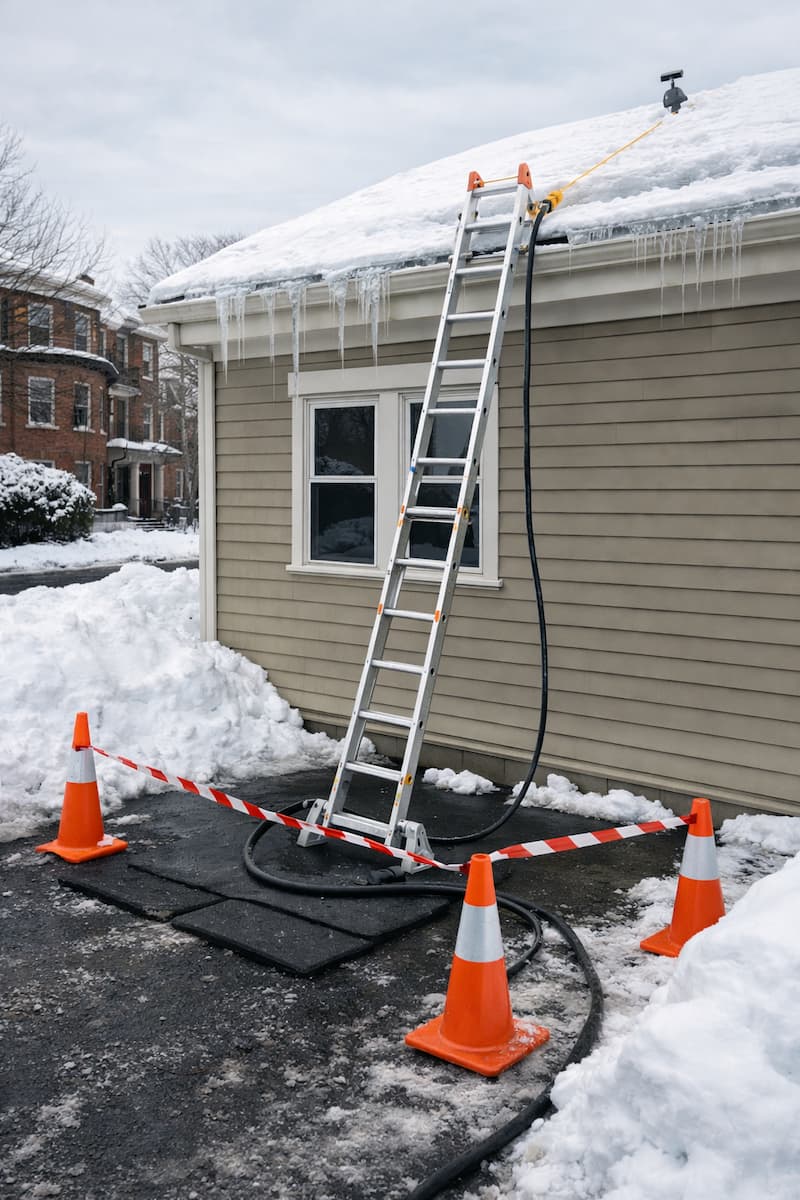
- We plan access, staging, and controlled work zones to reduce risk and protect the property.
Gutters, soffits & roof edges
- Ice can distort gutters and pull on fascia — aggressive prying can make damage worse.
- Chipping at shingles or flashing can crack tabs, break seals, and create new leak paths.
- We focus on non-damaging ice dam removal methods to open drainage paths safely.
Utilities, heat cables & overhead lines
- Be mindful of overhead utility lines near roof edges and ladders.
- If heat cables are present, avoid pulling or striking them; damaged cables can create electrical hazards.
- We work carefully around roofline details and flag any safety concerns we see during removal.
Why Choose Boston Restoration Prime for Ice Dam Removal in Boston?
Ice dams aren’t just a nuisance — they’re a roof-edge drainage failure that can keep feeding leaks and damage through every thaw. Our job is to remove the ice safely, reduce backup risk, protect shingles and flashing, and document what we did so you can make smart next-step decisions.
Safety-First, Roof-Aware Approach
Winter roof work is high-risk. We plan access, protect walkways, and choose methods that prioritize safety and roof integrity.
- Controlled access & fall-risk awareness
- Care around flashing, valleys, and roof edges
- Clear plan before work starts
Steam Ice Dam Removal (When Appropriate)
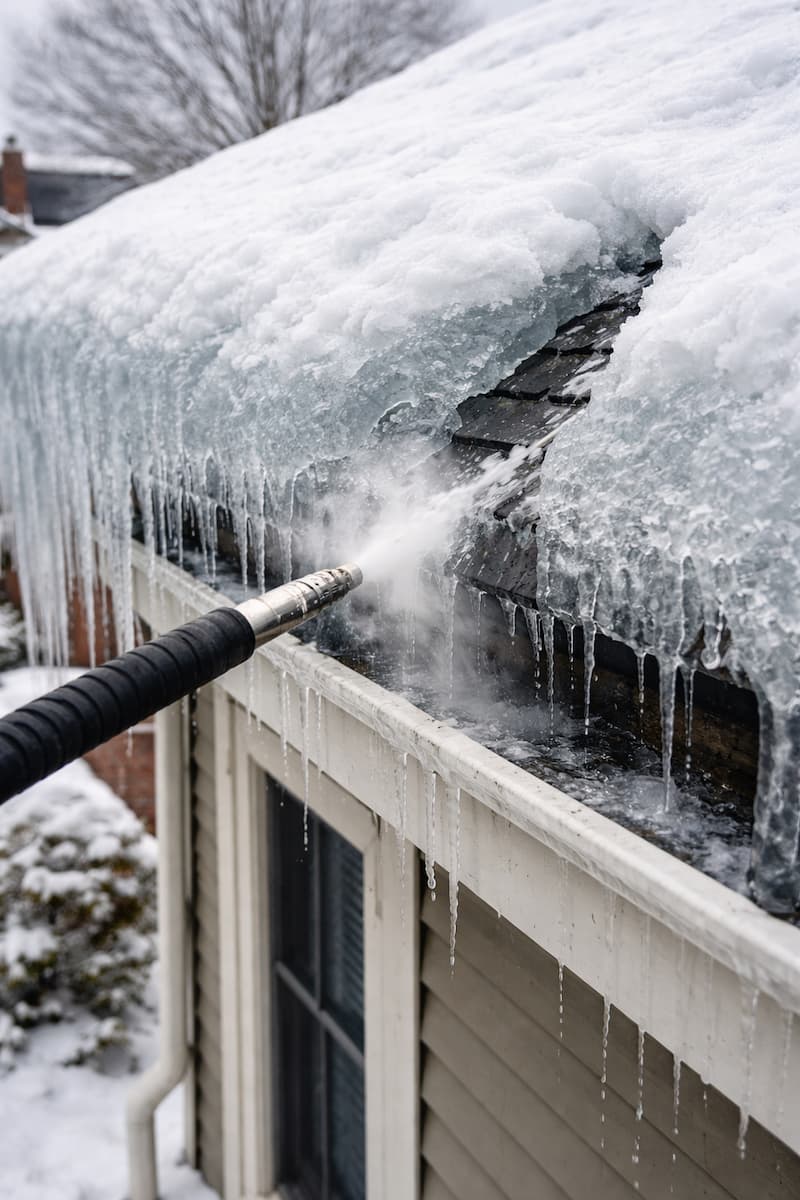
For many roofs, steaming is the most controlled way to open drainage paths without aggressive chipping that scars shingles.
- Non-damaging ice removal focus
- Targeted work at eaves and problem zones
- Confirm flow paths after removal
Clear Documentation & Next-Step Guidance
We document roof-edge conditions and explain what helps reduce repeat damming — so you’re not guessing after the emergency.
- Photos of affected areas and results
- Scope notes and what we addressed
- Practical prevention tips (ventilation/insulation/air sealing)
Ice Dam Removal vs. Repairs: Removal Reduces Ongoing Backup While You Plan the Fix
Ice dam events often create two tracks: (1) the active ice blockage at the roof edge, and (2) any resulting damage (leaks, stained ceilings, wet insulation, warped trim). Our role here is the roofline emergency: ice dam removal (including roof steaming ice dam removal when appropriate), restoring drainage paths and reducing repeat backup — plus clear documentation so your repair plan stays organized.
Is ice dam removal covered by insurance?
Coverage varies by policy, deductibles, and how the loss is classified. Even when the repair portion is covered, policies often expect reasonable steps to mitigate additional damage. Timely ice dam removal can help show you acted responsibly to reduce ongoing backup and potential interior impact.
What we document (for clarity)
- Photos of ice buildup areas before/during/after
- Notes on roof-edge conditions (eaves, valleys, gutters, flashing areas)
- Removal method used (including steaming when applicable)
- Next-step guidance to reduce repeat damming
If interior leaking has already occurred, we can also guide you on what to do immediately to protect the home.
What Drives the Cost of Ice Dam Removal in Boston?
Ice dam removal is priced by scope — how much ice must be removed, how difficult it is to access safely, and which roof details are involved (eaves, valleys, dormers, skylights, gutters). Two homes can look similar from the street, but roof pitch, height, and ice thickness can change the plan quickly.
Main drivers we evaluate
- Ice thickness & length: how large the ridge is and how far it extends along the eaves.
- Roof height & pitch: multi-story access and steep roofs require stricter safety planning.
- Roof details: valleys, chimneys, dormers, skylights, and complex edges often take more time.
- Method used: steam ice dam removal vs. limited manual clearing depending on conditions.
- Gutters & drainage: ice-packed gutters/downspouts and delicate fascia areas need careful handling.
- Site conditions: tight alleyways, landscaping, walkway hazards, and multi-unit access rules.
What a “clean estimate” includes
Your Partner in Ice Dam Removal
Experience the Prime Difference
Ice dams are sneaky: you can have a thick ridge at the eaves while everything looks “fine” from the ground — right up until the next thaw sends water back under shingles. Our goal is safe, non-damaging, and well-explained — not rushed chipping that creates new problems. We assess the roof edge, choose the least invasive method (often steaming when appropriate), remove the blockage to restore drainage, and document the work so you can plan next steps with confidence.
Ice Dams Are Deceptive — Removal Must Protect the Roof While Restoring Drainage
An ice dam is a combination of heat loss, refreezing, and blocked drainage. What you see (icicles and a thick ridge) is only part of the story — the real risk is meltwater backing up under shingles at the roof edge. A proper plan focuses on safe removal, restoring flow paths, and reducing repeat buildup.
What makes ice dams especially risky
- Back-up pressure: trapped water seeks a path under shingles and flashing
- Roof-edge stress: heavy ice can pull on gutters, fascia, and soffit areas
- Repeat freeze/thaw: dams rebuild quickly and expand across eaves and valleys
- Hidden roof details: valleys, dormers, skylights, and chimneys can concentrate refreezing runoff
- Interior risk: if backup reaches underlayment seams, leaks can appear far from the entry point
After removal: prevention priorities
Removing the ice dam solves the immediate blockage — but long-term prevention usually comes from reducing melt and refreeze: improving attic insulation, air sealing warm leaks, and balancing ventilation so the roof deck stays cold and consistent. We’ll highlight the most common causes we see in Boston homes and what to address first.
After Ice Dam Removal: What Usually Needs Inspection, Repair, or Monitoring
Ice dam removal addresses the immediate blockage, but it’s smart to check the roof edge and any areas where backup water may have stressed materials. Below is a practical guide to what’s often fine, what’s case-by-case, and what commonly needs repair — especially after repeated freeze/thaw cycles.
Our Ice Dam Removal Process (Boston)
Ice dam removal needs to be safe and roof-aware. Our workflow is built to assess risk, choose non-damaging methods, remove the blockage, and confirm drainage — with clear documentation and prevention guidance.
Assessment & Access Planning
We review roof height, pitch, ice thickness, and problem zones (eaves, valleys, skylights, chimneys). Then we plan safe access and staging to protect people and property.
Protection-First Setup
We protect the work area below, plan around gutters and delicate roof-edge details, and avoid methods that can scar shingles or flashing.
Ice Dam Removal (Often Steaming)
We remove the ridge to restore drainage paths. When conditions fit, steam ice dam removal is a controlled, roof-safe method to open flow without aggressive chipping.
Verification, Documentation & Prevention Guidance
We confirm meltwater can drain properly, document results with photos/notes, and share the most effective prevention priorities to reduce repeat ice damming.
What You Can Expect During Ice Dam Removal in Boston
Ice dams aren’t a “quick scrape.” The goal is to remove the blockage safely, protect roof materials, and restore drainage paths — with clear communication so you know what’s happening and what to do next.
Homes, condos & multi-unit buildings
- Roof-edge assessment: eaves, valleys, dormers, skylights, chimneys, and gutter lines
- Safety planning for access, staging, and falling-ice hazards
- Non-damaging removal method selection (often steaming when appropriate)
- Photos and clear notes so you can plan repairs or prevention work if needed
Property management & commercial buildings
- Priority focus on dangerous roof-edge buildup and high-traffic walkways
- Documentation that’s easy to share with managers, tenants, and vendors
- Flexible coordination around access rules and building schedules
- Clear next-step guidance to reduce repeat ice dam formation
If you’re seeing thick eave ice, heavy icicles, or repeat leaking during thaws, treat it as urgent. Timely ice dam removal service in Boston can help reduce backup pressure and protect your roof edge before the next freeze/thaw cycle.
Ice Dam Removal in Boston — Fast Response, Roof-Safe Methods & Clear Documentation
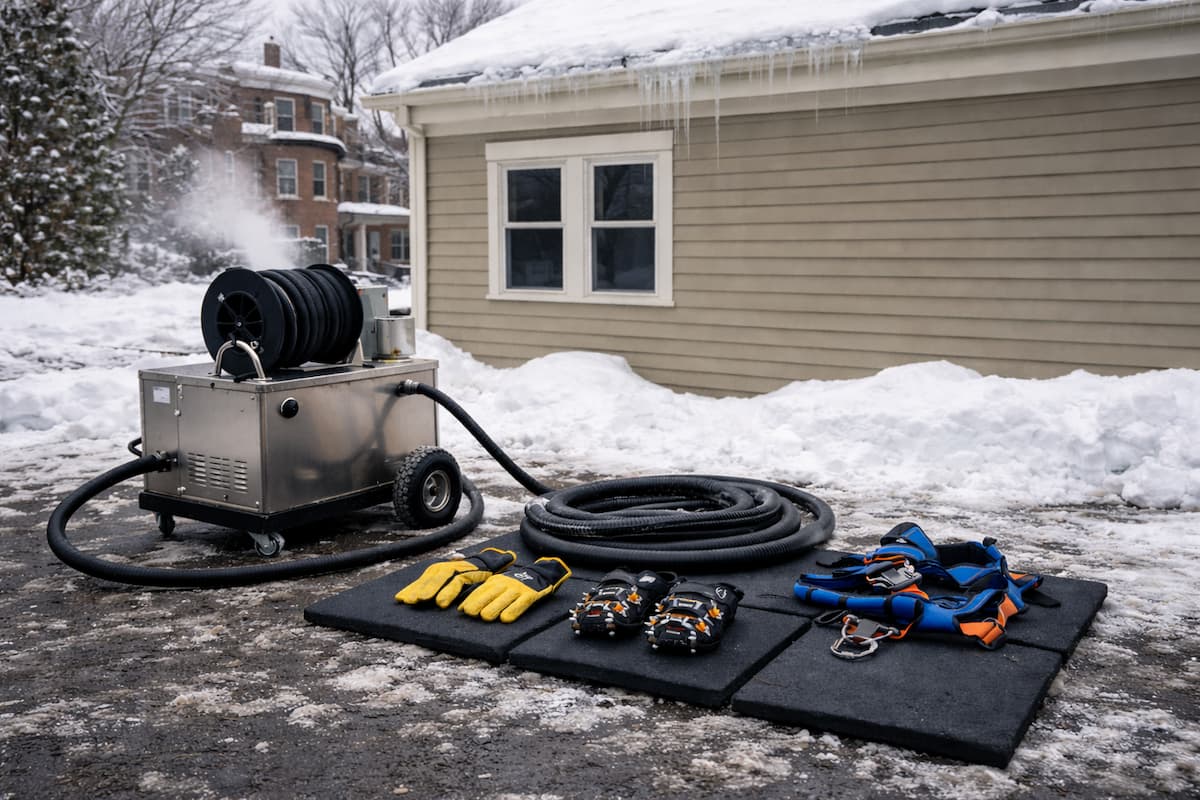
Ice dams can rebuild quickly and keep forcing meltwater back under shingles at the roof edge. We respond prepared to assess the situation, choose the least invasive method (including steam ice dam removal when appropriate), remove the blockage, and document the scope so you’re not guessing what was addressed — or what to prioritize to prevent repeat damming.
Helpful Tips That Reduce Ice Dam Risk
Contact Us for Ice Dam Removal in Boston
Whether you’re seeing thick ice at the eaves, heavy icicles, or repeated leaks during snowmelt, we’ll help you stabilize the situation fast. We provide ice dam removal in Boston, including roof-safe steaming options when appropriate, plus clear documentation and prevention guidance. Call anytime or request an estimate — we respond 24/7.
Need Emergency Ice Dam Removal in Boston?
Tell us what’s happening — we’ll respond quickly with a clear plan for safe ice dam removal (often including roof steaming when appropriate) and straightforward next steps to reduce repeat damming. If you have active leaking or falling-ice hazards, call us 24/7 for urgent guidance.
Get a Fast Estimate
Usually replies within 15 minutes. No spam.