
Black Water Cleanup in Boston, MA — Category 3 Remediation, Disinfection & Odor Control (24/7)
“Black water” means Category 3 contamination — water that may contain sewage, harmful bacteria, and pathogens. The goal isn’t just extraction. It’s containment, safe removal of impacted porous materials, professional disinfection, and clear documentation so the space can be safely restored. We dispatch 24/7 across Boston to stabilize the area and prevent cross-contamination into clean rooms.


“We had a Category 3 water situation after a sewer line backed up. They arrived fast, set containment, removed what couldn’t be safely sanitized, and handled disinfection and odor control without turning the whole house upside down. The documentation was clear and made the insurance conversation much easier.”
“No chaos — just a clean plan. They protected the clean areas, ran HEPA, and made the space safe again.”
“They explained Category 3 clearly and told us what to avoid doing before cleanup. Super organized and professional.”
Black water is Category 3 — high-risk contaminated water (often related to sewage or heavily polluted floodwater). Our Boston team provides Category 3 cleanup with containment, safe removal of impacted porous materials, professional disinfection, odor control, and insurance-ready documentation. Note: we handle remediation inside the property — plumbing/sewer repairs are typically handled by a licensed plumber.
Category 3 (Black Water) Escalates Fast — Here’s What Proper Remediation Prevents
Category 3 isn’t a “bigger water extraction.” It’s a contamination event. The priority is containment, safe removal, and professional disinfection — so pathogens and odor sources don’t migrate into clean spaces. A correct black water cleanup plan helps reduce health risks, persistent odor issues, and hidden damage behind walls or under flooring.
Common Category 3 scenarios we respond to
- Sewer backup through a basement drain, toilet, tub, or shower
- Backflow after heavy rain, overloaded municipal lines, or a blocked main
- Toilet overflow with contamination that reaches porous materials
- Floodwater that entered from outdoors and is considered contaminated
- If the source is a septic backup (not a municipal sewer issue), see: Septic Backup Cleanup in Boston
Before we arrive (safe quick steps)
- Keep people/pets out of the affected area; close doors if possible
- Stop water use if the source is plumbing-related (no flushing, showers, laundry)
- Don’t run fans or HVAC — it can spread aerosols and odor
- Take a few photos/videos for documentation (then step out)
Mechanical & Infrastructure Cautions (Black Water Safety)
Category 3 incidents can create hidden hazards around electrical systems and mechanical equipment. If your affected area includes a basement, utility room, or shared building corridor, use extra caution before entering.
Electrical panels & outlets
- If water reached outlets, extension cords, or a panel area, avoid contact and do not step into standing water.
- Do not run shop-vacs, fans, or dehumidifiers in a contaminated wet zone unless it’s professionally assessed and set up.
- If needed, have power evaluated/shut off by a qualified professional before cleanup continues.
Boiler / furnace / HVAC
- Don’t run HVAC if returns/ductwork may pull contaminated aerosols into clean spaces.
- Heating equipment in wet areas may require inspection before restart.
- We plan containment and air control to reduce cross-contamination during removal and sanitation.
Sump pumps & ejector pumps
- Black water can foul pumps and discharge lines; cycling them without a plan can spread contamination.
- If the source is a sewer/septic backup, continued water use can re-contaminate the area.
- We coordinate stabilization so pumping supports containment (not the opposite).
Why Choose Boston Restoration Prime for Black Water Cleanup?
Category 3 remediation isn’t a “spray-and-wipe” job — it’s containment, safe removal, disinfection, and documented remediation.
Health-First Response
We treat black water as a contamination event. That means PPE, controlled handling, and steps designed to reduce pathogens and prevent cross-contamination into clean areas.
- Containment & protected pathways
- Safe removal of impacted porous materials
- Disinfection + odor control plan
Containment + HEPA Filtration
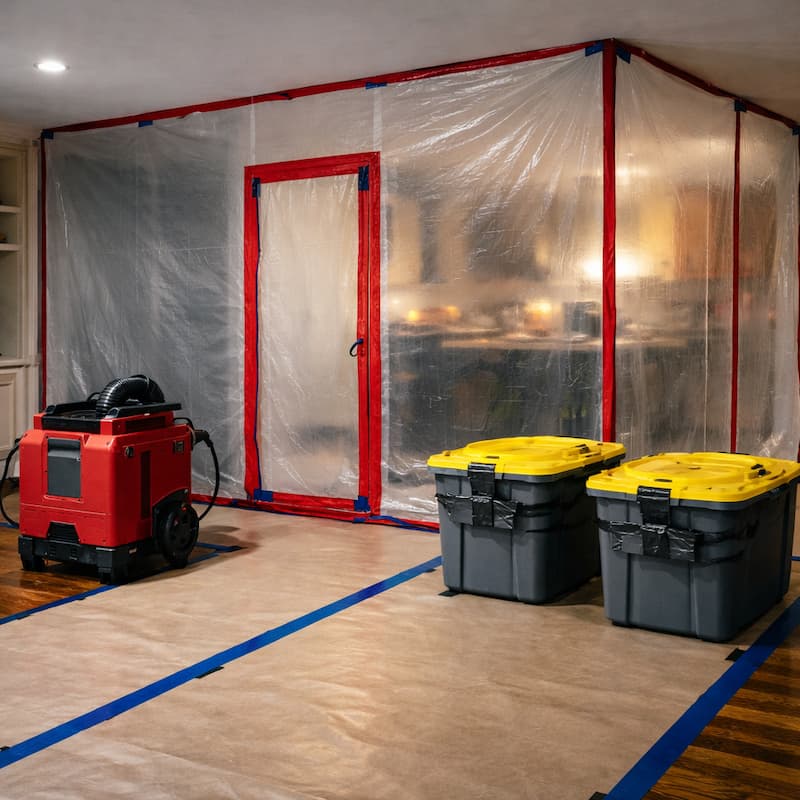
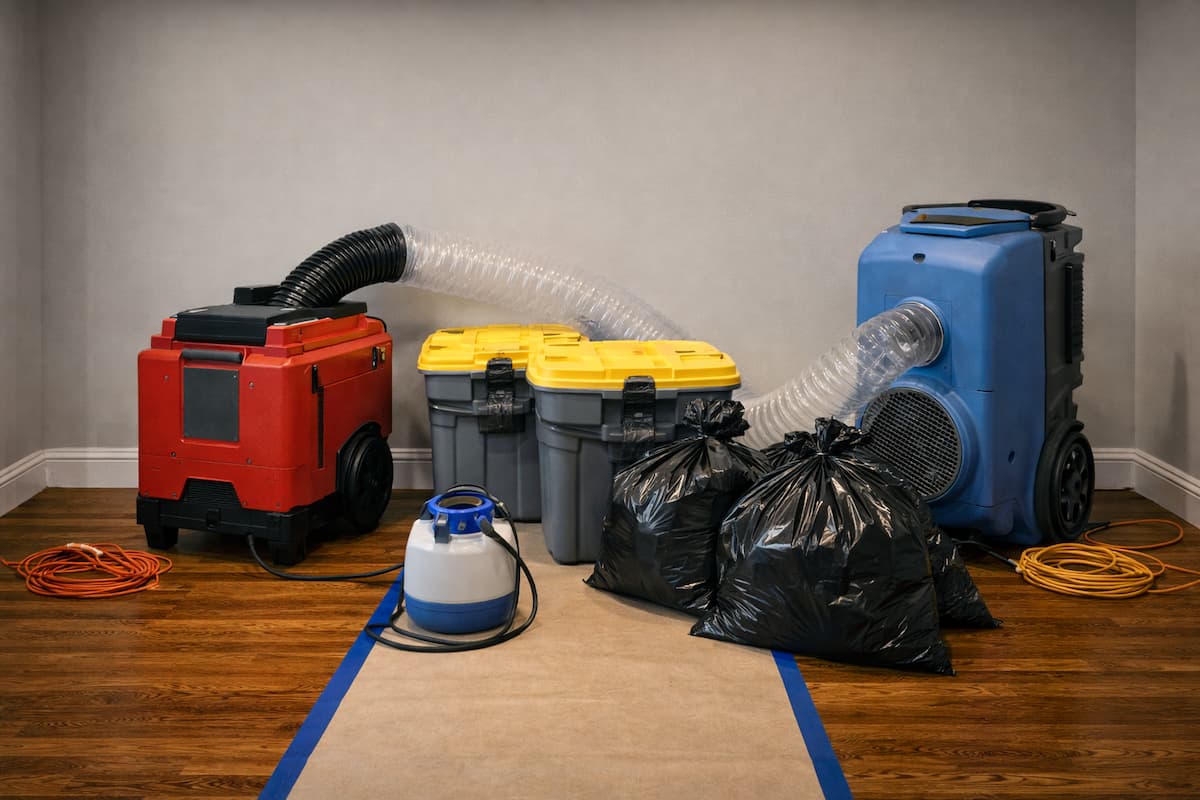
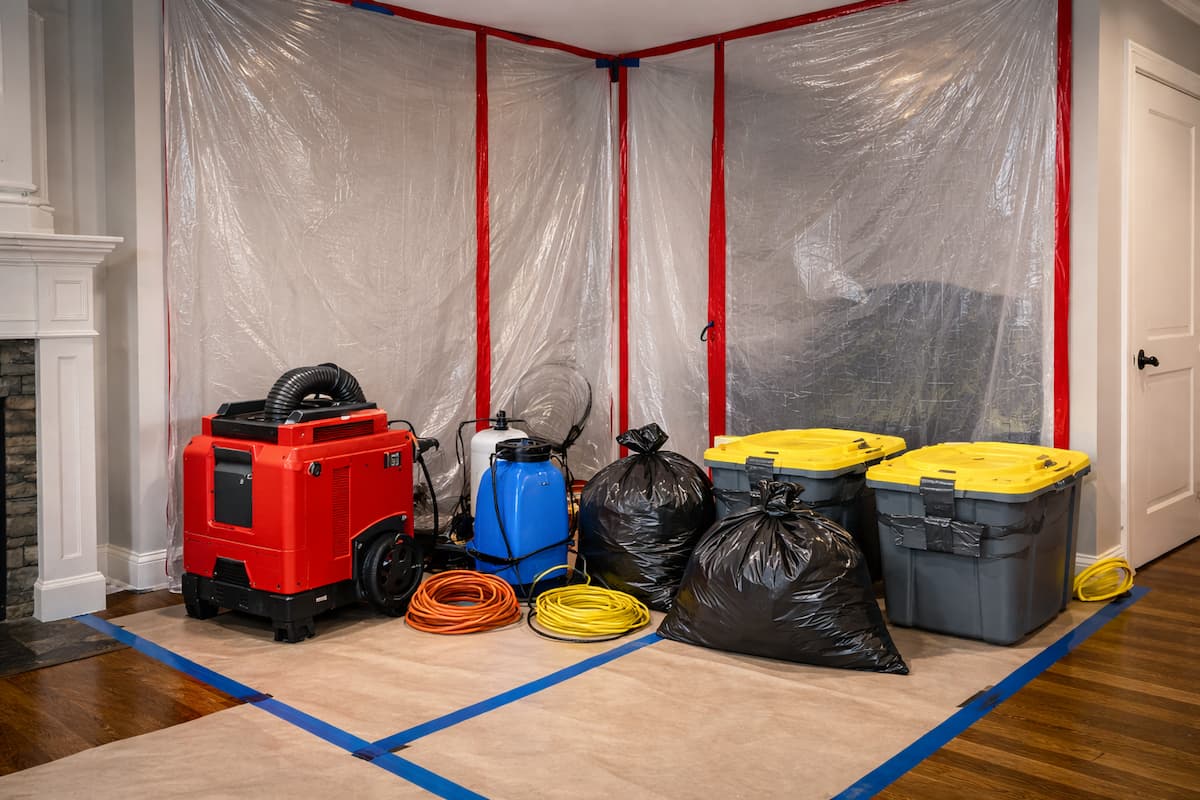
Cleanup quality depends on controlling the environment. We use containment, HEPA filtration, and careful cleaning so contaminated particles don’t migrate into adjacent rooms.
- Negative air (when needed)
- HEPA air scrubbing
- Controlled drying after sanitation
Insurance-Ready Documentation
We document what matters for Category 3: photos, scope notes, affected materials, and sanitation steps. This helps keep decisions and next steps moving.
- Before/during/after photos
- Clear scope & communication
- Adjuster-friendly records
Remediation vs. Repair: Black Water Cleanup Handles the Contamination Inside the Property
Many Category 3 events have two tracks: (1) a source/line issue handled by a licensed plumber or municipality, and (2) the contamination inside the building handled by a restoration team. Our work focuses on proper remediation: contain, remove impacted porous materials, disinfect, control odor, and document the scope — especially when insurance is involved.
Is black water cleanup covered by insurance?
Coverage depends on your policy and endorsements (often listed as sewer/water backup or similar). Even when coverage applies, most policies still require “duty to mitigate” — taking reasonable steps to prevent further damage. That’s why fast, documented remediation matters.
What we document (claim-ready)
- Photos before/during/after + notes on affected rooms and materials
- Containment setup and sanitation steps performed
- Removal list for impacted porous layers (when required)
- Moisture checks and drying plan after disinfection
This helps you understand the scope and gives your adjuster a clear file to review.
What Drives the Cost of Category 3 (Black Water) Cleanup?
Category 3 work is priced by scope — containment, removal, sanitation, odor control, and documentation. Two properties can look similar at first glance, but the materials affected and access requirements can change the plan fast.
Main drivers we evaluate
- Area & depth of impact: square footage, how far contamination traveled (rooms/hallways/adjacent spaces).
- Porous materials involved: carpet pad, drywall edges, insulation, soft contents often require removal.
- Containment complexity: multi-room setups, protected pathways, negative air/HEPA needs.
- Time since exposure: delays can increase odor work, removal, and verification steps.
- Access constraints: basements, tight stairs, multi-unit rules, elevator scheduling, after-hours work.
What a “clean estimate” includes
Your Partner in Black Water Cleanup
Experience the Prime Difference
The goal isn’t “cleaner.” It’s safe, documented, and ready for rebuild. We contain the loss, remove impacted porous materials when required, disinfect properly, control odor, and document the scope so you can make decisions with confidence (and keep your claim organized if needed).
Black Water Is High-Risk — Remediation Requires More Than “Cleaning”
Category 3 water can carry pathogens and can soak into porous building materials. That’s why a proper remediation plan often includes containment, removal of impacted porous materials, disinfection, and verification — followed by controlled drying if moisture is present.
What makes Category 3 risky
- Pathogens: bacteria/viruses can remain on surfaces and in porous layers
- Aerosolization: disturbance can spread particles into air and adjacent rooms
- Porous contamination: carpet pad, drywall, insulation often can’t be “sanitized in place”
- Odor persistence: odor can linger if source materials aren’t removed and treated correctly
After sanitation: drying & verification
Once disinfection is complete, we confirm what’s wet and what’s stable. If materials remain damp (subfloor edges, drywall, baseboards), we set a controlled drying plan and verify progress with moisture checks — so you’re not left with hidden moisture that can lead to odor, swelling, or microbial growth later.
Salvage vs Discard: What Can Be Saved After Black Water Exposure?
With black water (Category 3), the goal isn’t just “cleaner” — it’s safe. Many porous materials can hold contamination deep inside, so removal is often the safest, fastest route to a clean rebuild.
Our Black Water Cleanup Process (Category 3)
A clean workflow built for safety and clarity — contain, remove, disinfect, verify, and document the scope for next steps.
Containment & Safety Setup
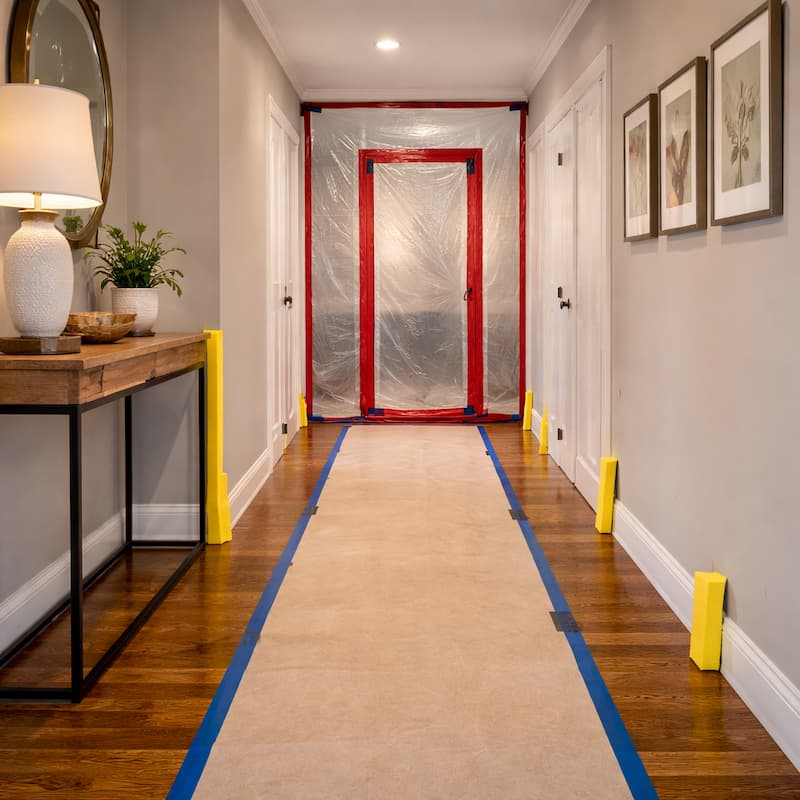
We assess the affected area, identify travel paths, and set protected pathways. The goal is to prevent spread into clean rooms and control airborne particles.
Removal of Impacted Materials
We remove contaminated water and impacted porous materials when required (carpet pad, damaged drywall, insulation, etc.). This is often the difference between “looks okay” and a truly safe result.
Cleaning, Disinfection & HEPA
We clean and disinfect impacted surfaces, use HEPA filtration as needed, and apply odor control strategies. We focus on a standard-aligned plan, not shortcuts.
Drying, Verification & Documentation
If moisture remains, we set controlled drying and verify progress. We document scope, materials, and steps taken, then outline next steps clearly — repairs, rebuild, or coordination with your claim.
What You Can Expect on a Black Water Cleanup in Boston
Boston properties vary — older basements, tight stairwells, multi-unit layouts, and shared plumbing can create unique pathways for contamination. Our team focuses on a clean setup, clear communication, and a workflow designed to protect the rest of the property while keeping the project easy to follow.
Residential & multi-unit
- Floor protection and controlled pathways to reduce cross-contamination
- Clear guidance on what can be cleaned vs what should be removed
- Odor control strategy based on materials and airflow conditions
- Simple next steps for repairs or rebuild after sanitation
Commercial & property management
- Priority stabilization to reduce downtime and prevent spread
- Documentation that’s easier to share with managers/adjusters
- Flexible scheduling around access, tenants, and building rules
- Clean work zones and controlled odor where occupants are nearby
If you’re unsure whether water is Category 3, treat it as contaminated and avoid DIY cleanup. A quick professional assessment typically reduces overall scope and helps avoid long-term odor and microbial complications.
Professional Category 3 Cleanup Since 1997
Experience matters — especially with contaminated losses. We arrive prepared to contain, disinfect, control odor, and document the scope so you’re not left guessing about what’s safe and what comes next.
Helpful Tips to Reduce Category 3 Risk
Contact Us for Black Water Cleanup in Boston
Whether it’s a sewer backup, a contaminated flood event, or an overflow that reached porous materials, we’ll help you stabilize the property and set a clear plan. Call anytime or request your estimate — we respond fast.
Need Emergency Black Water Cleanup in Boston?
Tell us what’s happening — we’ll reply fast with a clear Category 3 remediation plan. If contamination is actively spreading, call us 24/7.
Get a Fast Estimate
Usually replies within 15 minutes. No spam.